







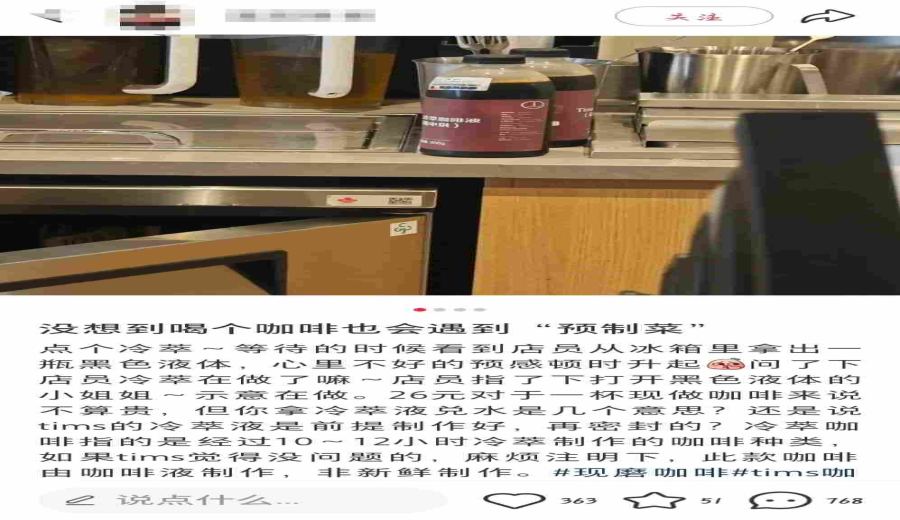
Introduction:Recently, it was discovered that some chain coffee shops use pre-made espresso concentrate to prepare cold brew, sparking consumer doubts about "freshness" and "quality." Is cold brew necessarily made fresh? Do pre-made concentrates meet standards? This article delves into the production techniques of cold brew, in-store operational practices, and compares the flavor differences between pre-made and freshly brewed versions to help readers make smarter choices.
A recent post on social media sparked heated discussion when a customer purchasing cold brew at the well-known chain brand Tims noticed the staff taking a black liquid from the refrigerator and pouring it directly into a cup. The customer suspected that the drink was not made on-site but was instead a pre-prepared "pre-made product."
In fact, the cold brew process itself involves steeping coffee grounds in cold or low-temperature water for 8 to 24 hours, making it a form of "cold extraction" technique. Since the entire process is time-consuming, most coffee shops opt to steep the coffee the night before or during off-peak hours to maintain supply efficiency and flavor consistency. The filtered coffee is then served to customers. Therefore, the "freshly made cold brew" ordered by customers in-store is often actually coffee liquid that has been prepared in advance.
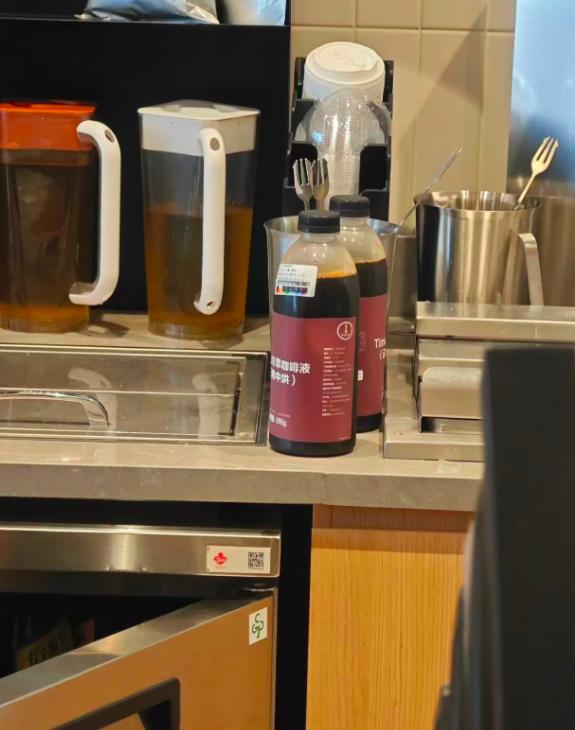
However, the focus of this controversy is not on the "preparation in advance," but rather on the fact that the store in question used what appears to be factory-distributed, frozen "espresso concentrate" rather than coffee liquid typically steeped and filtered in-store. Based on photos shared online, the liquid was contained in plastic bottles with clear packaging and labels, suggesting it was produced at a central factory, frozen, and delivered to stores, where staff would thaw and prepare it as needed.

This approach has raised concerns among many consumers, who feel it falls short of traditional expectations for "cold brew." Many netizens commented: "This is no different from just adding ice water to espresso concentrate at home," "Cold brew made with pre-made concentrate loses the essence of slow brewing," "Can long-term storage guarantee freshness and flavor?" Some even compared it to turning espresso into an Americano by adding hot water — just in a different form.
However, some industry professionals and consumers point out that using factory-prepared cold brew concentrate can indeed ensure consistent flavor across every cup, reducing quality fluctuations caused by human error. Moreover, cold brew inherently cannot be "made to order" due to its lengthy preparation time. Preparing each cup individually on demand would not only be time-consuming but also inefficient for store operations. As a result, some businesses adopting pre-preparation methods is actually a common industry practice.
So, what constitutes a "standard" way to make cold brew? Generally speaking, the standard process for cold drip (pour over) involves steeping coarsely ground coffee beans (a recommended ratio of about 1:8 to 1:12, adjusted according to flavor preference) in cold water (typically 4°C to 10°C) for at least 12 hours. The liquid is then filtered through cloth or paper to remove coffee grounds, resulting in the final product. This process avoids high-temperature extraction, thereby preserving more sweetness and low-acid flavors, making it a popular choice for consumers who prefer a smoother taste.
However, for chain brands aiming to maintain consistent cold brew quality across all stores in Taiwan or globally, using centrally produced pre-made concentrate is indeed one solution. The key lies in whether these pre-made liquids use high-quality coffee beans, whether they are properly frozen and stored, and whether they are used within their shelf life — all critical factors that influence the final flavor.
In summary, there is no absolute right or wrong way to make cold brew, but consumers can observe product information, ask baristas about the preparation method, or even choose the product that best fits their personal needs regarding "freshness" and "flavor complexity." Whether pre-made or freshly brewed,the quality of the coffee beans and the extraction method remain the core determinants of flavor excellence..
The above content is compiled by CoffeeHunters, a coffee news website.


