








Introduction:The coffee series promotional campaign launched by Chinese tea beverage brand Gu Ming in collaboration with actor Wu Yanzu sparked polarized consumer feedback due to the use of celebrity-themed packaging bags across all nationwide stores. Many customers criticized the design for lacking aesthetic appeal, with the oversized celebrity portraits being mocked for resembling health supplement packaging. This article analyzes common controversies surrounding branded co-branded packaging and offers practical suggestions on aligning packaging design with the tastes of younger consumers.
Since late June this year, Gu Ming has collaborated with well-known actor Wu Yanzu to promote its coffee products. During the campaign, co-branded events were held and celebrity stickers and other merchandise were given away, successfully attracting fan attention. However, when the packaging bags featuring Wu Yanzu’s image were gradually rolled out across all national outlets, they unexpectedly triggered widespread consumer discussion.
Many customers voiced dissatisfaction on social platforms, bluntly stating that the bag design was “not aesthetically pleasing,” especially due to the disproportionately large celebrity portrait, which made the overall style seem outdated. Some netizens joked that carrying such a bag on the street felt like holding a “middle-aged health product” or a “goji-berry brewing pouch,” with some even saying they wanted to throw away the packaging upon receiving their takeout.
Some netizens further analyzed that although Wu Yanzu has high national recognition, his aging image may not quite align with Gu Ming’s core target demographic of younger consumers. In addition, some consumers pointed out that takeout beverage packaging is usually quite durable, and many people reuse or repurpose it. Therefore, packaging design should take into account real-life usage scenarios. If the bag features an overly eye-catching celebrity close-up, it could reduce the willingness to reuse it — “you wouldn’t even want to carry it while shopping.”
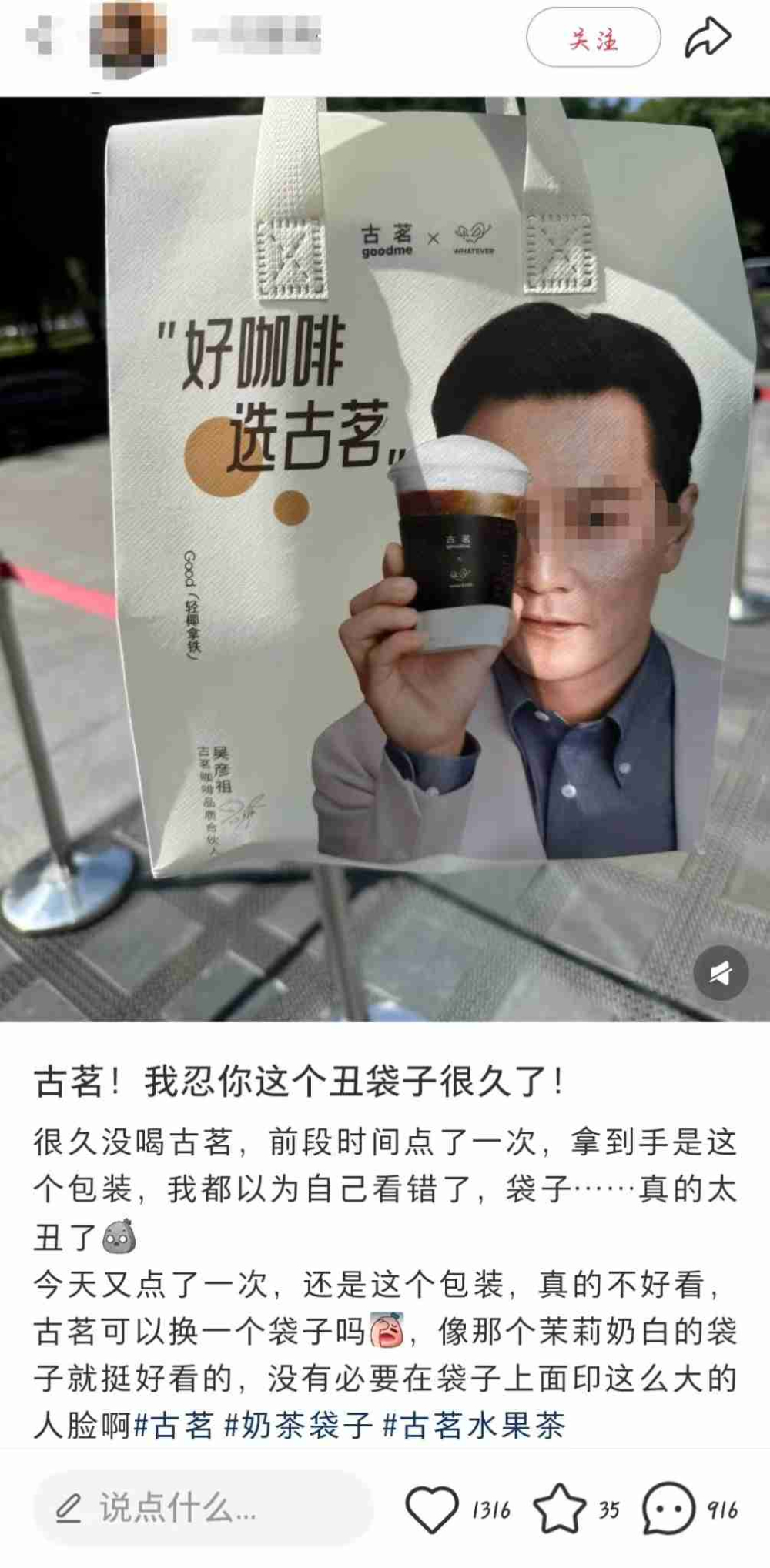
Faced with the negative feedback online, many Gu Ming users called on the brand via social media to adjust the packaging design, hoping for simpler, non-celebrity versions that would enhance overall aesthetics and functionality.
In response to the controversy, on September 23, a media outlet contacted Gu Ming’s brand team under the guise of a customer. A staff member responded that they had not yet received any formal complaints regarding “oversized patterns” or “limited styles,” and explained that the styles and colors of the store-used packaging bags mainly depend on the company’s recent material arrangements and inventory status, with specific inventory data unavailable for immediate inquiry.
The media further conveyed suggestions from netizens, including increasing the variety of packaging styles and colors, adjusting the proportional presentation of the spokesperson’s image, and even considering selecting a spokesperson who better resonates with the younger demographic. In response, Gu Ming staff said they would carefully record these opinions regarding design and branding strategy and forward them to the relevant internal departments for subsequent evaluation and handling.
This incident reflects the challenge beverage brands must seriously consider: how to balance the pursuit of topical appeal in co-branded packaging with the aesthetic preferences of their target consumers. For coffee or tea brands aiming to build long-term brand value, packaging is not just a container for protecting drinks, but also a crucial medium for expressing brand image and forging emotional connections with consumers.
Industry experts suggest that when planning co-branded or endorsement campaigns, brands should not only consider the popularity and market recognition of the spokesperson, but also proactively assess whether the spokesperson’s image and packaging design align with the aesthetic trends of the target audience. There should also be enough flexibility for adjustments to avoid high-profile collaborations ultimately provoking consumer backlash and affecting brand trust and reputation.
The above content is compiled by CoffeeHunters, a coffee news website.


