







Introduction:Luckin Coffee is set to relaunch its classic drink "Coconut Mango Pomelo Sago" at the end of September. This dessert beverage, which has been off the menu for three years, is highly anticipated by fans. However, the unveiling of the new recipe has sparked heated discussions among employees. With 12 preparation steps and six additional ingredients, store operations have become more cumbersome, and there are also challenges with limited refrigerator storage space. This article takes an in-depth look at the drink’s recipe details, operational difficulties, and real-world challenges faced by stores, shedding light on the brand strategy and market feedback behind it.
The chain coffee brand Luckin Coffee will relaunch "Coconut Mango Pomelo Sago" at the end of September. This dessert drink, which was a bestseller three years ago, is now making a comeback, much to the delight of many loyal customers. However, the announcement of the new recipe has stirred considerable discussion internally. It is understood that this version of "Coconut Mango Pomelo Sago" involves as many as 12 preparation steps and uses six new ingredients, not only making the process more complicated for store employees but also putting pressure on existing refrigerator storage capacity.
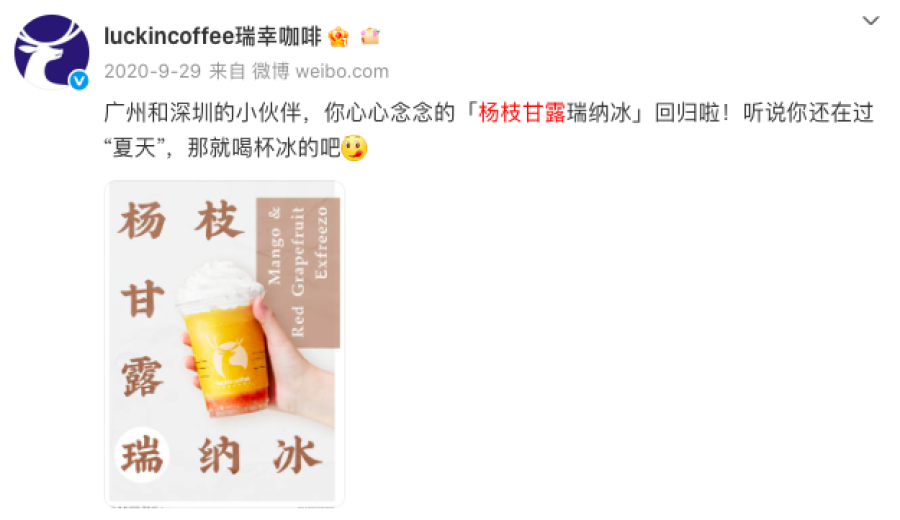
As early as 2020, Luckin had launched products such as "Large Mango Pomelo Sago" and "Mango Pomelo Sago Frappuccino," which won praise from many customers for their rich ingredients and delicate taste. Now that this classic drink is making a return, many fans are delighted, but when store staff saw the new recipe, they couldn’t help but complain. One employee joked that "this recipe is longer than a life sentence," pointing out that its complexity takes two to three times longer than the preparation of a regular drink.
It is understood that traditional mango pomelo sago is usually based on sago pearls, mango, coconut milk, and grapefruit, but Luckin’s "Coconut Mango Pomelo Sago" retains the mango, coconut cream, and grapefruit while adding ingredients like tapioca pearls and coconut jelly, making the drink "overflowing with toppings." Although this design enhances the layers and texture of the drink, it also complicates the preparation process. According to employees, it may take two to three minutes from gathering the ingredients to completing the packaging—far longer than the time it takes to prepare a typical coffee drink.
A more challenging issue lies in the limited refrigerator storage space in stores. Currently, Luckin’s in-store refrigerators are already packed with various juices, formulated milk, and bottles of ingredients, creating a visually cluttered and space-constrained environment.Once "Coconut Mango Pomelo Sago" officially hits the shelves, six additional new ingredients will need to be stored., further exacerbating the overcrowding in the refrigerators. Some employees have mentioned that preparing this drink requires them to "crouch in front of the fridge and search for a minute," or even "use up half the fridge just to make one drink," greatly affecting work efficiency.
To address this challenge, some employees have suggested that Luckin install small tabletop refrigeration units in stores to reduce the burden on the main refrigerator and allow employees to avoid frequently bending down and standing up to retrieve items, thereby improving operational comfort and efficiency. However, some netizens have questioned the positioning of this drink, arguing that as a coffee brand, Luckin’s continuous launch of tea-like beverages can blur its brand identity. They suggest categorizing light milk teas and fruit teas under a separate sub-brand, similar to the previous "Luckin Tea," to maintain brand focus.
Overall, while the return of "Coconut Mango Pomelo Sago" satisfies the nostalgic desires of many consumers, the complicated preparation process and inventory management challenges reflect the need for chain beverage brands to balance operational feasibility and actual store efficiency when expanding their product lines. For consumers, whether this drink can strike a balance between taste and waiting time will be key to its performance upon its return.
The above content is compiled by CoffeeHunters, a coffee news website.


