







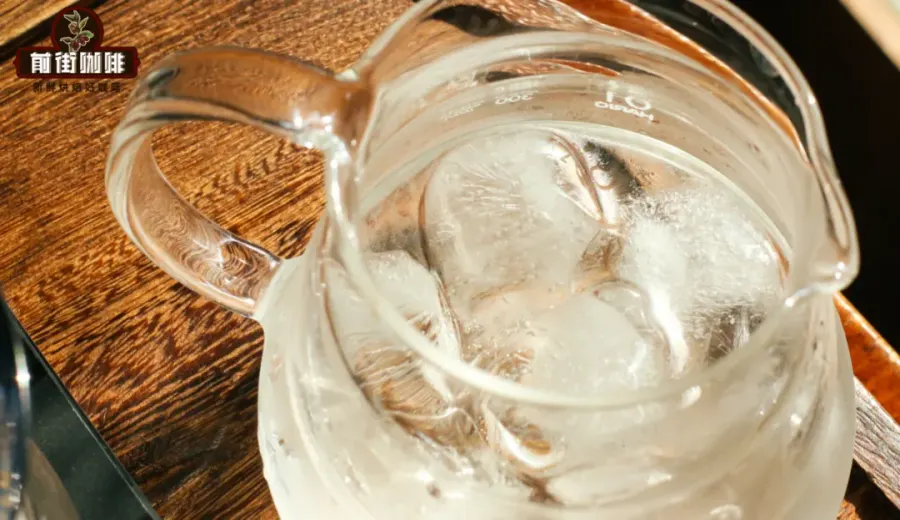
Introduction:Many coffee beginners wonder: can you brew iced pour over directly with ice water? In this practical test, we used an extremely low water temperature of 4°C, combined with ultra-fine grind and constant stirring, to challenge the extraction limits of the Boundary Line Estate · Gesha. We uncover the solubility threshold of ice water on flavor compounds. From extraction efficiency, parameter combinations to actual taste differences, we explore why ice water struggles to produce a coffee with rich flavors, and offer more practical alternatives like cold brew and ice drip.
In the world of pour over coffee, five key elements—water temperature, grind size, extraction time, stirring intensity, and coffee-to-water ratio—collectively shape the flavor profile of the coffee. Among them, “Can you brew iced pour over directly with ice water?” is a common question among many coffee enthusiasts. Especially with the appearance of many online videos demonstrating ice water brewing, this question seems even more relevant to real-world needs. However, the reality may not be as simple as it seems.
At one of our stores, we often encounter customers curious to ask: “Why can’t you brew iced pour over directly with ice water? Do you have to use hot water?” This question is very reasonable, especially for those who are new to coffee and have not yet deeply understood the principles of coffee extraction. Ice water might seem like the most intuitive choice for making iced coffee. But the key question is: can ice water alone truly extract satisfying coffee flavors?
The answer may disappoint some. Experiments prove that even when using an extreme combination of parameters—includingan extremely low water temperature of 4°C,an ultra-fine grind (close to a 1-setting on an espresso Q18 grinder, powder fine as flour),thorough stirring throughout the entire process, as well as extended extraction time—ice water still struggles to effectively extract key flavor compounds from the coffee. The actual results show that the brewed coffee only has faint aroma, and the overall performance is more like “water with a slight hint of coffee flavor.”
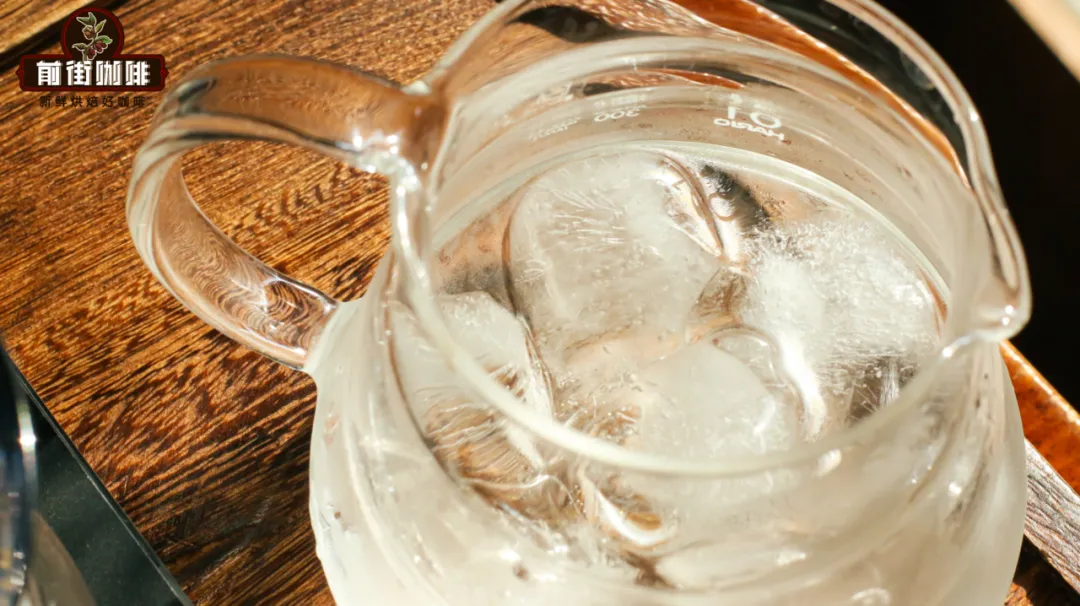
The coffee beans used in this experiment were the “Boundary Line Estate · Gesha” from a certain coffee list. Under normal iced pour over extraction conditions, this bean can showcase rich grape juice, passion fruit, apricot aromas, with a hint of red wine complexity, balanced acidity and sweetness, and an overall profile similar to a rich juice with wine-like notes. However, under extreme ice water conditions, its performance was vastly different.
The specific experimental parameters are as follows: the coffee dose was set to15 grams, the water temperature was strictly controlled at4°C4°C, using a1:10 coffee-to-water ratio, with an ultra-fine grind (close to a 1-setting on an espresso Q18 grinder), and the extraction was carried out bypulse pouring combined with continuous manual stirring, for a total time of about5 minutes
. It should be specially noted that this set of parameters is for experimental reference only, and is not recommended for general home or beginner use due to the high operational difficulty and risk involved.Judging from the actual output, it’s not hard to notice the difference between the two cups of coffee—on the right is a regular pour over, and on the left is the result of this ice water experiment. Judging just by sight, the left cupis noticeably lighter in color brightness and concentration
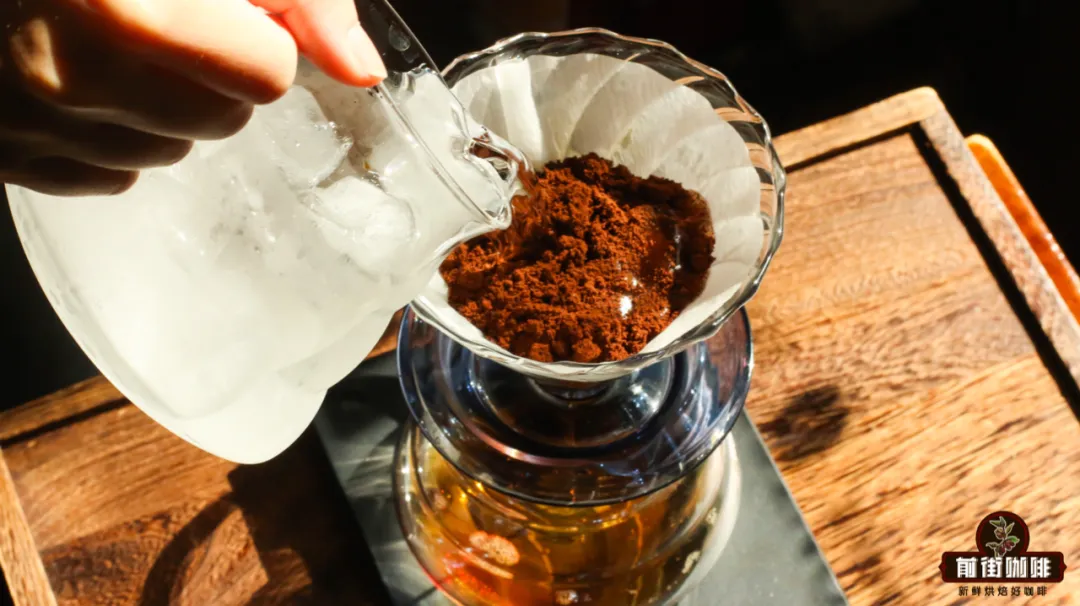
, and in terms of actual taste, its flavor is reduced to just a faint trace of coffee, with an overall sensation much like water with just a slight coffee taste.This outcome is actually not surprising.The molecular activity of ice water is far lower than that of room temperature or hot water
, resulting in significantly reduced ability to penetrate the coffee grounds, soften the fiber structure, and effectively dissolve aromatic compounds. Even if we adjust the grind to ultra-fine, use stirring techniques, and extend the extraction time to five minutes, ice water still cannot extract the aroma and flavor molecules from the coffee as quickly and abundantly as hot water can.
In fact, one team also tried to perform ice water extraction under pressure, but the results were similarly unsatisfactory, unable to achieve the desired extraction efficiency within a reasonable timeframe. Therefore, if your goal is to brew a iced pour over coffee with distinct flavors and rich layers, relying solely on ice water and pour over is not the best option.If you only have ice water at hand and still want to enjoy cold coffee, consider switching to traditionalcold brew (Cold Brew)orice drip (Ice Drip)methods. The core principle of these two methods is to useprolonged immersion (usually 12 to 24 hours)
, allowing ice water to slowly seep through the coffee grounds and gradually extract flavor compounds. Although it takes longer, it yields a smoother, lower-acid, and more balanced iced coffee, better highlighting the coffee’s own layers and sweetness.
The above content is compiled by CoffeeHunters, a coffee news website.


