







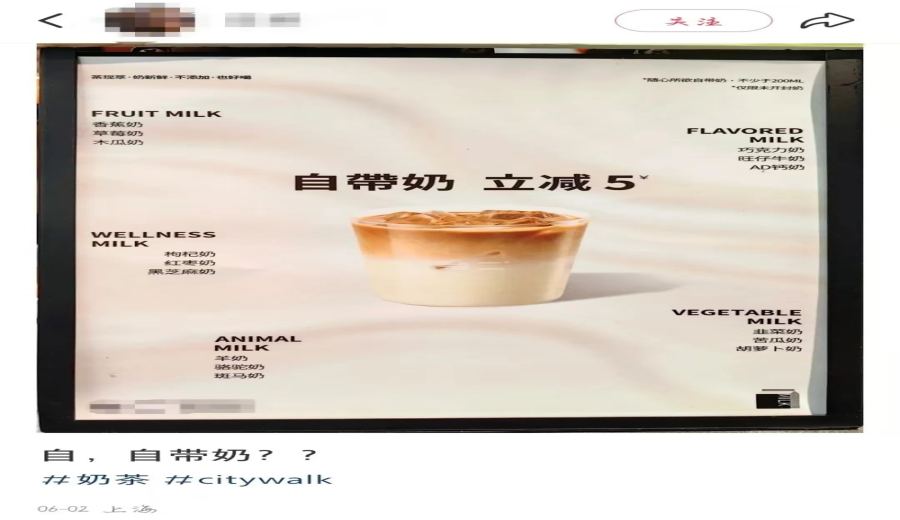
Introduction:A tea beverage shop launched a promotion offering a “₵5 discount for bringing your own milk,” allowing customers to bring their own dairy products to pair with freshly brewed tea drinks, sparking heated discussion among netizens. This move is a great boon for those who are lactose intolerant, but it also raises concerns about where food safety responsibilities lie. This article provides an in-depth analysis of the pros and cons of this policy, exploring how consumers can balance convenience, health, and potential risks when pursuing customized beverages.
Bringing your own cup to buy coffee has gradually become a daily habit for many people, not only helping to reduce the use of single-use packaging but also earning discounts from the shop. Recently, however, a tea beverage brand launched a “Bring Your Own Milk, Get ₵5 Off” campaign, encouraging customers to bring their own dairy products while the shop provides freshly brewed tea bases to create customized drinks. This innovative measure quickly sparked widespread discussion on social media platforms, with sharply divided opinions.
According to the tea beverage brand’s official social media information, this discount has been in effect since March of this year. Customers only need to bring their own dairy products, and the shop provides the freshly brewed tea base, allowing consumers to adjust the drink to their personal taste. Once this policy was announced, netizens were divided in their views. Supporters believe that this measure is especially suitable for people who are lactose intolerant, enabling them to enjoy the flavor of milk tea while avoiding additives such as non-dairy creamers, contributing to a healthier diet.
However, some consumers question whether bringing your own milk blurs the line of responsibility in drink preparation, expressing concern that in the event of a food safety issue, it would be difficult to determine where the responsibility lies.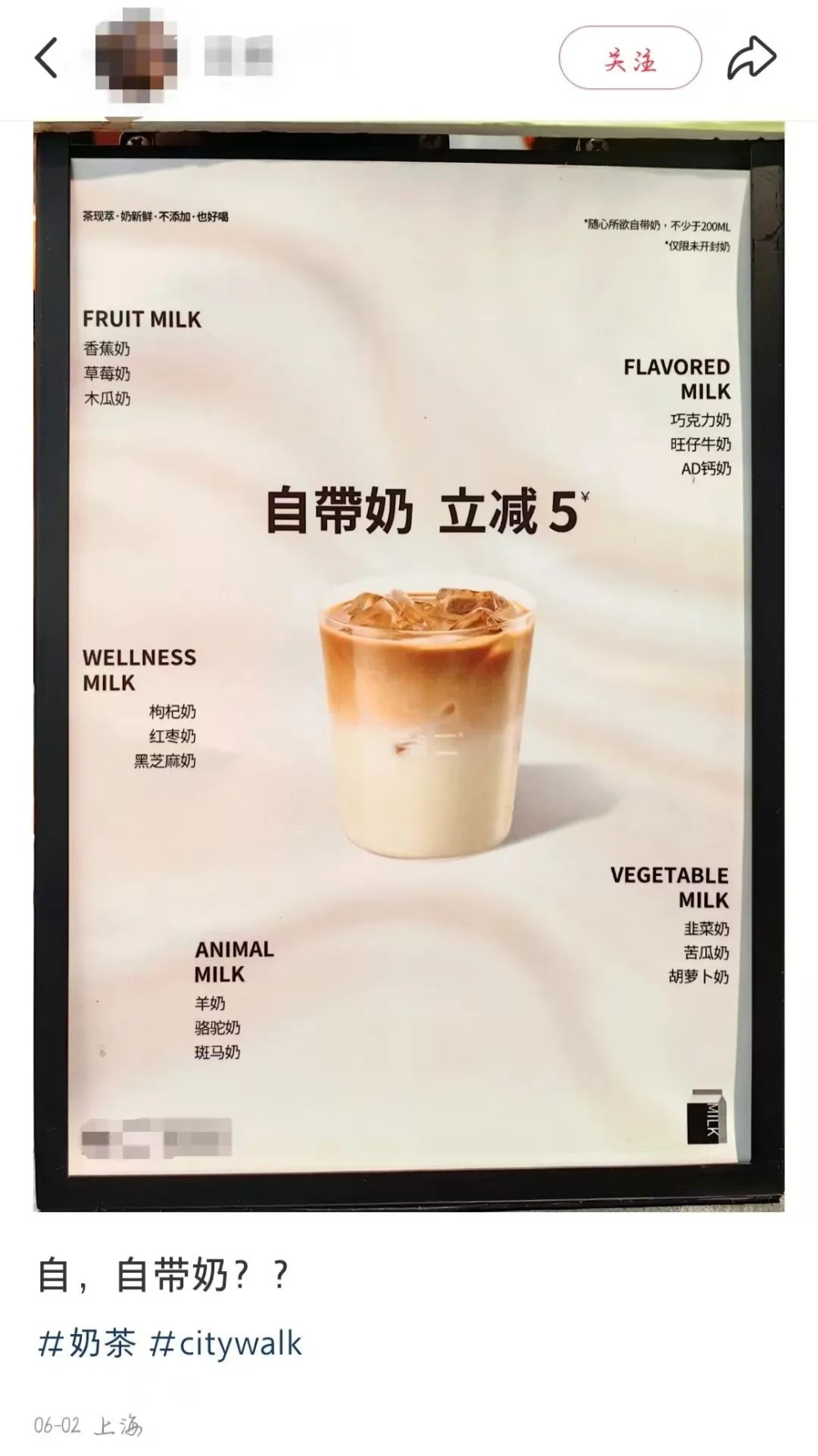 They further pointed out that many chain brands, such as Starbucks and Manner, while accepting customers bringing their own cups, explicitly stipulate that the cups must not contain pre-added milk or ice cubes—they must be empty—to ensure beverage safety and avoid hygiene risks caused by external ingredients.
From an environmental perspective, bringing your own cup is intended to reduce the use of plastic and paper cups, which is friendly to the planet. But the concept of bringing your own milk has left some netizens puzzled, with some even joking, “Next, are we supposed to bring our own coffee beans and fruit too?” These humorous comments reflect public concerns about businesses shifting costs onto consumers.
However, for customers with special dietary needs, such as those who are lactose intolerant, being able to bring their own oat milk or other dairy alternatives is undoubtedly a great benefit. These consumers say that the tea drink options on the market often fail to meet their needs, and bringing their own milk not only allows them to enjoy milk tea but also helps them avoid common non-dairy creamers or unclear base milks found in regular milk teas, resulting in a more reassuring drinking experience.
Yet, many users remain cautious about this policy, mainly due to concerns over food safety. They believe that if they experience discomfort from bringing their own milk, it is difficult to determine whether the issue lies with the milk itself or the tea drink provided by the shop, making it hard to assign responsibility. Based on these considerations, many feel that businesses should carefully assess the risks of such promotions to protect consumers’ health rights.
In summary, while the “Bring Your Own Milk, Get ₵5 Off” policy offers new possibilities for personalization and healthier drink choices, it also comes with challenges related to food safety responsibility and risk management. When implementing such innovative services, businesses need to carefully weigh customer experience against potential risks, and consumers, when choosing to bring their own ingredients, should fully understand possible safety hazards and make informed decisions.
The above content is compiled by CoffeeHunters, a coffee news website.


