







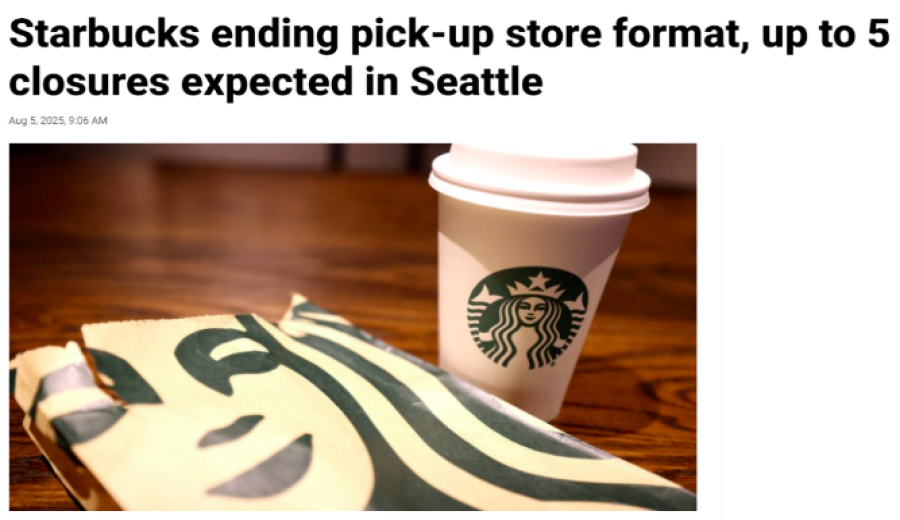
Introduction:Starbucks recently announced that it will gradually phase out nearly 90 "Pick-up Only" stores across the United States by 2026—stores that only offered takeaway services. This marks the end of an operational model once seen as the future of retail. This decision not only reflects the brand’s emphasis on customer experience but also highlights the challenges of balancing digital transformation with human-centered service. This article takes an in-depth look at the rise and fall of Starbucks’ pickup-only stores, market feedback, and the future direction of integrating physical and digital experiences.
During its latest earnings conference, Starbucks revealed a major decision: the brand plans to completely cease operations of its "Pick-up Only" stores—those offering service exclusively for customer pick-up—by 2026. This move will affect nearly 90 stores spread across more than 20 U.S. states. These stores originally marketed themselves on the convenience of “order online, pick up in store,” especially gaining attention during the pandemic for their efficiency. However, they have gradually lost favor with consumers due to the lack of personal interaction and ambiance.
In the earnings call, Starbucks’ CEO bluntly stated that these pickup-only locations were “too cold and lacked humanity,” running counter to the brand’s core values of “connection and warmth.” He pointed out that customers increasingly desire to step into a physical space, enjoy a cup of coffee in a cozy café atmosphere, rather than hurriedly picking up their drinks through an impersonal window.
Looking back to around 2019, before and after the outbreak of the pandemic, Starbucks actively experimented with new market strategies by launching these small-scale pickup-only outlets in airports, university campuses, and office business districts across the U.S. These outlets featured compact footprints and minimal staffing, which significantly reduced initial investment and operational costs. Customers could place orders via the official app and quickly collect their pre-made beverages on-site, making it highly suitable for the fast-paced rhythm of urban life.
At the time, this model was seen as a major trend in the future of coffee consumption. Especially during the pandemic, the “contactless, quick pickup” service catered to the needs of a wide range of consumers, and store performance was once strong. However, as the pandemic eased, customers began reevaluating their consumption habits and placed greater emphasis on face-to-face interaction and the overall in-store experience.
In reality, many customers reported that while the pickup stores excelled in speed and convenience, they often struggled to provide the comfortable atmosphere of a traditional café due to limited space and lack of seating. Over time, foot traffic at these locations began to decline, with some outlets even facing the embarrassment of having few or no visitors.
In response to this trend, Starbucks management conducted an in-depth evaluation and ultimately concluded that this store model no longer aligned with the brand’s long-term development direction. The CEO further emphasized that Starbucks should focus on re-establishing the concept of the “third place”—a physical space where customers can linger, connect, and relax—a quality that the pickup-only stores failed to deliver.
According to current plans, Starbucks will gradually close or transform these nearly 90 pickup-only stores. Some locations will be shut down permanently, while others may be converted into traditional storefronts to offer a more complete consumer and social experience.
It is worth noting that despite adjusting its store formats, Starbucks has not slowed down its digital transformation. According to official statements, mobile app orders currently account for31%of total transaction volume, demonstrating that digital reservations and mobile payments have become important choices for consumers. Starbucks stated that it will continue to optimize its digital tools to enhance the operational efficiency of physical stores and the quality of customer service.
In summary, Starbucks’ strategic adjustment this time is not only a flexible response to market trends but also highlights the brand’s careful consideration between pursuing innovation and maintaining core values. For consumers, enjoying coffee at Starbucks in the future will once again bring back that long-missed sense of human connection and spatial warmth.
The above content is compiled by CoffeeHunters, a coffee news website.


