







Introduction:Delve into Panama’s Boquete region to explore the legacy of the century-old Kotowa family, and focus on the unique flavors of the Finca Duncan Natural Caturra. This article provides a comprehensive analysis of this high-altitude specialty coffee — from its growing background and processing methods to roasting and cupping profiles — revealing the intricate craftsmanship and natural conditions behind its layered characteristics.
Located in Boquete, Panama, the Kotowa family has over a century of coffee cultivation history. Since 1925, when Canadian immigrant Alexander Duncan MacIntyre settled here, to the present day under the management of the third-generation owner Ricardo Koyner and his daughter Victoria, the family has been dedicated to growing and producing high-quality coffee. Their Finca Kotowa DUNCAN is particularly renowned for its Natural Caturra.
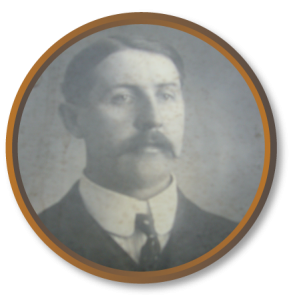
The history of the Kotowa family dates back even earlier to the late 19th century. Alexander was born in 1873 and originally worked in the fruit trade with his elder brother Joseph Albert McIntyre in Canada before transitioning into politics, even becoming the youngest mayor of Port Alberni. In 1916, Joseph purchased a farm named Finca Carolin in Boquete, Panama. Although he didn’t reside there for long, he remained deeply attached to the area. Inspired by his brother and attracted by newspaper reports, Alexander moved to Panama in 1925, married a local woman named Angela Rosas, and together they cultivated the land, renaming the farm La Carolina — thus beginning the Kotowa coffee journey.
Finca Kotowa is situated at the foot of the Volcán Barú, and its privileged location offers fertile volcanic soil, abundant rainfall, and distinct day-night temperature variations. These natural conditions provide an ideal environment for coffee trees, especially at altitudes between 1650 and 1750 meters where coffee cherries ripen slowly, accumulating richer flavor compounds.
Today, the Kotowa group owns seven farms, five of which are well known, including Finca Duncan, Don K, Finca Rio Cristal, Finca Tradicional, and Finca Las Brujas. There are also two newer farms, Mango and Redondo, which have not yet released commercial coffee. Each farm has its own unique microclimate and flavor profile, with Finca Duncan’s Natural Caturra standing out among specialty coffee enthusiasts due to its meticulous processing and high-altitude advantages.
This Finca Duncan Natural Caturra uses the Caturra variety, a natural mutation of Bourbon, known for its strong disease resistance and good cupping potential. Grown at altitudes between 1650 and 1750 meters, it delivers bright acidity and rich fruity notes. In terms of processing, the traditional Natural method is used: coffee cherries are handpicked at optimal ripeness, when they turn a deep wine-red, ensuring that only the most mature and flavorful fruits proceed to the next stage.
After harvest, the coffee cherries undergo sun drying promptly, allowing the sugars and flavor compounds in the pulp to gradually penetrate the seeds (i.e., the coffee beans). This process requires strict control over drying time and temperature to avoid over-fermentation or mold — one of the most technically demanding aspects of sun drying. This particular lot is roasted to a medium-light level, highlighting layered flavors such as floral notes, red grapes, dried fruits, and prunes, while retaining a moderate fermentation sensation that adds to the overall complexity.
The medium-light roast accentuates its fruity and floral notes along with caramelized sweetness, making it an excellent choice for pour over lovers. Cupping results show that this coffee emits delicate pink-hued floral aromas and rich fruity scents when hot. The first sip reveals the sweetness of Kyoho grapes and prunes, paired with a honey-like smooth texture. As it cools, hints of hawthorn acidity and the lingering taste of brown sugar emerge, delivering a richly layered flavor profile with a long-lasting finish.
Notably, the Kotowa processing facility still retains an early wooden gear-driven processing machine. This system, powered by water flow and equipped with leather belts, may be ancient but serves as a witness to the early development of Panama’s coffee industry. It has now become part of the estate’s historical exhibition, attracting many visitors. The name “Duncan” honors the family’s founder, Alexander, and every coffee bean produced here carries the dedication and perseverance of four generations.
The above content is compiled by CoffeeHunters, a coffee news website.


