







Introduction:The charm of cold brew lies in its refreshing, sweet-and-sour low-temperature flavor profile, yet there is a wide range of preferences when it comes to the coffee-to-water ratio—from 1:8 all the way to 1:15. So which ratio best highlights the characteristics of the beans? In this article, we conduct a practical test using Kenyan AA washed beans across four major powder-to-water ratios, deeply analyze the extraction principles involved, and guide you through key variables such as grind size, steeping time, and water quality, teaching you how to dial in your ideal taste.
The coffee-to-water ratio for cold brew has long been a hot topic among coffee enthusiasts. Some prefer the bold intensity of a 1:8 ratio, while others lean toward the light and clean taste of 1:15, with the more commonly seen commercial ratio hovering around 1:10. But which ratio truly brings out the layers and balance in coffee? Through hands-on testing, we help you understand how different ratios influence flavor, and take Kenyan AA washed beans as an example to analyze the specific differences in taste and aroma among four ratios—1:8, 1:10, 1:12, and 1:15—to help you find the formula that suits your palate best.
Cold brew is a low-temperature, long-duration immersion extraction method. By extending the contact time between coffee grounds and cold water, it allows small-molecule aromatic compounds and acidic components to slowly release. As a result, the final product typically features a bright, sweet-and-sour tone with clear flavors and a refreshing mouthfeel. Compared to hot brewing methods, cold brew requires no specialized equipment—just coffee grounds, water, and a container, refrigerated to completion—making it an easy way to enjoy caffeine.
However, many users notice that while pour over coffee generally uses a 1:15 ratio, cold brew offers a wide spectrum from 1:8 to 1:15. What kind of actual flavor variations do these different ratios bring? The key lies in the balance between concentration and extraction efficiency. The higher the water volume, the more diluted the brew becomes, resulting in a lighter flavor; the lower the water volume, the more concentrated the brew, offering a bolder flavor but also carrying higher risks—such as over-extraction leading to bitterness or an overly heavy mouthfeel.
Beyond the powder-to-water ratio, other parameters should not be overlooked. For cold brew, the recommended grind size is similar to white sugar granules, roughly achieving an 80–85% pass rate through a standard 0.85 mm sieve, as finer grinds can lead to over-extraction and disrupt overall flavor balance. Steeping time generally ranges between 6 to 16 hours, and it’s advisable to fine-tune based on ambient temperature, as overly long steeping may cause undesirable off-flavors to emerge. Additionally, water quality is a crucial factor—the mineral content in different types of water can significantly impact extraction results and the final taste, which is also one reason why some people fail to achieve their desired flavor even with identical parameters.
This test uses Kenyan AA washed beans as an example. These beans undergo K72 washed processing and include the SL28 and SL34 varieties. SL28 brings bright acidity and rich fruity notes, while SL34 offers a softer profile. The combination makes this bean well-suited for cold brew, showcasing flavors of dark berries, cherry tomatoes, and citrus fruits, which are especially enchanting when served chilled.
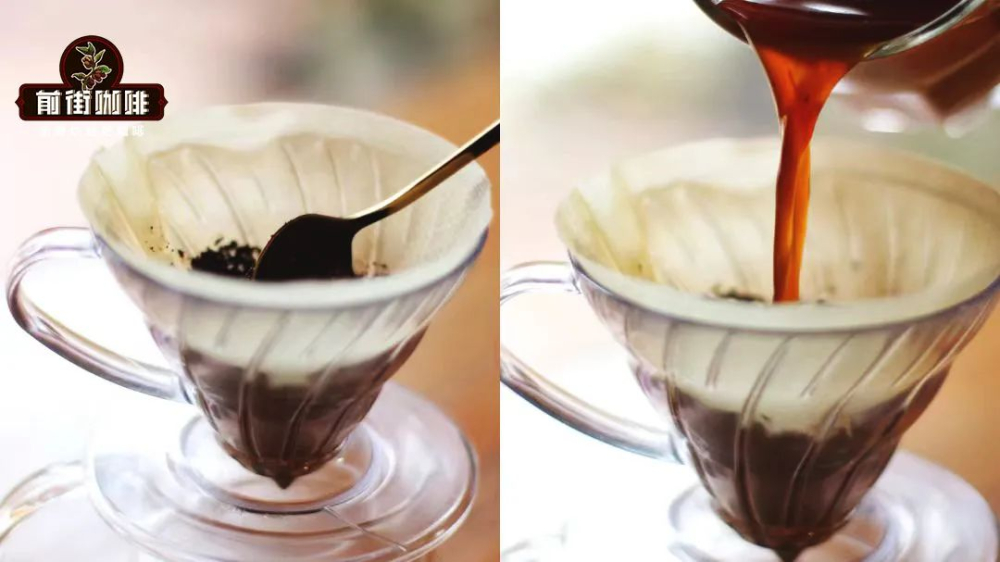
To compare the differences among various ratios, we fixed the amount of coffee grounds at 18 grams and extracted them using four powder-to-water ratios: 1:8 (144 grams water), 1:10 (180 grams water), 1:12 (216 grams water), and 1:15 (270 grams water). The grind size was set to that of fine sugar, equivalent to an 80% pass rate through a Chinese No. 20 sieve (approximately 9.5 on the EK43s scale), with a uniform steeping time of 6 hours. After stirring once during the process, the mixture was sealed and refrigerated, and the final flavors were evaluated after filtration.
The test results showed that the 1:8 ratio produced the darkest brew, with intense flavors and prominent acidity, even carrying a slight salty note. Berry aromas were not pronounced, and the finish had a mild bitterness. The 1:10 ratio delivered more concentrated aromas, with hints of sugarcane, and distinct layers of red plum, berries, and pear tea. However, the acidity was relatively high, and the sweetness was less noticeable. The 1:12 ratio achieved the best overall balance, featuring a clean mouthfeel with lingering notes of cherry tomato, red plum, black plum juice, sugarcane, and licorice candy. The acidity, sweetness, and body were well-coordinated, making it suitable for most palates. The 1:15 ratio, due to excessive water, resulted in a lighter flavor with a thin body, offering only faint sourness from black plum and berries, almost no bitterness, but the overall profile felt somewhat flat.
Overall, the 1:8 ratio suffered from insufficient flavor development and a risk of over-extraction due to too little water, while the 1:15 ratio lacked richness and tasted bland because of excessive dilution. Both the 1:10 and 1:12 ratios delivered satisfying extraction performance, with the 1:12 standing out particularly when consumed directly. However, considering real-world drinking scenarios—where many shops and consumers add ice cubes to cold brew—not only does this help maintain a cool drinking temperature, but it also moderately dilutes the concentration, allowing the beverage to retain layered complexity over time. As a result, 1:10 has become the widely adopted compromise ratio: it ensures an initially bold flavor and pairs well with ice, catering to diverse consumer preferences.
The above content is compiled by CoffeeHunters, a coffee news website.


