







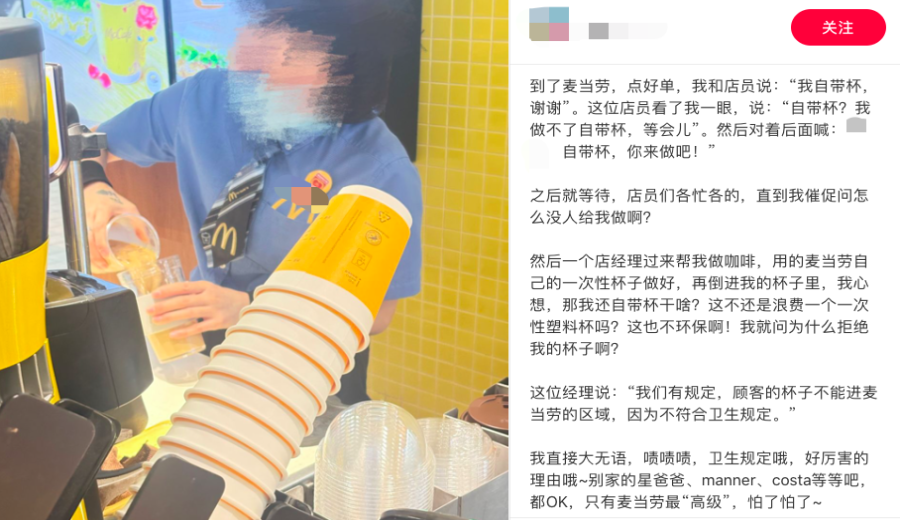
Introduction:To reduce the use of single-use plastic cups, many consumers have made it a habit to bring their own reusable cups when purchasing beverages. However, when trying to use their own cups at McDonald’s, some have encountered an unexpected requirement: first pouring the drink into a disposable cup before transferring it to their own. Store staff explain that this practice follows the company’s hygiene standards, but many customers feel it is unnecessary and contradicts the original intent of environmental protection. This article takes a deep dive into the restrictions on using personal cups at fast food restaurants and offers practical advice and precautions.
Using a personal eco-friendly cup to buy coffee has become a daily habit for many people—not only does it help reduce plastic waste, but it can also earn customers discounts from the store. However, some customers who tried to use their own cups at McDonald’s were met with an unexpected situation: instead of pouring the coffee directly into their cup, the staff first filled a standard McDonald’s disposable paper cup and then transferred the coffee into the customer’s own container.
According to one customer’s account, when she ordered coffee at McDonald’s and said she wanted to use her own cup, the staff initially said it was not possible and that she would need to wait for another colleague to assist. Later, the store manager personally made the drink, but instead of pouring it directly into the customer’s cup, they first poured it into a standard McDonald’s disposable paper cup and then transferred it into the customer’s reusable cup. This left the customer puzzled, feeling that an extra plastic cup had been used unnecessarily—not very environmentally friendly and also wasteful.
When the customer asked the manager why this extra step was necessary, the manager responded: “The company has regulations that customers’ cups cannot enter McDonald’s operational area due to hygiene requirements.” This explanation sparked discussions among many netizens—some agreed with McDonald’s commitment to food safety, while others questioned whether this approach goes against the environmental principles promoted by encouraging the use of personal cups.
In fact, McDonald’s does not explicitly ban the use of personal cups, but in practice, most outlets follow internal hygiene rules by first pouring the beverage into a standard in-store cup and then transferring it into the customer’s own container. Although this process may seem cumbersome, according to some McDonald’s employees, it is in line with headquarters policy to prevent non-standard customer containers from entering the food preparation area, thereby avoiding potential cross-contamination or food safety risks.
From a food safety perspective, even if a customer’s personal cup is thoroughly cleaned, allowing non-restaurant-provided cups into the preparation area may still be seen as a potential contamination source due to differences in material and cleaning standards.Fast food chains like McDonald’s maintain very strict hygiene controls in their food preparation areas and typically only allow the use of brand-approved cups and tools.Therefore, the practice of keeping personal cups out of the preparation area is not an isolated action by a single outlet, but part of an overall operational policy.
This incident has sparked widespread discussion on social media. Some netizens believe that McDonald’s, while promoting discounts for personal cups, also requires the use of a disposable cup as an intermediary, which can indeed feel contradictory and contrary to the spirit of environmentalism. However, many other commenters expressed understanding, arguing that in the high-traffic, fast-paced environment of a fast food restaurant, maintaining food hygiene and safety is more important. While the manager’s approach may seem environmentally unfriendly, it is actually a responsible measure for the sake of all customers.
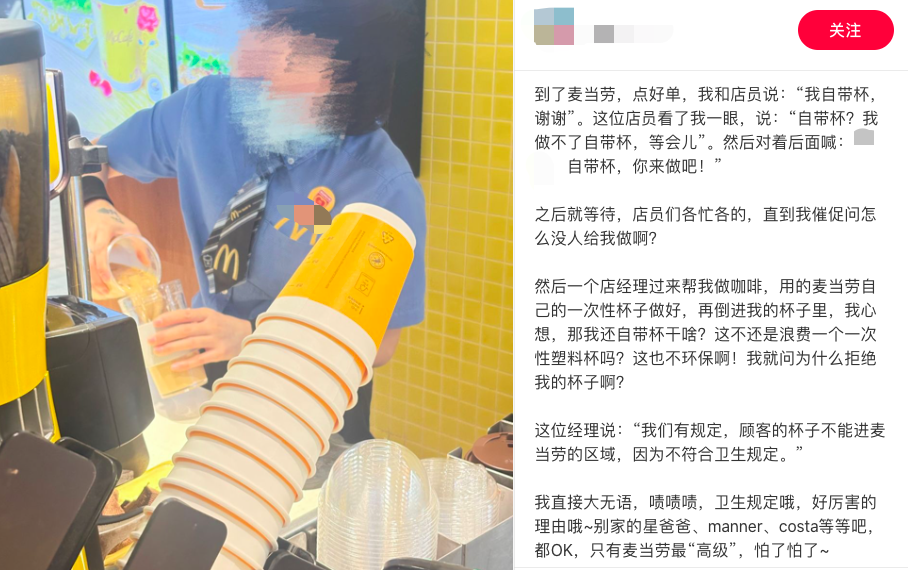
For consumers who wish to use their own cups, it is recommended to first understand the actual procedures at each outlet and to proactively communicate with staff to ask whether the drink can be poured directly into their personal container. If a transfer is required, customers may also inquire whether there are more eco-friendly alternatives. Additionally, when choosing to drink in-store or carry a reusable eco-friendly cup, attention should also be paid to the cleanliness and sealability of the cup to avoid affecting the drink’s quality or causing spills.
In summary, the McDonald’s personal cup transfer incident highlights the challenges fast food businesses face in balancing environmental responsibility with hygiene standards. While using an extra disposable cup may seem environmentally unfriendly, it is tied to stricter food safety controls. As consumers enjoy the convenience of eco-friendly options, a bit more understanding and flexibility can go a long way toward finding more sustainable solutions together.
The above content is compiled by CoffeeHunters, a coffee news website.


