








Introduction:Recently, consumers in Guangdong reported that the "Grandpa Doesn’t Make Tea" drink "First Love Rose Grapefruit Iced Tea," priced around 17 RMB, was only half full when unopened, sparking online discussion about whether iced drinks should be served full even when served without ice. This article delves into the store’s serving standards, cup design issues behind the incident, and analyzes how consumers can identify beverage portions, providing practical purchasing advice and precautions.
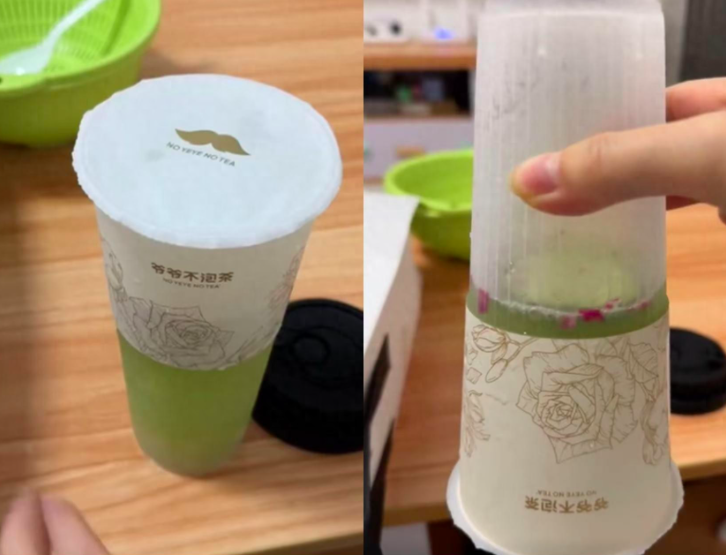
Recently, a video showing an unopened "Grandpa Doesn’t Make Tea" milk tea containing only half the expected liquid went viral on social media. According to consumers in Guangdong, their purchased "First Love Rose Grapefruit Iced Tea" appeared normal from the outside, but felt noticeably lighter before opening. Only after turning it upside down did they discover that the liquid filled only the bottom half of the cup.
The cold drink cups used by the brand have an opaque upper section, and the cup's design patterns happen to obscure the empty area, making it difficult for consumers to judge the actual capacity from the appearance without flipping it over. Some consumers emphasized that they had ordered the drink without ice, and “if it hadn’t felt unusually light when picked up, I wouldn’t have thought to turn it upside down.”
Public opinion on this incident is divided. Some netizens argue that removing ice naturally reduces the liquid volume, so the staff’s preparation was not improper; however, many other consumers pointed out that even when choosing no ice, merchants should still top up the drink with tea, water, or milk to ensure it is sold full, rather than accepting a half-full state as the norm.
Real-world cases show that this is not an isolated incident.Some consumers shone flashlights through the opaque cups and found nearly one-third of the space inside remained unfilled; others weighed unopened drinks on kitchen scales and found large-sized drinks weighing less than 400 grams, triggering widespread skepticism about the brand’s portion control.
Based on feedback from social media, many users reported having encountered similar situations and suspected that the brand’s stores have long had issues with underportioned servings. Under public pressure, the brand and its stores have responded publicly, stating that they are verifying and addressing the related complaints.
A store employee explained that if a drink contains a lot of toppings, the tea portion will naturally be less; also, if the drink has been sitting for too long, the foam on top may dissipate, making it appear as though there is less liquid—though usually not to the extent of being half empty. Regarding concerns about reduced volume in no-ice drinks, the staff emphasized that all drinks are now made by machine, and choosing no ice does not cause the actual tea portion to be reduced.
Brand customer service further stated that they have received related feedback, which is currently being investigated by the responsible department. They promised to coordinate with relevant units to look into the matter after gathering information and to release the results in due course. They also noted that under normal circumstances, stores following standard serving procedures should not encounter such issues, and they will further examine possible lapses in the production process.

For consumers, it is particularly important to choose tea drink brands with transparent portioning and stable quality. It is recommended that when buying no-ice drinks, customers can proactively ask whether the volume will be topped up or opt for transparent cups that allow visibility of the liquid level, thereby reducing misunderstandings and disputes. Additionally, if a drink is noticeably underportioned, consumers can raise the issue through official channels to protect their rights.
When selecting tea drinks, in addition to flavor and price, portion size and transparency are increasingly becoming key concerns for consumers. By understanding cup design, serving standards, and common issues, consumers can make smarter choices and ensure that every purchase is worthwhile.
The above content is compiled by CoffeeHunters, a coffee news website.


