







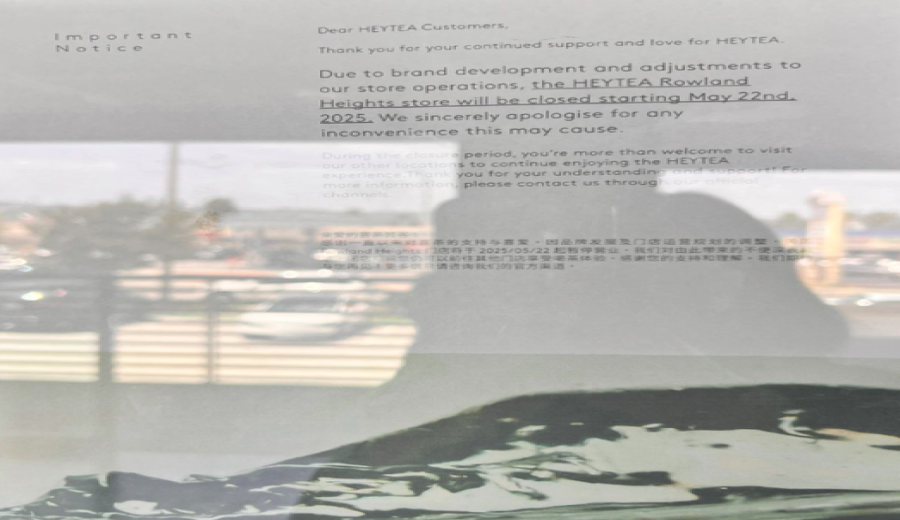
Introduction:HEYTEA’s Los Angeles, California branch in Rowland Heights closed operations after less than a year, from its September 2024 opening until its May 23, 2025 shutdown. This reflects the challenges faced by Taiwanese tea beverage brands in overseas expansion. This article delves into the multiple factors behind the store’s closure, including location selection, pricing strategy, and market competition, while offering business insights for tea beverage brands entering overseas markets—helping readers understand the global layout and localization challenges of the tea industry.
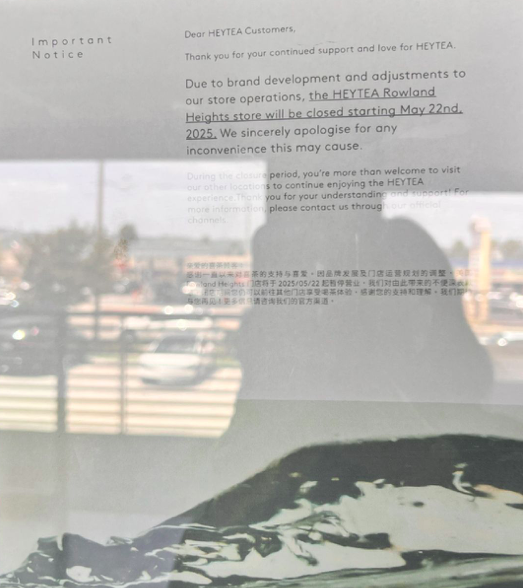
HEYTEA’s Los Angeles, California outlet in Rowland Heights has officially ceased operations. The store, which opened in September 2024, shut down permanently just under a year later on May 22, 2025. This marks the first closure of a HEYTEA location in North America, and the news immediately sparked widespread discussion among consumers and industry insiders.
Many regular customers were surprised by the sudden closure of this bubble tea shop, which had once attracted long queues. Especially during its early days, the store often saw large crowds outside. Since Rowland Heights is a major Chinese community in the Los Angeles area, both dine-in and delivery performance at the store were initially strong. One customer recalled: “I went to Rowland Heights twice in February and there were still lots of people,” and “Every time I went, it was packed.”
However, this seemingly popular store came to an abrupt halt after about nine months of operation. Many local residents stated that they were not particularly surprised by the closure, as compared to HEYTEA’s other locations in Los Angeles, the Rowland Heights branch was situated in a more remote and hard-to-find spot.
Moreover, due to limited parking availability at the shopping plaza where the store was located, many customers driving to the shop often faced significant parking difficulties, further affecting their willingness to patronize. A local commented bluntly: “Mainly the location is just too bad,” “The last time I wanted to go, I couldn’t find parking and left,” “The place isn’t well chosen—it’s really inconvenient to buy bubble tea,” and “Parking is inconvenient, I never go there even when I pass by.” Parking inconvenience became one of the key reasons deterring potential customers.
Beyond the suboptimal geographic and transportation conditions, industry insiders analyzed that the store’s operating costs and pricing strategy may also have been key factors leading to its inability to sustain operations.It is understood that HEYTEA outlets in North America generally price their products higher than those in the domestic market. The drink price range at the Rowland Heights store fell between $6 and $10, approximately equivalent to NT$43 to NT$72.For consumers accustomed to paying around 20 RMB (approx. several USD) for a bubble tea in the domestic market, such prices are noticeably higher, making it difficult to establish consistent repeat purchase rates.
Some consumers mentioned that they only visited the store “once just to check it out” and never returned, highlighting how price sensitivity significantly influences consumer behavior in overseas markets. Additionally, according to past information, HEYTEA’s franchised stores in North America bear various expenses including rent, staffing, ingredients, as well as franchise and security deposit fees charged by the brand—resulting in a relatively high overall investment threshold that places considerable financial pressure on operators.
Furthermore, with other well-known tea beverage brands such as Chagee, Chun Shui Tang (Yi Dian Dian), and Jasmine Tea White entering the North American market, local consumers now have increasingly diverse options, thereby intensifying the competitive pressure faced by HEYTEA.Amidst intensified market competition, low consumer loyalty, and high operating costs—all interwoven factors—the closure of the Rowland Heights store can be seen as a strategic adjustment during the brand’s process of overseas expansion.
Image source: Xiaohongshu (Little Red Book)
The above content is compiled by CoffeeHunters, a coffee news website.


