







Introduction:Recently, multiple consumers have reported experiencing an "explosive" spray of powdered coffee when opening canned coffee powder from brands such as Nestlé and illy. The incident not only dirtied their clothes and surroundings but also caused skin scratches and eye discomfort. The brands largely attributed the issue to "altitude and air pressure differences" but failed to clearly indicate preventive measures on the packaging, raising concerns about the adequacy of product safety warnings. This article delves into the reasons behind this phenomenon and provides can-opening precautions to help readers enjoy their coffee safely.
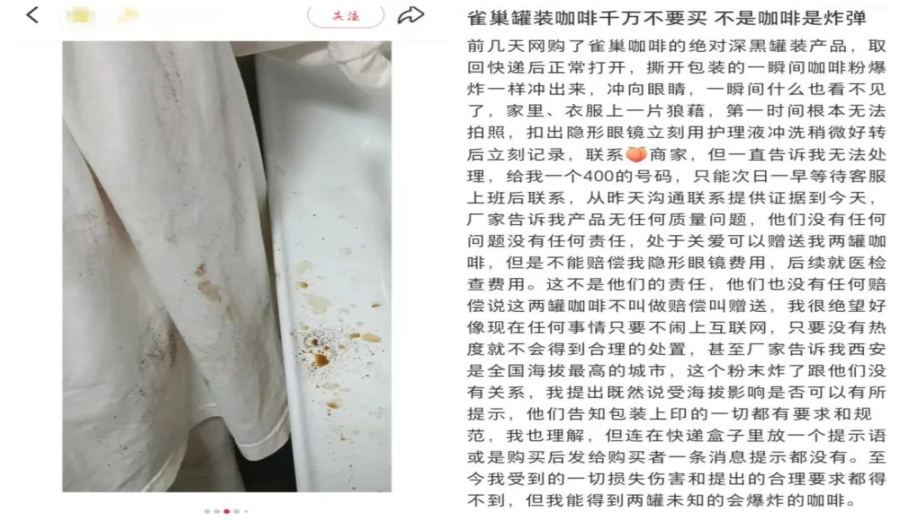
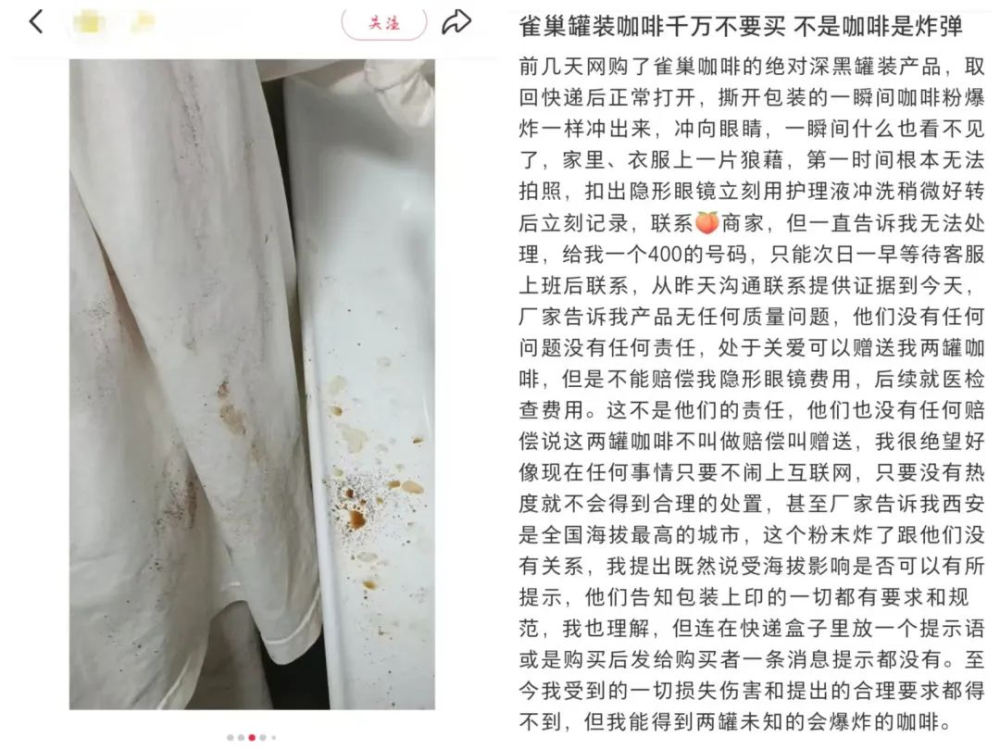
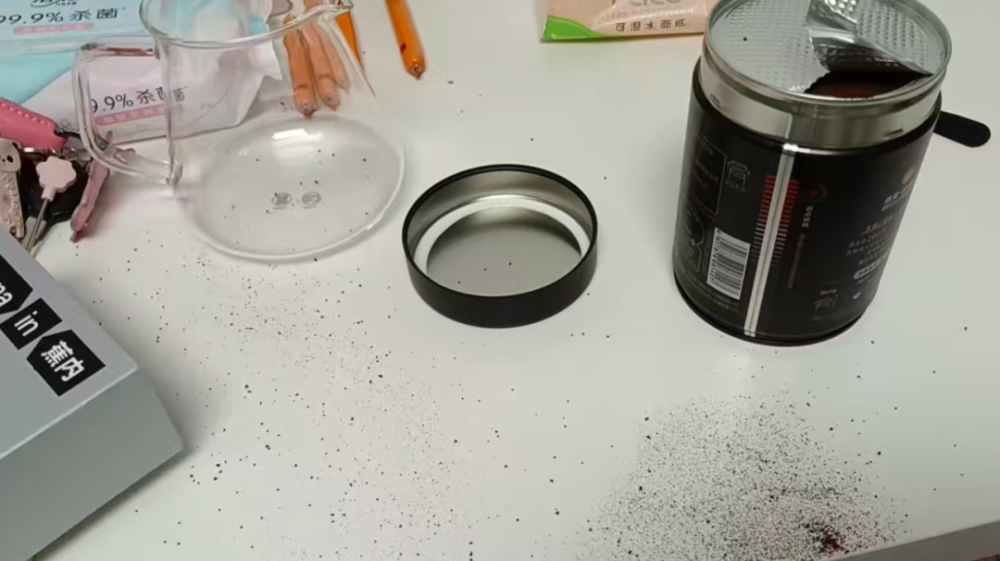
Recently, a consumer in Xi’an shared her experience on social media, stating that she had purchased a can of Nestlé’s "Absolute Dark" canned coffee powder from an e-commerce platform. She had simply intended to enjoy a rich cup of coffee, but was met with a terrifying scene the moment she tore open the packaging. According to her description, the coffee powder exploded out of the can violently, dirtying her face, clothes, and the floor, and even causing a minor two-to-three-millimeter cut near her nostril.
To make matters worse, the high-speed spray of coffee powder directly entered her eyes, causing her to temporarily lose her vision. She had to urgently remove her contact lenses and repeatedly rinse them with solution before her condition gradually improved. Due to the suddenness of the event, she didn’t have time to take photos of the scene, but the experience left her deeply shaken.
After the incident, she immediately contacted the merchant on the e-commerce platform for assistance but was told to reach out to the brand directly. She then called the brand’s customer service hotline, only to be told that "the product itself has no quality issues, so there is no liability for compensation." Although the brand, citing "humanitarian concern," offered compensation in the form of two cans of coffee powder, it explicitly stated that it could not accept responsibility for the damage to her contact lenses or any subsequent medical expenses.
When asked by the consumer why the coffee powder would suddenly "explode," customer service explained that it was due to the relatively high altitude of Xi’an, which resulted in air pressure differences compared to the environment in which the product was originally sealed, thus triggering the incident. However, the consumer and many netizens felt that if the product's safety is so easily affected by altitude or air pressure, the brand should clearly indicate relevant precautions on the packaging rather than using air pressure differences as an after-the-fact excuse.
Notably, the consumer pointed out that neither the exterior of the can nor the opening area contained any warning or advisory text related to air pressure changes or can-opening methods, leaving her completely unprepared for the sudden incident. This has left many netizens astonished, with comments in the thread reading: "If the altitude in Xi’an can cause an explosion, does that mean people living in high-altitude areas can’t buy this kind of product?" "Such dangers should be clearly labeled on the can!" "Do I need to wear a protective mask just to open coffee?"
Even more surprisingly, when netizens further searched for the term "coffee powder explosion," they found that this was not an isolated incident for a single brand. The well-known Italian coffee brand illy has also been repeatedly reported by users for similar occurrences, with some users posting photos showing canned coffee powder violently spraying out upon opening, with quite a shocking scene. Some netizens speculate that in order to maintain the flavor and freshness of the coffee beans, the brand may inject excessive nitrogen gas into the cans, leading to a "spray effect" caused by sudden air pressure changes when opened.
In fact, some attentive consumers have also noticed that in illy’s official product information, there is a brief mention of the precaution to "open slowly to allow gas to escape," but such information is often buried in the details of the webpage and is not directly printed in a prominent place on the can or packaging, causing most consumers to easily overlook these potential risks when purchasing and opening the product.
In response to this series of incidents, a media reporter called Nestlé’s official customer service hotline posing as a regular consumer. The customer service representative responded that if the can itself shows no obvious damage or air leakage, the "exploding" of coffee powder upon opening is mostly related to air pressure changes. The customer service advised that when opening canned coffee powder, consumers should try to avoid shaking the can and let it sit for a while before opening to reduce the impact of air pressure differences.
However, when the reporter further inquired whether "the air pressure in the Xi’an area is really sufficient to cause this phenomenon," the customer service emphasized that all Nestlé products undergo strict testing procedures before leaving the factory, with standardized operational controls at every stage from ingredient selection to final packaging. But they did not directly answer whether the air pressure in Xi’an constitutes a "special circumstance." In addition, the customer service also revealed that the suggestion to "add air pressure or can-opening precautions to the packaging" has been noted and they promised to provide further feedback to the relevant departments.
This incident not only highlights the potential risks of canned coffee under air pressure changes but also draws attention to product packaging labeling and safety reminders. Industry experts pointed out that canned coffee powder is often filled with nitrogen to extend shelf life and maintain freshness, but if the nitrogen ratio is too high or the can is opened improperly, it can indeed cause the powder to spray out suddenly.
To prevent similar accidents from happening again, experts recommend that consumers pay attention to the following points when opening canned coffee powder:First, let the can sit for a few minutes before opening to allow the internal and external air pressure to equalize; second, avoid shaking the can vigorously to reduce clumping of the powder inside and changes in air pressure; finally, when opening the can, hold the can firmly with one hand and slowly pull open the seal with the other, while also avoiding the face and eyes to prevent powder spray.
In addition, for consumers living in high-altitude areas or regions with special climatic conditions, it is recommended to check the brand’s official website or packaging information in advance to confirm whether there are any relevant can-opening precautions, and to prioritize products with clear warnings or operational instructions on the packaging to ensure their own safety during use.
The above content is compiled by CoffeeHunters, a coffee news website.


