







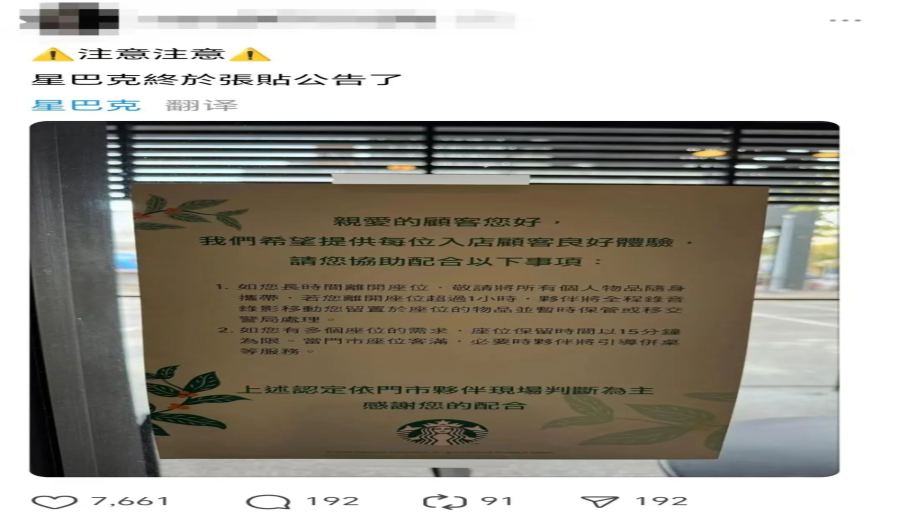
Introduction:Some Starbucks outlets in Taiwan have implemented new regulations stipulating that if a customer leaves their seat for over an hour without returning, staff may record audio or video and move their personal belongings, sparking heated discussion among consumers. This article details the policy content, enforcement specifics, and various perspectives on balancing "third space" management with customer rights, providing practical reference.
Long occupancy of seats by customers is a common issue in chain cafes, especially at Starbucks, which prides itself on offering a "third space." Recently, Taiwanese netizens noticed that a certain Starbucks branch posted a notice announcing that starting April 1, if a customer leaves their seat for more than an hour, staff will record audio and video throughout the process and remove any personal items left on the seat, even involving the police if necessary. This new measure quickly sparked both positive and negative discussions on social media.
Known for its comfortable environment and spacious seating, Starbucks has long been a top choice for many office workers and students, but it has also become a hotspot for seat occupation issues. Many customers temporarily leave their seats and place personal items such as laptops or backpacks on them as "placeholders." However, some customers leave their belongings for extended periods without returning, preventing others who wish to dine or work from using available seats, thereby affecting table turnover rates and overall store operations.
The new Starbucks policy explicitly states that staff will conduct irregular patrols of seating areas. If a customer is found to have been away from their seat for over an hour, staff will first place a note on the table and record the time. Once the time limit is exceeded, they will proceed with handling according to the rules, including moving personal belongings and, if necessary, involving the police.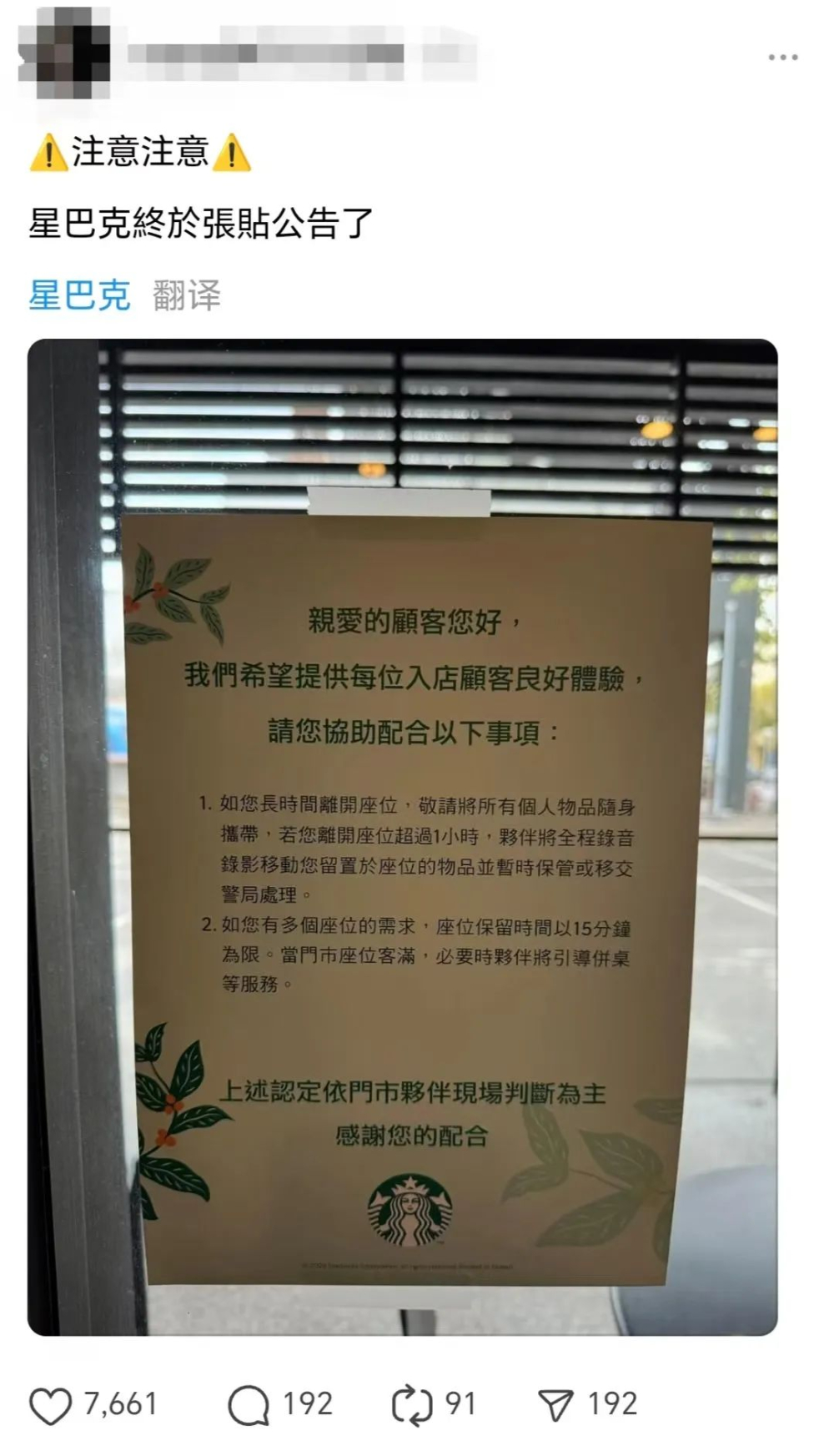 This measure aims to improve seating efficiency and protect the rights of other customers.
Consumers who support the new policy believe it can effectively address the previous chaos of "using items to hold seats" while the person is absent, allowing truly needy customers to use the seats. Comments include: "Finally, we won’t see seats taken up by bags with no one sitting there," and "An hour away from the seat is just too long—this should have been managed long ago." There are also calls for other chain coffee brands to follow suit to jointly maintain a good dining and working environment.
However, many consumers and netizens have raised doubts about the feasibility of the new rules. Some point out that it’s a major challenge for staff to accurately determine whether a customer has been away for over an hour, and moving someone else’s property without consent could lead to disputes or even conflict. Additionally, previously in July last year, Starbucks introduced measures such as reserving seats for 15 minutes and assisting with table sharing when full, but these were reported to have limited actual effect, with the seat occupation issue not significantly improving.
In response to public concerns, Starbucks employees explained to the media that the new policy indeed took effect across all Taiwan branches starting April 1. Staff will implement it through regular patrols and placing notes to track time. The primary goal is to improve seat turnover rates without compromising the customer experience. For potential property disputes or misunderstandings, branches will handle the situations cautiously and decide whether to involve the police based on circumstances.
Industry insiders note that balancing the maintenance of a "third space" atmosphere while effectively managing seating resources is a long-term challenge for chain coffee brands. Although Starbucks’ new policy has sparked discussion, it also highlights the store’s attempt to find a balance between customer rights and operational efficiency. While enjoying the comfortable environment, consumers should also be mindful not to occupy seats for extended periods, to jointly uphold good public space usage order.
The above content is compiled by CoffeeHunters, a coffee news website.


