







Introduction:Many beginners who are just starting out with pour over coffee often confuse the two measurement methods of “brew ratio (粉水比)” and “extraction ratio (粉液比).” This article will take an in-depth look at the definitions, usage scenarios, and their effects on extraction for both, and through practical brewing comparisons, help you understand why beginners are better off using brew ratio—assisting you in mastering stable and delicious brewing techniques.
In the world of pour over coffee, precise measurement is one of the keys to influencing coffee flavor. Common methods include “brew ratio” and “extraction ratio,” but many beginners, not understanding the difference between the two, end up with unstable brewing results. This article will clearly explain the true meanings of these two ratios, and why we recommend beginners prioritize using brew ratio to help you consistently brew flavorful, layered coffee.
Brew Ratio vs Extraction Ratio: More Than Just Different Names
Although brew ratio and extraction ratio sound similar, their calculation methods are completely different.Brew RatioRefers to the ratio of the weight of coffee grounds you use to the weight of hot water you pour, for example, the common 1:15 means for every 1 gram of coffee grounds, you use 15 grams (or milliliters, since the density of water is close) of water. AndExtraction RatioIs the ratio between the weight of coffee grounds and the final weight of the brewed coffee liquid—in other words, it emphasizes the “output,” not the “input.”
It is precisely this difference in focus that leads to very different control experiences in actual operation. For beginners learning pour over, controlling each pour of water is especially important, and this is where brew ratio has the advantage.
Why Is Extraction Ratio Not Recommended for Beginners?
One of the most common issues beginners face when learning pour over is difficulty accurately controlling the amount of water poured. The calculation basis of extraction ratio is the “final weight of brewed coffee liquid,” which means you don’t actually know how much water you’ve poured during the brewing process—you can only rely on experience or visual estimation. If you accidentally pour too much water at any stage, such as during the bloom or subsequent pours, it can easily lead to over-extraction or flavor dilution, thereby affecting the overall flavor profile.
In contrast,brew ratio lets you know from the start exactly how much water you should pour, allowing you to better control brewing time, concentration, and flavor balance—especially suitable for coffee enthusiasts who are just starting to practice their pouring technique.
The Origins of Brew Ratio and Extraction Ratio
In the past, when small digital scales were not yet widespread, many coffee enthusiasts found it difficult to accurately measure the amount of water poured, so they turned to using container markings or experience to estimate the final coffee liquid volume, thus forming a brew ratio calculation method centered on the “target coffee liquid weight.” At that time, even the weight of coffee beans was often indirectly estimated via container capacity.
With the popularity of digital scales, we can now easily and precisely monitor every step of the water volume, which has made brew ratio a more mainstream and reliable measurement method. However, extraction ratio has not completely disappeared and is still commonly seen in situations where accurate measurement is difficult, such as in certain espresso extraction processes.
Bloom Stage: Potential Issues with Extraction Ratio
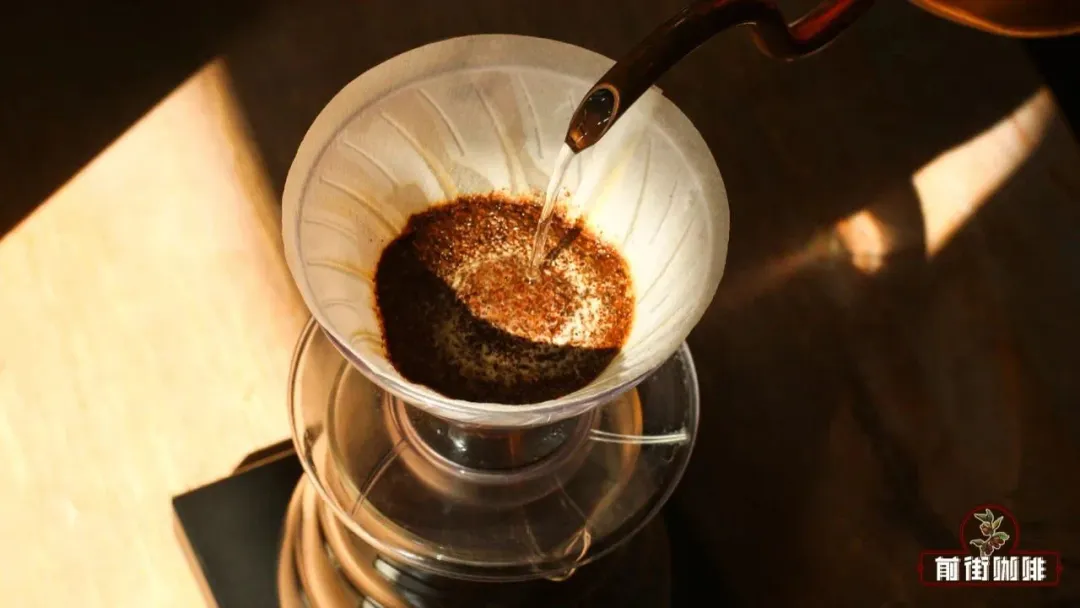
Take the “bloom” step in the pour over process as an example—it’s a crucial early step aimed at wetting the coffee grounds and releasing internal CO₂ to create good conditions for subsequent extraction. Since the coffee grounds have not yet fully expanded during the bloom, the proportion of extractable substances from the water poured at this stage is far lower than in the main extraction phase that follows. Therefore,the bloom should use the minimum amount of water to achieve wetting, usually twice the coffee weight (for example, 15 grams of coffee uses 30 ml of water), to avoid wasting hot water and ensure the efficiency of subsequent extraction.
But if you use extraction ratio as the calculation basis, you won’t be able to accurately know how much water you’ve poured during the bloom stage. Beginners can easily misjudge and pour too much water, which not only affects the bloom effect but may also alter the overall extraction ratio, leading to flavor imbalance.
To verify this, we conducted an experiment: under the same conditions of coffee weight (15 grams), brew ratio (1:15), grind size (EK43 grinder at setting 10), and water temperature (92°C), we only adjusted the bloom pour volume—one group used 30 ml (twice the coffee weight), the other used 40 ml. Both coffees were brewed using the single-pour (一刀流) method, minimizing other variables as much as possible.
Significant Flavor Differences Observed in Practice
The experimental results showed that the coffee using 30 ml of bloom waterhad a total brew time of 1 minute 58 seconds, with a bright and clear flavor, featuring white floral notes, citrus tones, and moderate honey sweetness, balanced mouthfeel, and high sweetness. Its measured coffee concentration was 1.40%, with an extraction rate of 19.25%—both within the ideal range.
The group using 40 ml of bloom water,had a brew time of 1 minute 52 seconds. While the flavor still had layers, the overall taste was more acidic, the mouthfeel thinner, and the sweetness less pronounced than the first group. Its concentration was 1.32%, and the extraction rate was 16.88%—both values were lower.
Although flavor differences could also be influenced by other factors such as pouring technique, it is certain that when beginners are not yet familiar with water control, using extraction ratio increases the chance of operational errors, especially during this critical initial stage.
Conclusion: For Beginners, Brew Ratio Is More Reliable
Based on the above analysis, for those of you just starting out with pour over coffee, using brew ratio allows for a more intuitive and precise control of each step’s water volume, helping stabilize extraction, develop feel, and ultimately brew coffee with consistent and satisfying flavors. While extraction ratio still has its uses in certain specific scenarios, it is not the best choice during the learning phase.
Mastering the correct measurement method is the first step toward achieving premium pour over coffee. Starting today, plan your brews using brew ratio and experience a more precise and delicious coffee journey!
The above content is compiled by CoffeeHunters, a coffee news website.


