







Introduction:The timing of incremental pours in pour over brewing often puzzles coffee enthusiasts: should you wait until the previous pour has completely dripped through before adding the next, or pour in advance while there’s still some water left? This actually relates to extraction efficiency and flavor balance. Through experimental data and professional analysis, this article explains how different pouring timings affect extraction rates and provides practical advice tailored to various grind sizes, water temperatures, and flow rates, helping you precisely master the golden moment for each pour.
When performing multi-step pours in pour over coffee, many coffee lovers have faced a common question: should the next pour of hot water be added only after the previous one has fully dripped through, or poured in advance while there’s still a bit left? Opinions from different influencers and baristas vary widely—even a well-known brand’s video employs different methods—leaving many beginners at a loss.
In fact, the answer to this question isn’t mysterious; it hinges on the extraction effect you aim to achieve. And the core factors influencing extraction rate primarily involve thecontact timebetween water and coffee groundsand theconcentration level
of the liquid at that moment. This article will present a rigorous experiment comparing the extraction rate differences resulting from varying pouring timings, and delve into the underlying principles, enabling you to make the most suitable choice based on actual conditions.
The so-called "multi-step pouring" refers to dividing the total brew water into several increments, such as the common three or four steps. This method helps control the uniformity of extraction and the layering of flavors. However, the timing of the third or subsequent pours—whether to pour when the previous water is about to run out or to wait until it has completely dripped through—often sparks debate.
Online experts hold differing views: some advocate early pouring to maintain a stable flow rate, while others believe waiting for the water to finish dripping can enhance extraction efficiency. Faced with these varied opinions, how should we judge? In truth, if the number of pours is limited, the impact may be minimal—but if you want to precisely control the effect of each pour, understanding the science behind it becomes crucial.
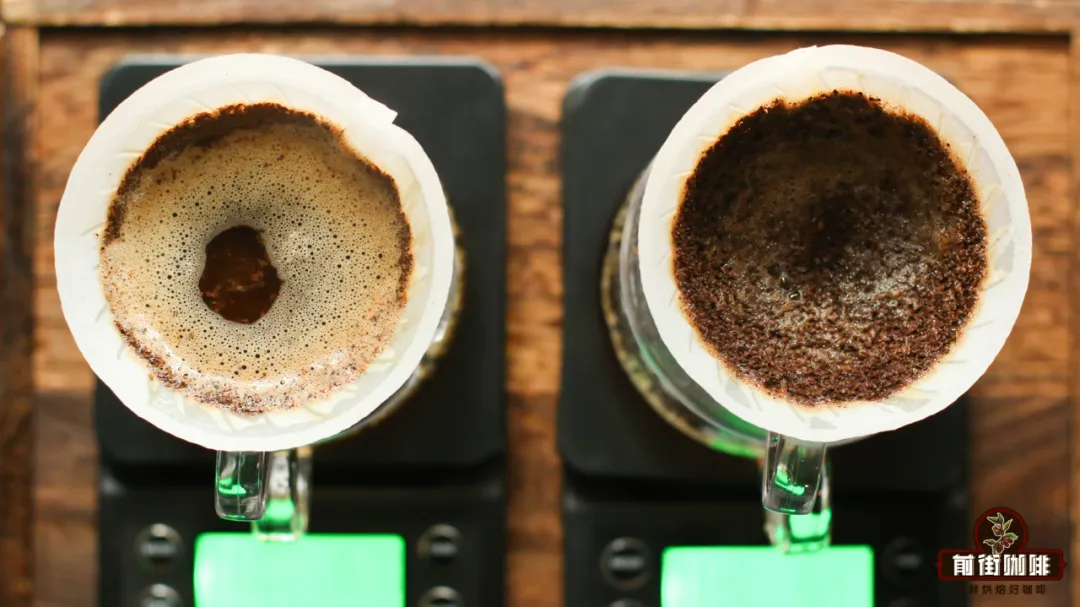
To find an answer, we designed a controlled experiment: using identical coffee beans, grind size, water temperature, brew ratio, and pouring technique, we only adjusted the timing of the third 75ml pour. The experiment was divided into two groups, each with two brews—one group poured the next increment when the previous water was about to run out (around 1:10), and the other waited until the previous water had completely dripped through (around 1:20). All parameters were standardized: 15g coffee, 10-click grind on the Ek43 grinder, 1:15 brew ratio, 92°C water temperature, using the V60 dripper for a three-step pour.

The experimental process was roughly as follows: first, a 30ml bloom for 30 seconds, followed by a 120ml pour within 20 seconds (around 50 seconds in). The third 75ml pour was administered either when the second pour was about to run out (around 1:10) or after the previous water had completely dripped through (around 1:20), with the pour completed within 15 seconds.
The results showed that the two brews where the third pour was added earlier had a total brew time of 1:50, with extraction rates measured at 16.33% and 16.88%; whereas the two brews where the third pour was added after the second had fully dripped through had a total brew time of 2:00, with extraction rates increasing to 17.30% and 17.58%. This proves that simply changing the pouring timing can noticeably affect the final extraction rate.The reasons for the differences mainly stem from two variables: one is thecontact timebetween water and coffee grounds,and the other is the
liquid concentrationin the extraction environment at that moment. When you allow the previous water to completely drip through before adding the next, not only does it extend the overall extraction time, but the lower liquid concentration also allows for more thorough subsequent extraction.If you wish to further enhance extraction—such as when using a coarser grind or lower water temperature that leads to fast flow and insufficient flavor extraction—we recommend
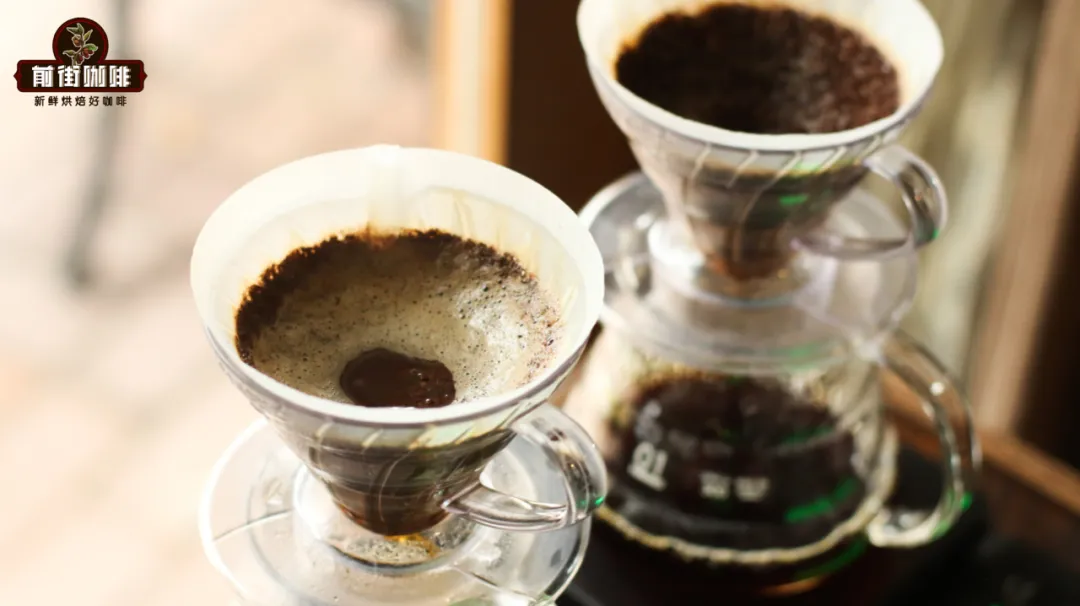
waiting for the previous water to completely drip through before adding the next.This approach is especially suitable when breaking the brew into more steps, helping extract coffee flavors and aromas more completely.Conversely, if you find that the extraction conditions are prone to over-extraction—such as high water temperature, overly fine grind, or slow flow due to clogging—then
pouring the next increment in advanceis the more appropriate strategy. It’s suggested to start the next pour when about one-third of the previous water remains, or when it’s about to run out (around 1:10), which helps balance concentration and reduce the risk of over-extraction.It’s worth noting that many worry that extending the wait time will cause the water in the dripper to cool down, thereby affecting extraction efficiency. However, both experiments and experience show that
the impact of temperature is far less significant compared to time and liquid concentration,
The above content is compiled by CoffeeHunters, a coffee news website.


