








Introduction:The Geisha coffee beans from Panama's Hacienda Esmeralda have long been renowned for their high quality and distinctive flavors. In recent years, the newly introduced "Black Label" grade has sparked widespread discussion. This mysterious grade is produced in extremely limited quantities, commands a high price, and features a unique processing method. This article will delve into the origins, plot characteristics, scarcity, and experimental processing techniques of the Black Label Geisha, helping you fully understand the story and value behind this top-tier specialty coffee.
In recent years, Geisha coffee has remained immensely popular in the specialty coffee scene, and Panama's Hacienda Esmeralda, which brought it to the international stage, is considered a legend among many coffee enthusiasts. In addition to the widely known Red Label, Green Label, and auction lots, Hacienda Esmeralda has quietly introduced an extremely mysterious grade — the "Black Label" Geisha. This new grade is not only produced in very limited quantities and is expensive, but also shrouded in mystery due to the scarcity of related information.
To understand the positioning of the Black Label Geisha, it is first necessary to revisit Hacienda Esmeralda's existing Geisha grading system. In the early days, the estate divided Geisha into three grades: Red Label, Green Label, and Blue Label. The Blue Label gradually exited the mainstream market later on due to its more affordable price. Today, the most commonly seen grades in the market are the Red Label and Green Label, as well as high-priced lots sold through auctions. The Red Label Geisha represents the highest quality, grown at elevations of at least 1600 meters, with cupping scores of 91 or above. It also comes with complete information about the growing region and processing methods. Every batch can be traced in detail, including plot, elevation, harvest date, and processing method.

The Green Label consists of blended Geisha batches, with elevations ranging between 1600 and 1800 meters. The processing methods are usually limited to traditional washed and natural processes. It is positioned as a more budget-friendly option, suitable for consumers who want to try Geisha but have limited budgets. The auction lots (Esmeralda Auction), on the other hand, represent the highest tier. They are typically released in extremely small quantities, with prices that consistently hit new highs, and must be obtained through auctions. These lots often feature gray labels.
As for the newly introduced "Black Label," it has not yet been officially incorporated into Hacienda Esmeralda’s regular product line. Official promotion of it is also relatively low-key, so most consumers know very little about it. Through scattered official information and sharing from market buyers, it is currently known that this mysterious grade is referred to in English as "Esmeralda Nano" or "Nano Lot." In the Chinese-speaking community, it is commonly called the "Black Label" because its label has a black background or features a black coffee flower design.
The Black Label Geisha can be seen as a more selectively sourced micro-lot that surpasses the Red Label. Its selection criteria are quite strict, usually requiring at least one of the following: being produced from extremely small plots with unique elevations, or being processed using experimental methods. Currently known production areas for the Black Label include specific tiny blocks within well-known sub-estates such as Cañas Verdes and El Velo. For example, the Nido plot in Cañas Verdes, which sits at an impressive mid-elevation of 2050 meters, and the Gigante plot, which exceeds 1900 meters. In the El Velo area, there are plots such as Pinto at 2200 meters and Valle at 2000 meters.
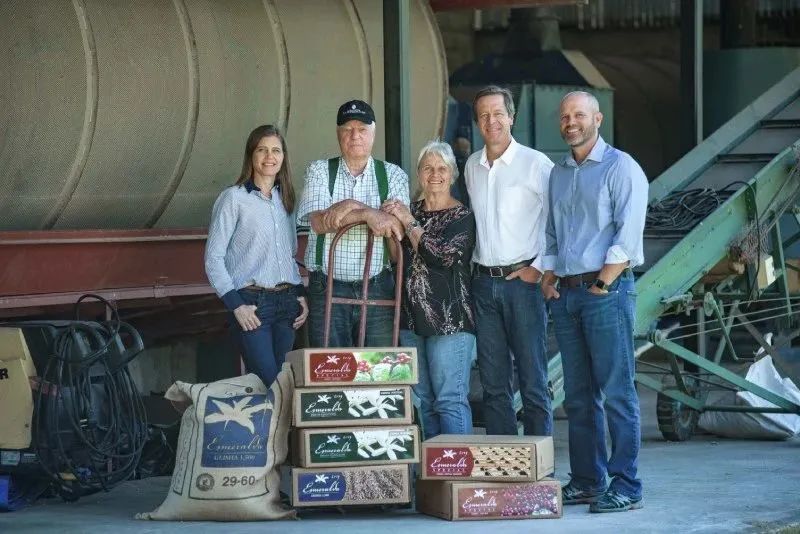
Because these plots are not only small in size but also produce extremely low yields — some Black Label batches even total less than 1 kilogram — their prices far exceed those of typical Red Label Geisha, making them extremely rare in the market. It is worth noting that most of these Black Label Geishas have only emerged in the past year, so many coffee professionals and enthusiasts are still unfamiliar with them.
In addition, the birth of the Black Label Geisha is closely tied to the temperature-controlled greenhouses and microbiological laboratories that Hacienda Esmeralda has invested in building in recent years. The estate is dedicated to exploring the impact of different processing methods on coffee flavors through more precise experimentation. For instance, their low-temperature fermented, raised-bed dried washed process is a relatively complex and meticulous method. This approach involves washing the ripe coffee cherries to remove the outer pulp, then placing the parchment coffee into sealed stainless steel tanks in a temperature-controlled refrigerated environment for approximately three days of fermentation. After fermentation, the beans are moved to raised beds for up to 18 days of drying to enhance their floral and fruity aroma profiles.

Overall, Hacienda Esmeralda’s Black Label Geisha is not only a pursuit of ultimate quality but also represents innovation and an experimental spirit in coffee processing techniques. For coffee enthusiasts, having the opportunity to taste or gain an in-depth understanding of such top-tier micro-lots is undoubtedly a rare and exceptional coffee experience. Although the Black Label remains an extremely rare offering for now, it has already brought more possibilities and anticipation to the specialty coffee market.
The above content is compiled by CoffeeHunters, a coffee news website.


