







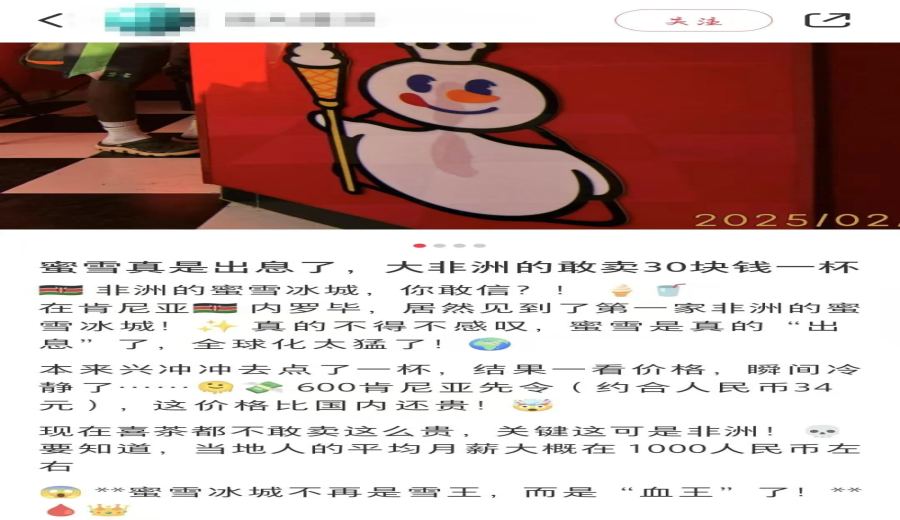
Introduction:A Starbucks-like outlet of China’s budget beverage chain Mixue in Nairobi, Kenya, sparked heated discussion among the local Chinese community after selling a single bubble tea for as much as 580 Kenyan shillings (approximately 32 RMB). Is this pricing justified? This article delves into Mixue’s pricing strategy in Kenya from multiple angles—African market conditions, supply chain costs, and consumer acceptance—while also exploring the challenges and opportunities faced by Chinese tea beverage brands expanding into Africa.
Widely recognized for its affordable pricing back home, Mixue has won the hearts of many consumers. However, in Nairobi, Kenya, a bubble tea is priced at 580 Kenyan shillings—a figure that far exceeds market expectations. The high price quickly stirred debate within the local Chinese community, with some arguing it aligns with local price levels, while others exclaiming “it’s too expensive.”
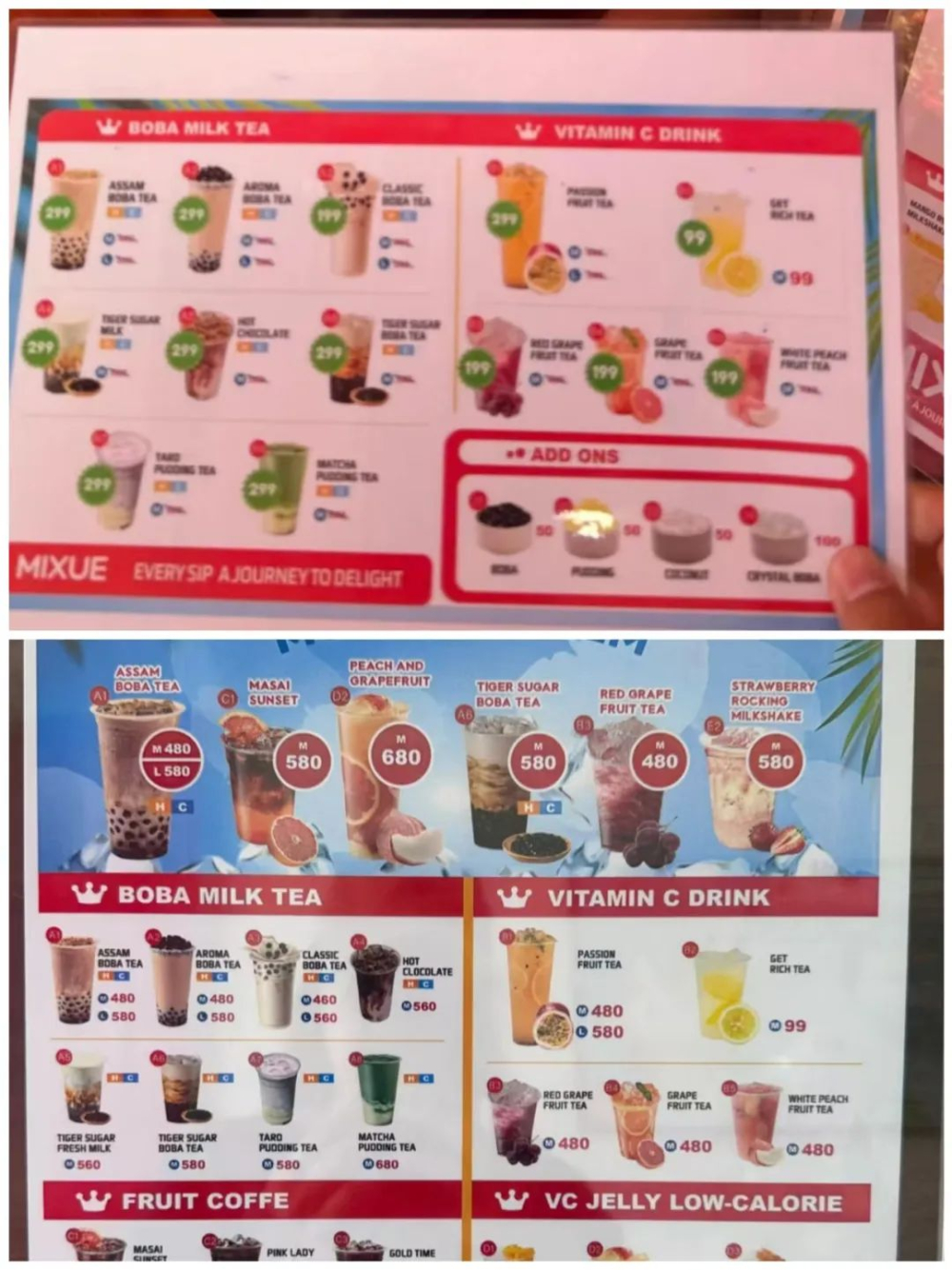
According to a price list photographed by customers, the promotional price for bubble tea during the store’s opening period was 299 Kenyan shillings (approximately 17 RMB), but the regular menu price stands at 580 Kenyan shillings. Notably, this price is not unique in the Kenyan market, especially when compared to bubble tea prices in other countries—it still remains fairly competitive.
Netizens living in Africa pointed out that the average price for bubble tea in Nairobi’s Chinatown typically ranges from 800 to 1000 shillings. By comparison, Mixue’s 580 shilling offering is already considered an “affordable” choice.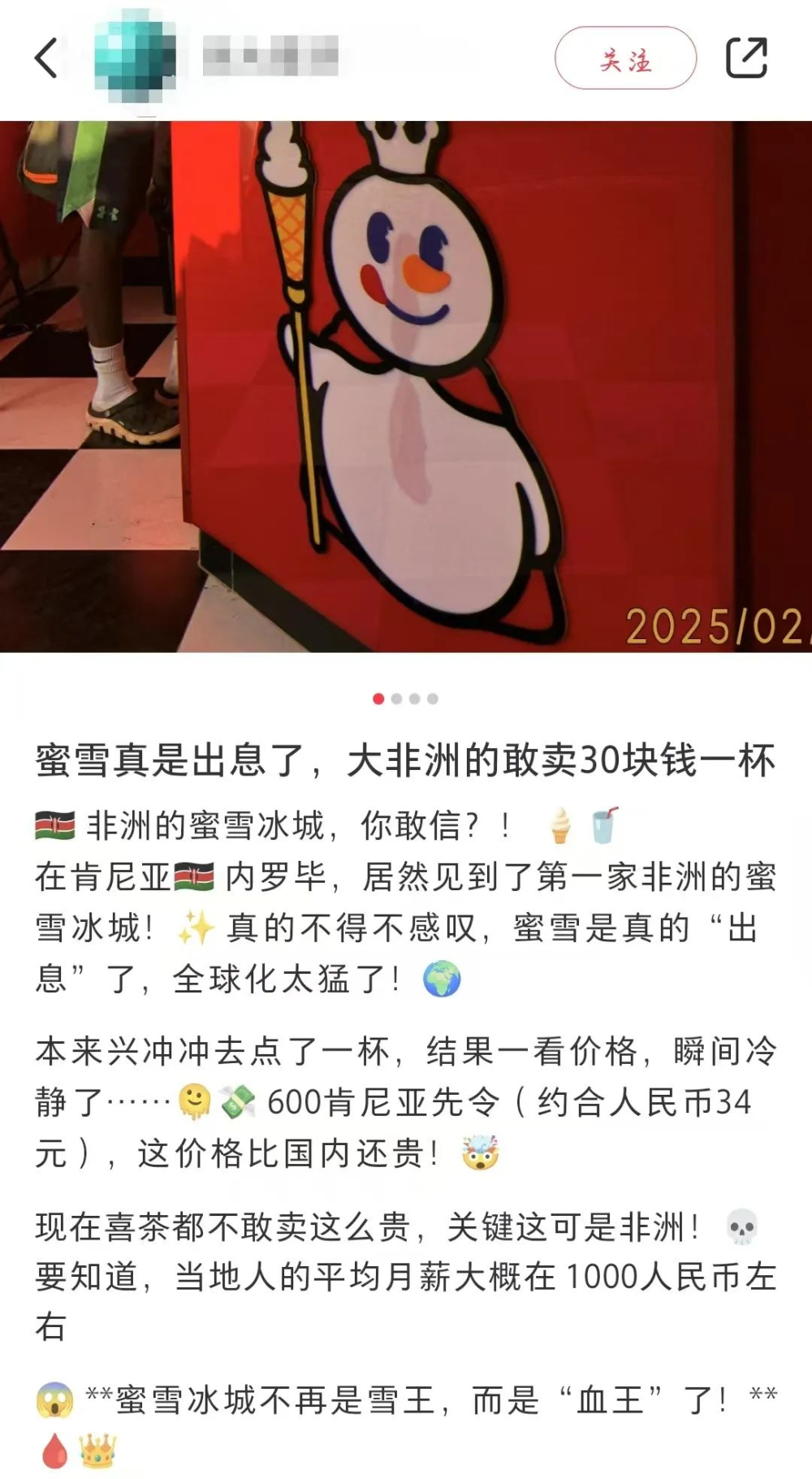 Furthermore, netizens from the Democratic Republic of the Congo and Zimbabwe noted that local bubble tea prices can reach as high as 10 to 15 US dollars, making Mixue’s pricing seem “quite reasonable.”
Behind Mixue’s higher prices in Africa, supply chain costs are a major factor. While the brand boasts an efficient supply chain system in China, it has yet to establish localized production or logistics networks in Africa, meaning most ingredients must be imported from overseas. As a result, transportation costs, tariffs, and product loss significantly drive up expenses, which in turn affects the final retail price.
In many African countries, the availability of goods is relatively limited, and certain ingredients essential for making bubble tea cannot be sourced locally—they must be imported. This situation further inflates overall food and beverage costs, leading to noticeable price differences between African markets and those back home.
So, is Mixue’s pricing too high for local consumers? In terms of income levels, Kenya’s average monthly per capita income is only around 1000 RMB, so a 32 RMB bubble tea certainly takes up a notable portion. Nevertheless, netizen analysis suggests that when brands first enter a new market, they often adopt a higher pricing strategy to balance initial investments and operational costs.
Moreover, Mixue’s target audience in Kenya isn’t limited to local residents. Chinese workers in Africa have also become a significant consumer group, expressing delight at being able to enjoy a familiar brand of bubble tea. Some expatriate workers mentioned that tasting beverages reminiscent of home in a foreign land is a rare and precious experience in itself.
From a market strategy perspective, Mixue’s pricing model resembles that of KFC and McDonald’s when they first entered the Chinese market. Initially priced higher, but backed by strong brand appeal and distinctive products, they were still able to attract consumers seeking novelty. As the market matures and the supply chain becomes more robust, there may be room for future price adjustments.
Overall, Mixue’s 580-shilling bubble tea in Kenya reflects both the unique characteristics of the African market and the challenges of brand globalization. For consumers, understanding the underlying cost structure helps in evaluating the true value of the product more objectively. For the brand, striking a balance between cost control and market acceptance will be key to determining the success of its African expansion.
The above content is compiled by CoffeeHunters, a coffee news website.


