








Introduction:Dirty coffee has gained widespread popularity in recent years due to its unique visual effect and contrasting flavor profile. However, many people encounter the issue of the espresso quickly sinking into the milk when trying to make it at home, resulting in a lack of the desired beautiful layering. This article will delve into the three key elements of making dirty coffee: pour height, temperature difference, and milk concentration. We’ll guide you step-by-step to create a dirty coffee with clear layers that offers both visual appeal and taste, while also clarifying its fundamental differences from a latte.
The appeal of dirty coffee lies in the dynamic visual effect of the espresso slowly floating on top of the iced milk before gradually seeping down, coupled with the intense contrast of boldness and smoothness upon tasting. However, many coffee enthusiasts find that their homemade versions often result in the espresso sinking directly into the milk without forming distinct layers, ending up looking like an ordinary iced latte.
So how can you ensure the espresso floats steadily on the milk and displays a beautifully layered aesthetic? The secret lies in mastering the pouring position, adjusting the temperature difference, and selecting the right milk concentration. This article will break down these three critical factors in detail to help you successfully replicate a professional-level dirty coffee.
I. Mastering the Accurate Pour Height to Prevent Sinking
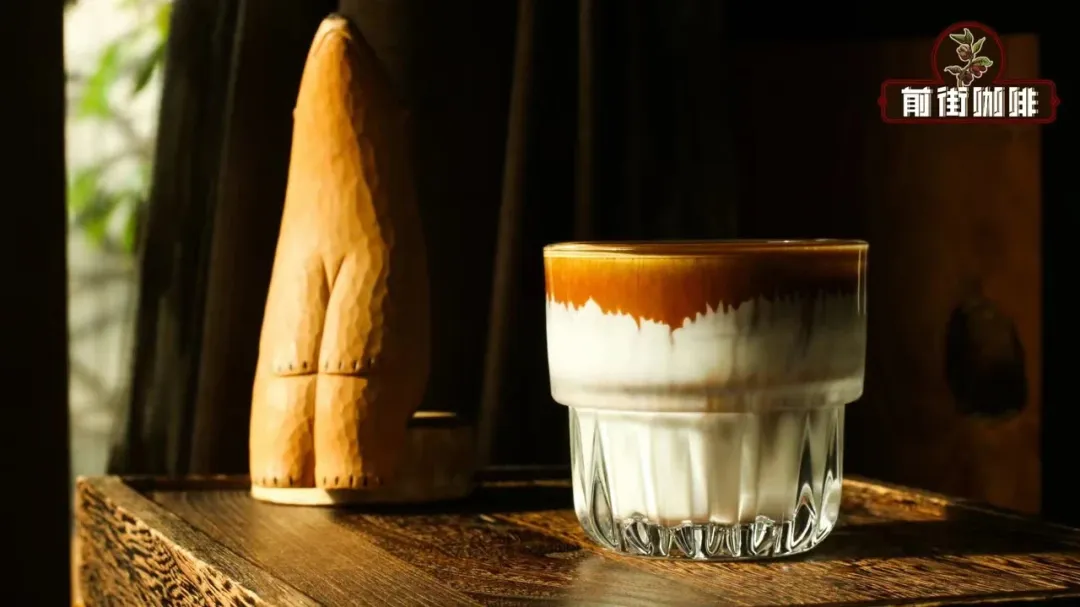
Many assume that making dirty coffee is simple—just pour hot espresso over iced milk, and it will naturally separate into layers. In reality, however, successful layering is closely related to where the espresso “lands.” Since the density of espresso and milk is quite similar, if the pour is too fast or from too far away, the force of impact can cause the espresso to pierce through the milk immediately, leading to quick mixing and no separation.
To avoid this, it’s recommended to pour the espresso as close as possible to the surface of the milk. Here are three practical tips you can choose from based on your setup:
① Use the saucer next to the coffee machine to elevate the cup of milk, shortening the distance between the pour spout and the milk surface, effectively reducing the impact as the coffee falls.
② If you don’t have a saucer, you can also manually lift the milk cup and bring it closer to the extraction outlet, which also helps lower the height difference.
③ The most recommended method is to place a spoon face-up gently on the milk surface. Let the espresso first drop onto the spoon and then slowly flow onto the milk. This not only significantly reduces the impact but also creates the most noticeable layering effect.
II. Widening the Temperature Difference to Extend Layer Stability
In addition to pouring technique, temperature also plays a significant role in layering. The density difference between espresso and milk is largely influenced by temperature: the colder the liquid, the higher its density, and the better it can support the hot espresso above. Therefore, increasing the temperature difference between the two can make the layers more pronounced and last longer.
When making dirty coffee, it’s recommended to use a chilled cup and pour in milk that has been refrigerated, ensuring the overall drink remains cold. This way, the high temperature of the espresso contrasts strongly with the low temperature of the milk, helping maintain the stability of the floating layer and creating a clear visual separation.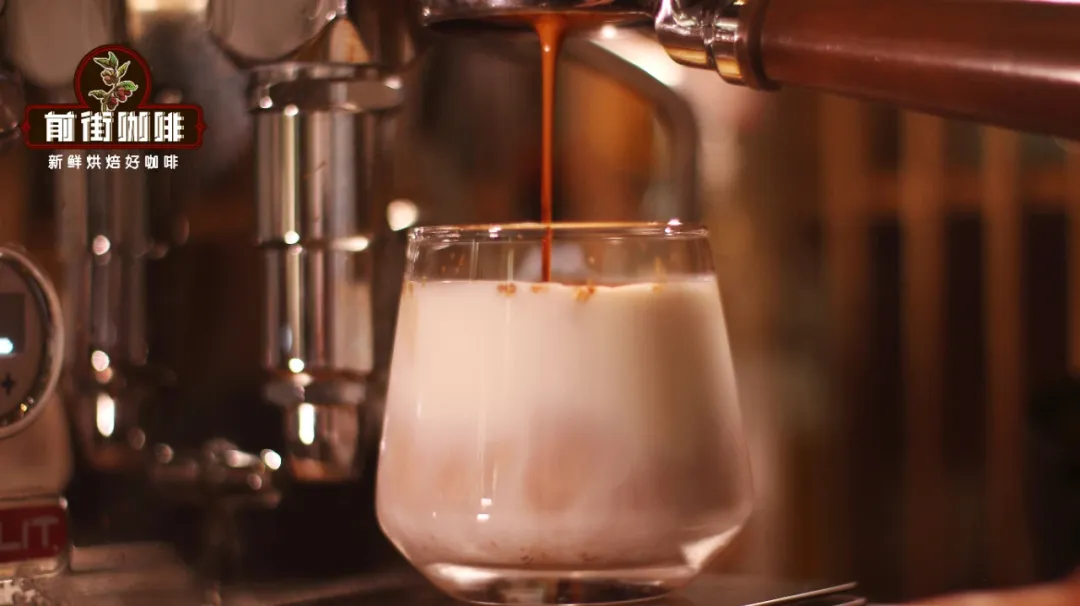
III. Increasing Milk Concentration to Enhance Support
The concentration of milk also affects its ability to support the espresso. The higher the concentration, the thicker the texture, and the more stably it can “carry” the espresso above, resulting in more enduring layers and a stronger visual contrast. This is also why concentrated milk (i.e., milk with some water removed) has become so popular in the dirty coffee scene in recent years.
If you don’t want to purchase expensive concentrated milk, you can also adjust the milk concentration yourself: freeze the milk in advance, wait for some of the water content to freeze, and then use only the non-frozen, concentrated portion. You can take about one-third to one-half of the total volume depending on your personal taste preference. This method is low-cost and suitable for home use.
The Fundamental Difference Between Dirty Coffee and Latte
Although both dirty coffee and iced latte contain espresso and milk, their core experiences are completely different. Dirty coffee emphasizes a gradual visual layering and a strong contrast in taste, with the transition from bold to smooth being truly striking. On the other hand, iced latte focuses on overall flavor balance and smoothness, typically achieved by fully stirring to blend the espresso and milk together.
In short, the charm of dirty coffee lies in that fleeting yet captivating "layered moment," and that’s what sets it apart most distinctly from a latte.
The above content is compiled by CoffeeHunters, a coffee news website.


