







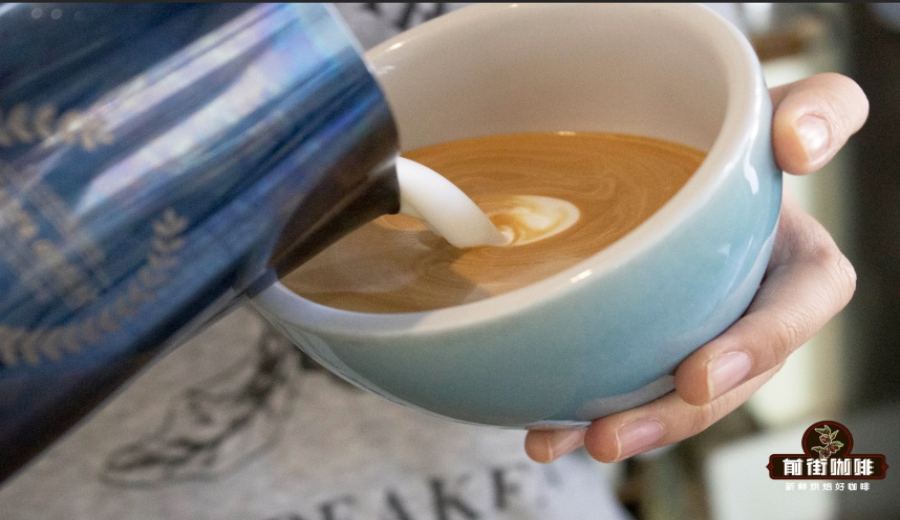
Introduction:Many baristas new to latte art often struggle with patterns that fail to center or appear asymmetrical left and right. This is usually due to insufficient control over details such as milk foam consistency, pouring rhythm, and initial pour point. This article delves into the three main causes of composition shifts in latte art—including improper milk foam thickness, too fast a return pour, and incorrect pour point selection—and provides specific adjustment suggestions and observational techniques to help you precisely control the position of your latte art, enhancing both visual balance and a sense of professionalism in your work.
In the presentation of latte art, the fluidity and beauty of the design depend not only on the details shaped by the milk foam but also on the overall arrangement of the composition. Among these, centering the pattern in the middle of the cup—known as centered composition—is the most common and popular approach because it creates a stable and symmetrical visual effect. However, many novice baristas often find that their finished latte art patterns are noticeably off-center, affecting the overall aesthetics. What exactly causes this shift? We break it down from three aspects: milk foam characteristics, pouring rhythm, and initial positioning.
The Three Main Causes of Pattern Shift
To create visually balanced latte art, you first need a high-quality espresso as the base. It’s recommended to use beans with rich crema and a smooth taste; such beans provide stable crema support, which helps ensure clear and defined patterns during pouring. In practice, blends containing an appropriate amount of Robusta are often favored for latte art due to their prominent crema performance.
1. Milk Foam Layer Too Thin
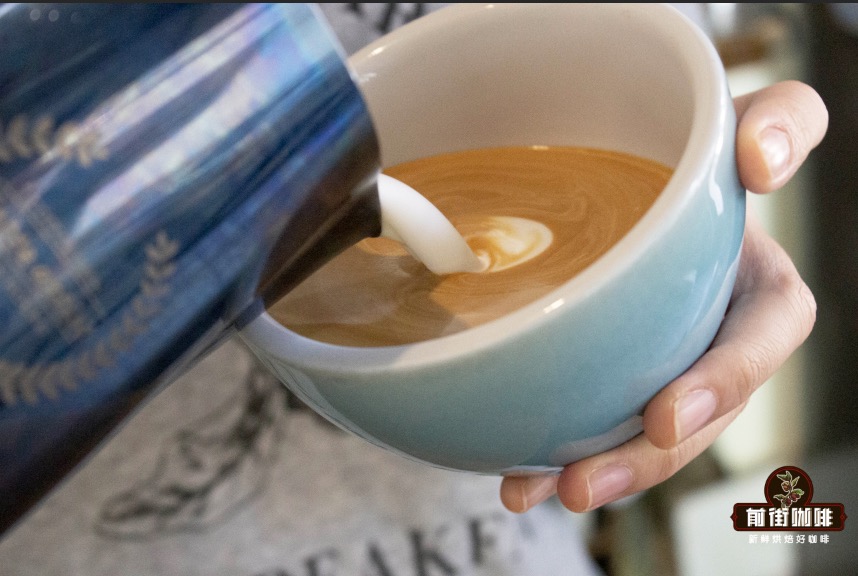
The texture of the milk foam greatly affects the controllability of latte art. When the milk foam is too fine and light—that is, when it lacks sufficient thickness—its fluidity significantly increases. This highly fluid milk is more susceptible to slight changes in angle when poured into the cup, causing the pattern to continuously shift during formation, resulting in fragmented textures or disconnected outlines. Common issues include jagged edges on the pattern or the entire design being pushed to one side by the milk flow. If you find that the pattern isn’t holding its shape during pouring, check whether the milk foam has been steamed too finely. Adjust the steam wand angle and steaming time appropriately to achieve a more moderate foam thickness.

2. Improper Return Pour Rhythm
The return pour refers to the process during latte art where, as the pattern gradually takes shape, you adjust the angle of the cup to bring it back to upright from its initial tilted position. This action needs to be closely coordinated with the speed and pressure of the milk pour, but for beginners, it’s often difficult to manage both hand coordination and angle control simultaneously, leading to a return pour that’s too fast. When the cup is returned to upright too early, the impact force of the milk pour can push the already-formed pattern away from the center, resulting in a final design that’s off-center. The key to improving this issue lies in repeatedly practicing the timing and degree of the return pour. Develop muscle memory through slow practice, and gradually master the interaction between the fluid and the cup’s angle.
3. Inaccurate Initial Pour Point
Different latte art patterns often have notably different starting points. For example, the classic heart shape is usually recommended to start slightly above the center of the cup, while the leaf pattern often begins in the area slightly below the center. If you fail to correctly judge the required starting point of the pattern at the beginning of the pour, even if subsequent movements are standard, the overall design may end up shifted toward the top or bottom edge, failing to land at the visual center of gravity. Therefore, before pouring, it’s advisable to observe the pattern design and pre-plan the relative position of the spout and the cup surface to ensure the first pour of milk lands where the pattern requires.

Additionally, observing the flow direction of the pattern as it forms is also an important clue to determining whether there is a shift. If you notice the liquid flow clearly favoring one side, you can make minor adjustments to the pitcher angle or pouring pressure in real time to correct the trajectory. For common issues of leaning left or right, these are often related to the pitcher grip posture and the initial force application point. It’s recommended to practice in slow motion to familiarize yourself with the fine control techniques needed for different patterns.

In summary, the issue of latte art pattern shifting is not caused by a single factor but is the combined result of multiple variables including milk foam quality, pouring rhythm, and spatial positioning. By systematically examining each aspect and making targeted adjustments to operational details, you can effectively improve the stability and visual balance of your latte art, ensuring that every cup showcases a professionally symmetrical aesthetic.
The above content is compiled by CoffeeHunters, a coffee news website.


