








Introduction:A recent video of a Starbucks bathroom toilet being shattered by someone stepping on it has sparked widespread discussion. Following the incident, the store’s restroom was promptly locked, leaving many customers caught off guard. In fact, this is not an isolated case—over recent years, an increasing number of Starbucks outlets have stopped offering public restrooms, with even longstanding locations often citing maintenance as a reason to close them. Why are chain coffee brands increasingly retracting this once “public convenience”? This article delves into the details of the incident and the current state of the industry, helping you understand the management challenges and practical considerations behind café restrooms.
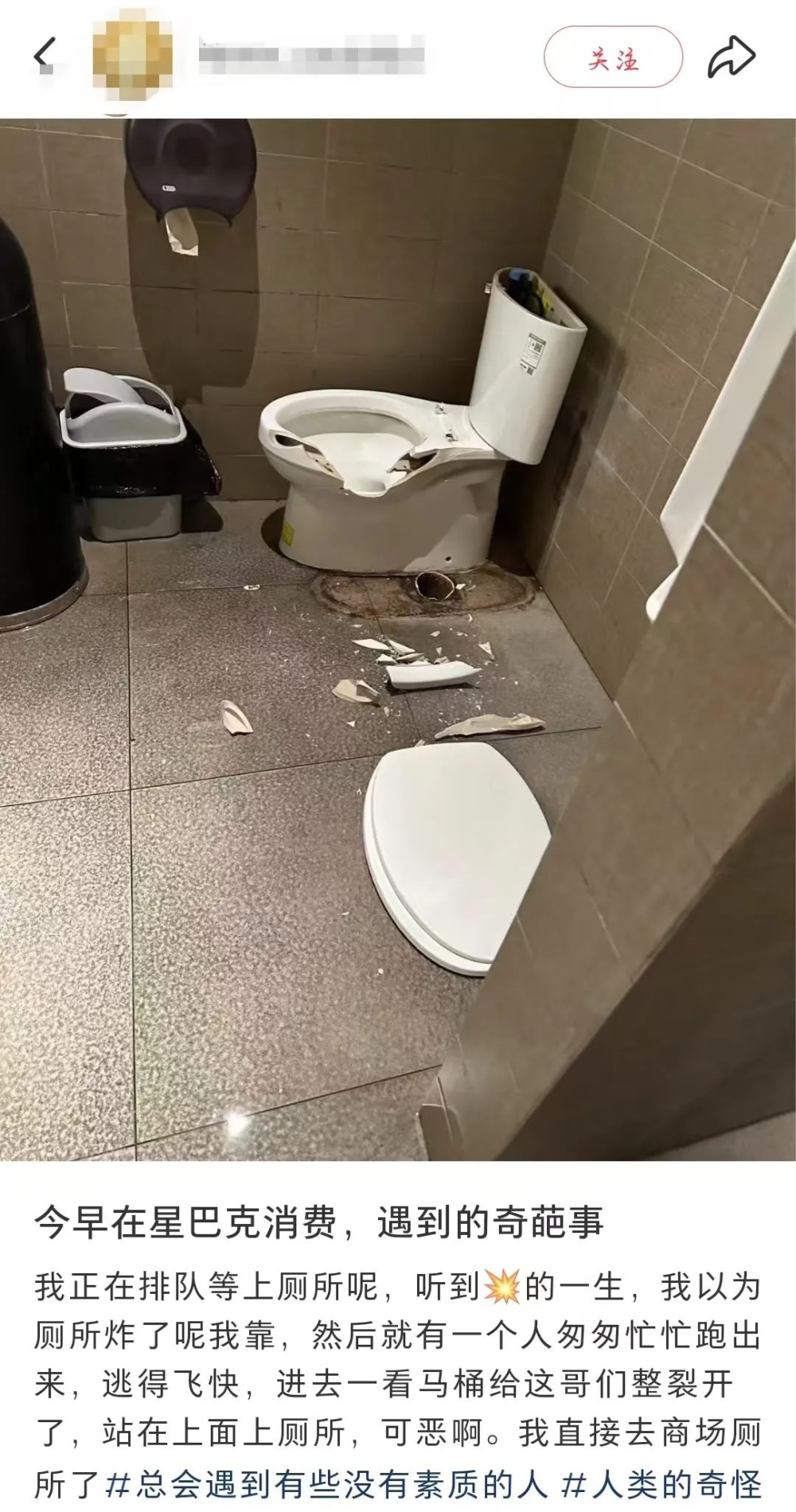
Not long ago, a shocking video went viral on social media: a customer waiting to use the restroom at a Starbucks outlet suddenly heard a loud crash, followed by a man rushing out in a panic, leaving behind a restroom in an utterly “disgusting state.” Upon entering to investigate, the person was stunned to find that the toilet was not only broken but had also separated from the drainage pipe beneath it, shifting several inches out of place.
After seeing the photos, netizens speculated that someone had likely stepped directly onto the toilet seat to use it, causing the porcelain to be unable to withstand the weight, ultimately leading to the collapse and displacement. Many also suggested that the store review surveillance footage to determine responsibility and seek compensation. However, more surprising than how the toilet was destroyed was the realization that—Starbucks still offers restrooms accessible to the public?
Many commenters noted that despite frequent visits to Starbucks, they rarely encountered restrooms inside the stores. In fact, veteran customers recalled that in earlier years, most non-small Starbucks outlets were equipped with restrooms open to everyone, regardless of whether they made a purchase. Over time, however, this convenience gradually disappeared.
What led to this shift? The issue lies in “user behavior.” According to multiple former and current Starbucks staff members, store restrooms are often left in extremely unsanitary conditions—floors littered with paper towels, cigarette butts scattered everywhere, and even toilet seats bearing footprints. Moreover, there have been instances of customers occupying the restrooms for extended periods to bathe, wash vegetables, or even handle raw food at the sink—behaviors that have left staff deeply exasperated.
Faced with such unconventional and excessive usage, Starbucks employees not only deal with the burden of cleaning but also worry about the impact on the store’s image and operational efficiency. As a result, most newly opened Starbucks outlets in recent years no longer include built-in restrooms. For older stores that originally had restrooms, it’s common to see signs on the doors stating “Out of order due to equipment failure,” with some even permanently locked and no longer open to the public.
While this change helps maintain a cleaner store environment and better working conditions for employees, it has also caused inconvenience for many who are accustomed to using Starbucks restrooms—especially travelers or customers with limited mobility. However, after seeing the toilet that was literally stepped apart, many netizens have expressed understanding toward Starbucks’ decision and sympathy for the frontline staff’s predicament.
In truth, restroom management is not just a challenge for Starbucks—it’s a common dilemma faced by all food and beverage businesses, especially open-concept cafés. Even when many stores are willing to provide public restrooms, they are often forced to close them due to misuse by patrons. How to strike a balance between “public convenience” and “management costs” remains an unresolved issue for the industry to this day.
For consumers, it’s advisable to familiarize yourself with nearby restroom locations before heading out, to avoid finding yourself in a bind when nature calls. For store owners, exploring more effective management mechanisms or design improvements to enhance the restroom experience is also a direction worth considering for the future. The “Starbucks toilet incident” is, in essence, just a microcosm of a broader phenomenon.
The above content is compiled by CoffeeHunters, a coffee news website.


