







Introduction:After the Spring Festival, the demand for part-time jobs in the beverage industry has surged. Heytea’s rule of "no meals within 6 hours of work" has sparked widespread discussion. This article takes an in-depth look at this controversial working hours policy that has upset employees, reveals the actual practices of scheduling shifts right up to the hour limit, and provides reference standards for reasonable meal arrangements in the food and beverage industry—helping job seekers avoid falling into labor rights traps.
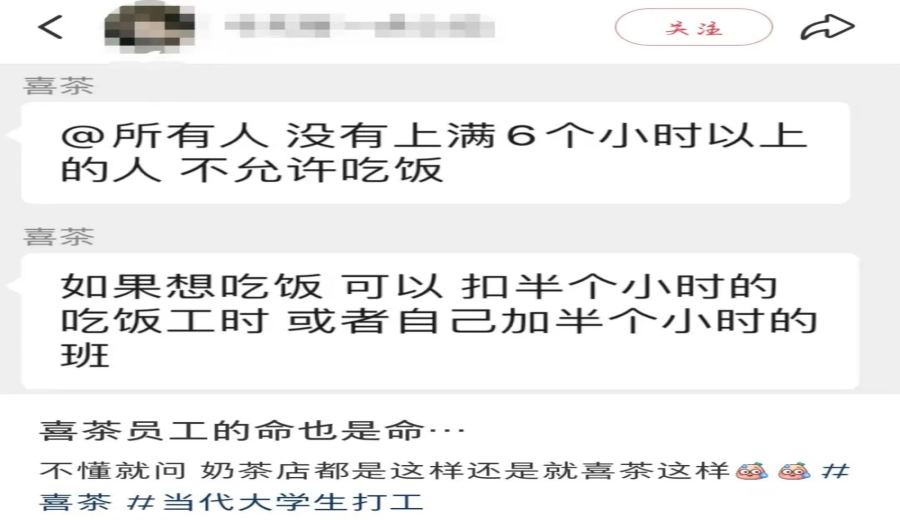
Around the Spring Festival, the tea beverage market experiences a peak in part-time employment, with large numbers of students joining stores of brands such as Heytea. However, they face a contentious rule: employees must work at least 6 hours before they can have an employee meal. According to feedback from multiple current and former employees, if the required hours are not met, they either have to deduct half an hour of their work time or voluntarily extend their shift in order to eat. This measure has sparked extensive discussion in the industry.
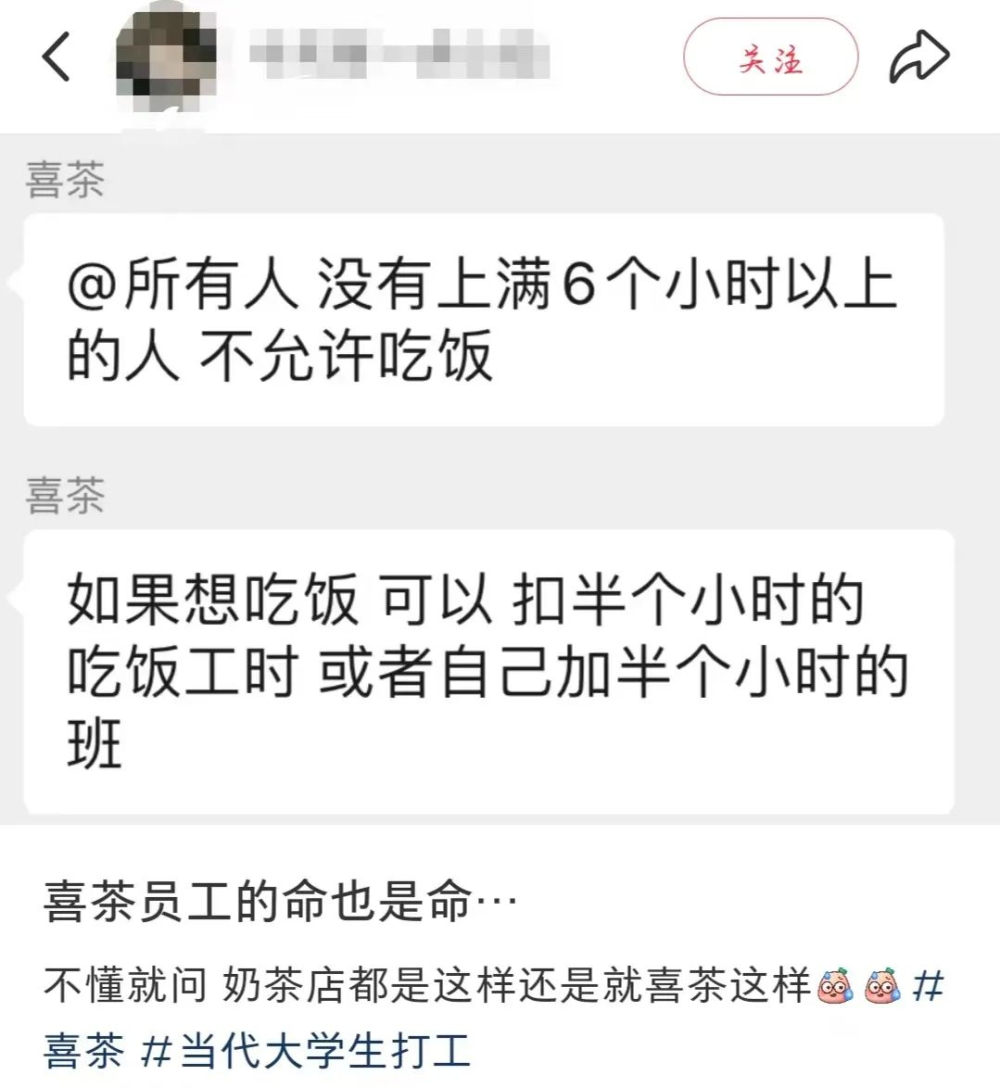
Internal store regulations leaked from social media platforms clearly state the policy of "no meals within 6 hours." One employee shared a screenshot asking, “Is this a common practice in the tea beverage industry, or is it unique to Heytea?” In fact, similar cases are not uncommon. A former employee pointed out that some stores even set the meal threshold at 7 to 8 hours, meaning that early-shift workers might not get to eat until 3 p.m., completely missing the normal lunch period.
Industry insiders explain that lunch and dinner times are usually peak business hours for tea beverage shops, during which employees must handle a continuous influx of orders. This does indeed lead to the common phenomenon of limited meal times. However, experts remind us that according to relevant provisions of the Labor Standards Act, employers should reasonably arrange rest periods for employees, and the practice of completely banning meals for those working short shifts is debatable.
The investigation found that in order to control labor costs, some stores adopt precise, hour-pinned scheduling strategies. One employee revealed that store managers would deliberately arrange short shifts of 4.5 to 5.5 hours, ensuring that employees do not qualify for meal breaks; during slow business periods, there were even instances of being “asked to clock out after just 2 hours.” While this flexible scheduling model may meet operational needs, abuse of it can directly impact employees’ basic rights.
Notably, restrictions on meal rights and work hour controls create a chain reaction. Since compensation in the tea beverage industry is mostly hourly, stores reduce total working hours by shortening shifts, indirectly decreasing employee income. Employees jokingly describe this situation as “asking the horse to run but not giving it grass,” often having to work continuously for hours during peak times without being able to eat—a physical burden issue that deserves attention.
Professional advice suggests that when interviewing for positions at tea beverage stores, job seekers should proactively inquire about the following practical details: minimum required working hours, mechanisms for flexible meal arrangements, how overtime pay is calculated, and how far in advance the work schedule is announced. This information helps evaluate the reasonableness of working conditions and avoid entering unreasonable labor environments.
Observing best practices in the industry, some chain brands have implemented flexible solutions such as “applying for a 15-minute meal break after working 3 hours” or arranging rotating meal times during peak periods. These measures maintain service quality while also ensuring that employees’ basic physiological needs are met, and may be worthy of reference and emulation across the industry.
The above content is compiled by CoffeeHunters, a coffee news website.


