







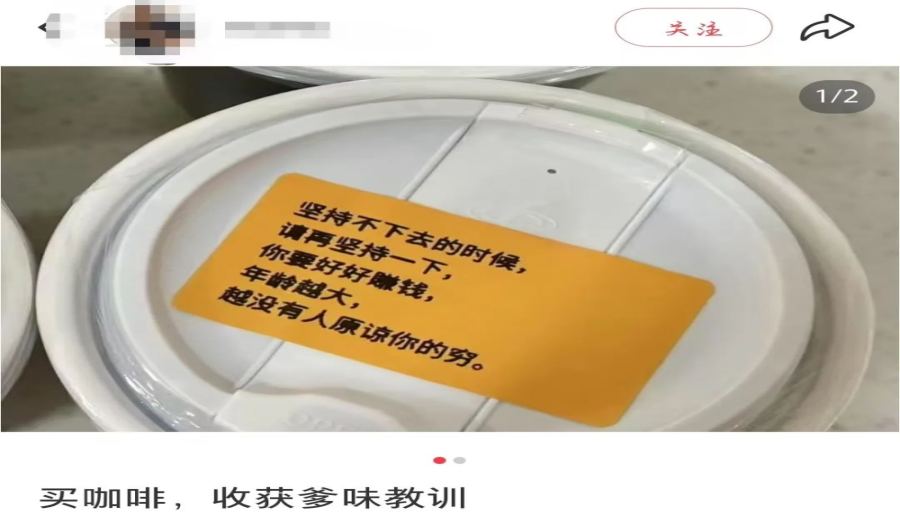
Introduction:When coffee becomes a gift option, small details on the takeaway packaging can often make or break the overall experience. A recent controversy sparked by an inspirational quote printed on a coffee cup lid has highlighted the importance of both what is said—and how it is said—on coffee delivery packaging. This article will explore the selection principles for the text content on coffee takeaway packaging, analyze which phrases are prone to causing misunderstandings, and provide practical design suggestions to help both coffee professionals and consumers maintain a positive coffee experience.
Buying coffee as a gift is usually a thoughtful and decent choice, but if the recipient opens the takeaway packaging and finds that each coffee cup lid is adorned with a yellow sticker bearing a preachy quote, the entire situation can quickly become awkward. Recently, a consumer shared her experience on a social media platform: she ordered four cups of coffee for someone else, only to find out after the gift was received that each cup lid had a sticker with an internet-popular “toxic chicken soup” style quote, leaving both parties feeling uncomfortable.
This incident quickly sparked discussion online. Some agreed with the original poster’s discomfort, believing the business added potentially misleading text without informing customers, showing a lack of customer consideration. Others felt the shop was simply trying to create a friendly vibe, albeit in a slightly excessive way. Regardless of stance, this case reminds us: the small labels on coffee takeaway packaging carry unexpected communicative functions and also test the business’s attention to detail.
According to the original poster, she ordered four drinks from a local café via a delivery platform, intending them as a gift. However, when the recipient opened the package, they discovered that each cup lid had a yellow label printed with quotes resembling internet “toxic chicken soup.” Though these quotes appeared light-hearted and humorous, they could easily make the recipient feel lectured—especially in the context of a gift-giving scenario, where such messages seemed particularly out of place.
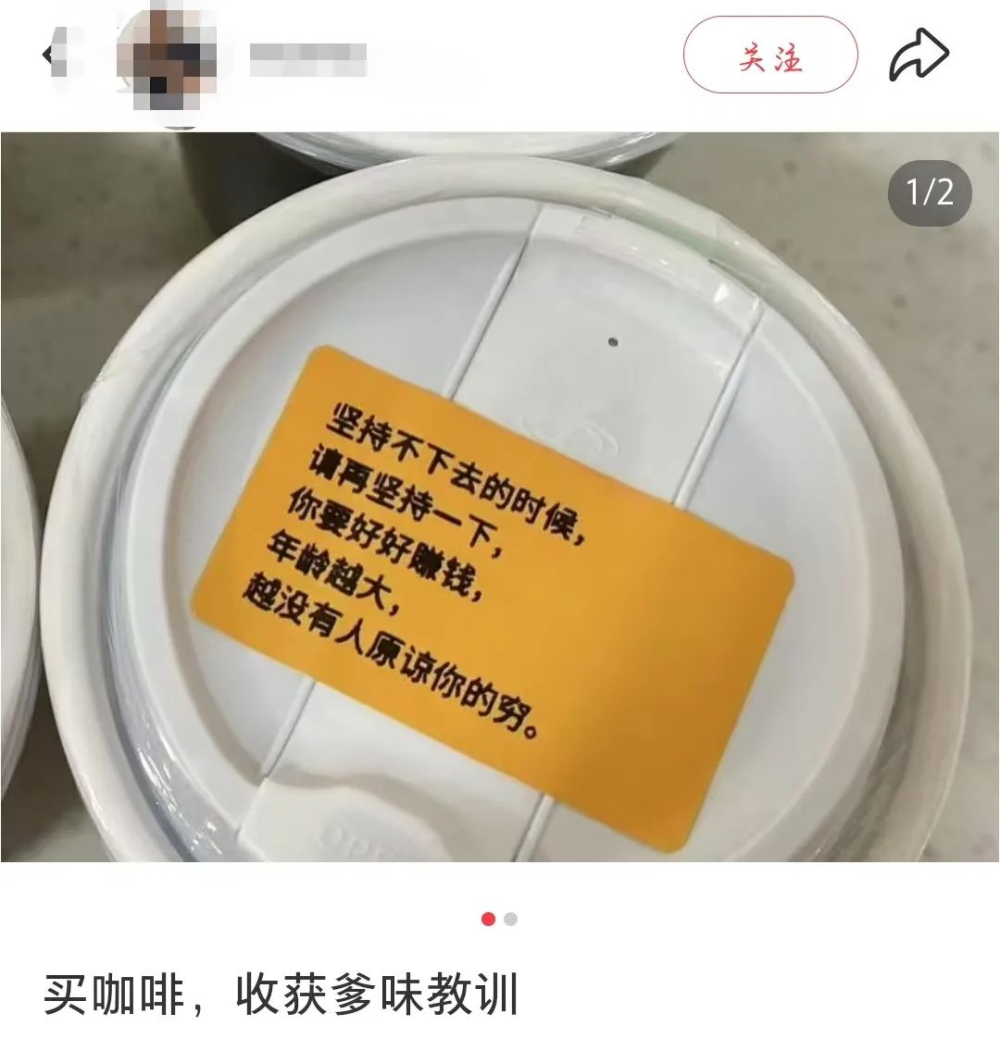
The poster stated that since the business charged an additional fee for the takeaway packaging, she believed it should have informed customers of the packaging design details before placing the order, giving them the choice to accept or decline such labels—rather than directly attaching potentially misleading text onto the cup lids. This handling not only affected the recipient’s feelings but also left the gift-giver feeling embarrassed and troubled.
After the incident came to light, it quickly gained widespread resonance online. Many netizens shared their own experiences of receiving coffee cups printed with “inspirational quotes” or “life reflections,” with some noting that although these words may have been well-intentioned, their appearance in inappropriate contexts made people feel uneasy.One netizen bluntly stated that when such quotes appear in a gifting context, they can easily lead the recipient to assume the giver is being passive-aggressive or preachy, further undermining the original goodwill.
In fact, many coffee shops add short phrases to the cup body or lid—such as “Have a great weekend” or “Smile today”—meant to add warmth to the consumption experience. Chains like Starbucks have long built a positive impression among consumers through handwritten blessings, and many independent cafés have followed suit, hoping to leave a favorable impression on customers.
However, when these messages turn into preachy “toxic chicken soup” quotes, the effect is often counterproductive.Image source: Xiaohongshu Netizens generally agree that if businesses wish to use popular internet phrases to strengthen brand identity, the key lies in selecting appropriate content and tone—avoiding wording that might cause misunderstanding or make people feel offended.
One café owner shared his experience: when designing cup labels for the Lunar New Year period, he specifically avoided using terms like “family happiness,” which might not apply to all customers, opting instead for more neutral and widely acceptable blessings. He emphasized,when designing takeaway packaging text, one should fully consider the various situations and feelings of different consumers, and avoid turning gift-giving into an awkward moment.
In summary, while the text design on coffee takeaway packaging may seem trivial, it can significantly impact the customer experience. When selecting packaging messages, businesses should prioritize positive emotional value in the text and avoid using preachy quotes that may cause misunderstandings. For consumers, if the text on takeaway coffee packaging feels uncomfortable, they can also proactively communicate with the business to jointly foster a more friendly coffee consumption environment.
Through this incident, we not only see the importance of detail in coffee packaging design, but also gain a deeper understanding that in coffee culture, every small element can influence the overall experience. In the future, both businesses and consumers can find key opportunities to enhance coffee quality and interaction refinement within these details.
The above content is compiled by CoffeeHunters, a coffee news website.


