







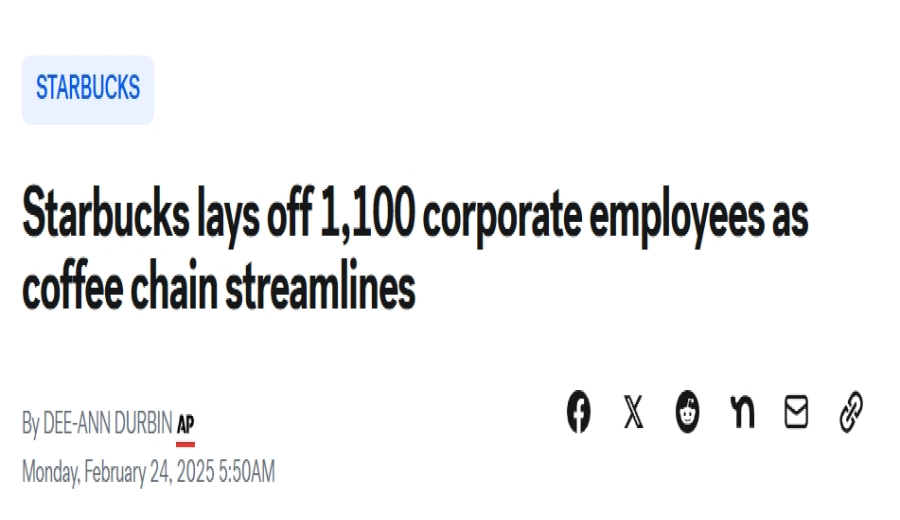
Introduction:Facing continuously declining sales, Starbucks has announced a large-scale restructuring plan that includes laying off 1,100 corporate employees globally and reducing its menu by 30%. The company’s new CEO, Brian Niccol, stated that these moves aim to streamline management layers and accelerate decision-making processes. This article details the adjustments, including a list of 13 beverages to be discontinued starting March 4, as well as industry insights on the transformation’s effectiveness, helping readers stay informed about the strategic direction of this international coffee chain.
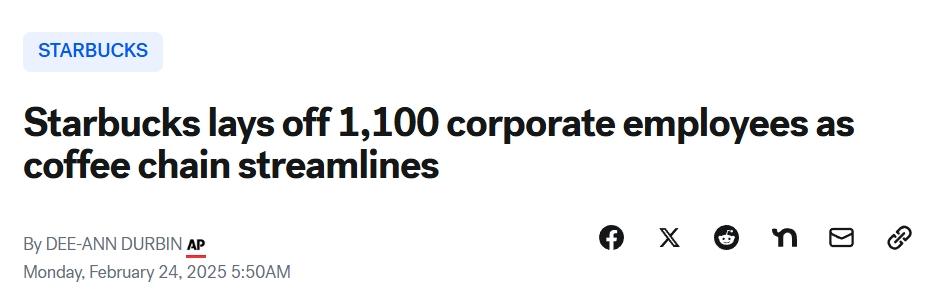
Starbucks is driving profound organizational changes to address challenges stemming from weak sales performance in recent years. The newly appointed CEO, Brian Niccol, recently announced that the company will cut 1,100 corporate positions worldwide, freeze hundreds of planned recruitment roles, and plans to reduce its store menu offerings by 30%, with the goal of improving operational efficiency through a leaner structure.
In an open letter to all employees, Niccol explained that layoff notices will be issued progressively before noon on February 25. Affected staff will receive their salaries and benefits until May 2, after which they will be given severance pay and career transition support based on their years of service. Notably, this round of adjustments primarily targets headquarters functional departments, accounting for approximately 7% of the global 16,000 corporate employees, and does not involve frontline stores, supply chains, or roasting plants and other operational teams.
Regarding the core objectives of the organizational optimization, the CEO emphasized: “We must reduce unnecessary management layers to make the decision chain shorter and responsibilities clearer.” He pointed out that the current structure suffers from overlapping functions, with some roles dedicated solely to cross-departmental coordination yet lacking actual decision-making power, leading to low execution efficiency.
As part of the restructuring initiatives, Starbucks also revealed its menu simplification plan. According to official disclosures, stores in the U.S. and Canada will discontinue 13 underperforming beverages starting March 4, including several specific flavors of Frappuccino, the Royal English Breakfast Tea Latte, and the White Hot Chocolate, among other familiar items. These products were selected for removal due to low order volumes, complicated preparation procedures, and functional overlaps with existing popular drinks.
Industry analysts note that the strategy to streamline the menu by 30% carries dual significance: it can reduce the complexity of inventory management and raw material procurement, while also freeing up display space for seasonal limited-edition products or regional specialty drinks. Officials added that further evaluations will continue before the end of the fiscal year in late September, with additional low-performing items being phased out gradually to fully achieve the overall adjustment goals.
The most practical information for consumers is that the 13 soon-to-be-discontinued beverages will still be available before March 4. Fans of unique flavors are advised to seize the final opportunity to try them. For instance, the Royal English Breakfast Tea Latte, which combines an Assam tea base with rich fresh milk, may become a discontinued favorite; meanwhile, certain seasonal Frappuccino flavors are also often staples on fans’ must-try lists.
Observers indicate that Starbucks’ transformation this time focuses on the dual axes of “organizational streamlining” and “product focus.” Whether it can effectively reverse the challenge of four consecutive quarters of same-store sales decline will depend on execution details and market feedback. The new structure is expected to shorten decision-making processes by about 20%, but how to balance efficiency gains with maintaining service quality remains a key issue that management must continue to refine.
The above content is compiled by CoffeeHunters, a coffee news website.


