







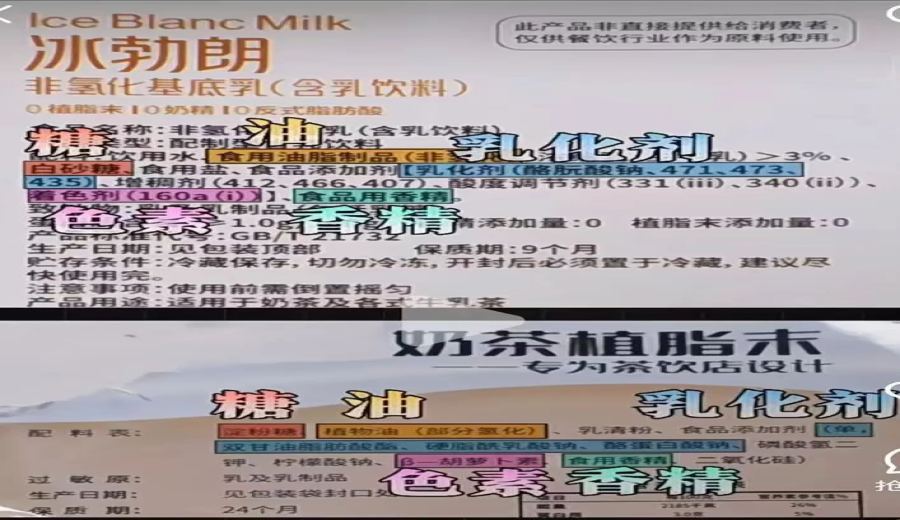
Introduction:The bubble tea brand Mixue has faced scrutiny over its use of the ice bloom base milk, with critics claiming it is no different from non-dairy creamer, sparking consumer concerns about the healthiness of its ingredients. This article delves into the differences between the two in terms of composition, explores the evolution of non-dairy creamer technology in China, and presents official industry responses to help readers discern the true nature of beverage ingredients and make more informed choices.
Recently, an online review video targeting "ice bloom," a commonly used base ingredient in bubble tea, has gone viral and triggered widespread discussion. The video points out that while test results show ice bloom contains no trans fatty acids, its composition is similar to that of common "non-dairy creamer." Moreover, after dehydration, it exhibits a relatively high ratio of sugar to fat, with some values even surpassing those of traditional non-dairy creamer. This revelation has thrust Mixue, which has long promoted a "0 non-dairy creamer, 0 milk essence" healthy image, into the center of public debate.
Many consumers have expressed shock, as Mixue has consistently claimed that its bubble tea products do not use non-dairy creamer or milk essence, positioning itself as a healthier choice. The disclosure that it uses ice bloom—whose composition is similar to non-dairy creamer—has led fans to question whether the "healthy bubble tea" they trusted is as pure as the brand claims, and even to worry about the intake of unknown additives.
Industry experts point out that consumer aversion to non-dairy creamer mainly stems from its potential content of trans fatty acids, which have been proven to be associated with an increased risk of cardiovascular diseases. However, according to the results of the review video, ice bloom itself has not been found to contain trans fatty acids, which is fundamentally different from traditional non-dairy creamer. Therefore, equating ice bloom directly with non-dairy creamer may be an oversimplification.
A veteran in the food industry likened the situation by saying, "Just like oranges and apples are both rich in vitamin C, we wouldn’t say they are the same fruit." Although ice bloom and non-dairy creamer may share some functional and compositional similarities, they differ significantly in terms of raw material sources, production processes, and final nutritional structures, and should not be easily equated.
In fact, domestic production of non-dairy creamer had largely transitioned to "0 trans fatty acids" technology around 2017. Currently, the majority of milk teas used by major chain beverage brands on the market already meet national standards for being free of trans fatty acids. Some brands have even gone further, abandoning non-dairy creamer in favor of fresh milk or high-quality base milk to respond to the growing consumer demand for healthier beverages.
Nevertheless, some netizens remain skeptical about the healthiness of ice bloom. A look at the ingredient list of ice bloom reveals that this base milk still contains a certain proportion of fat and sugar, which may not be the most ideal option for young people who pursue a "low-calorie, low-fat, low-sugar" diet. Some netizens have bluntly stated that if one aims to reduce fat and sugar intake, perhaps the only choice is to give up bubble tea altogether.
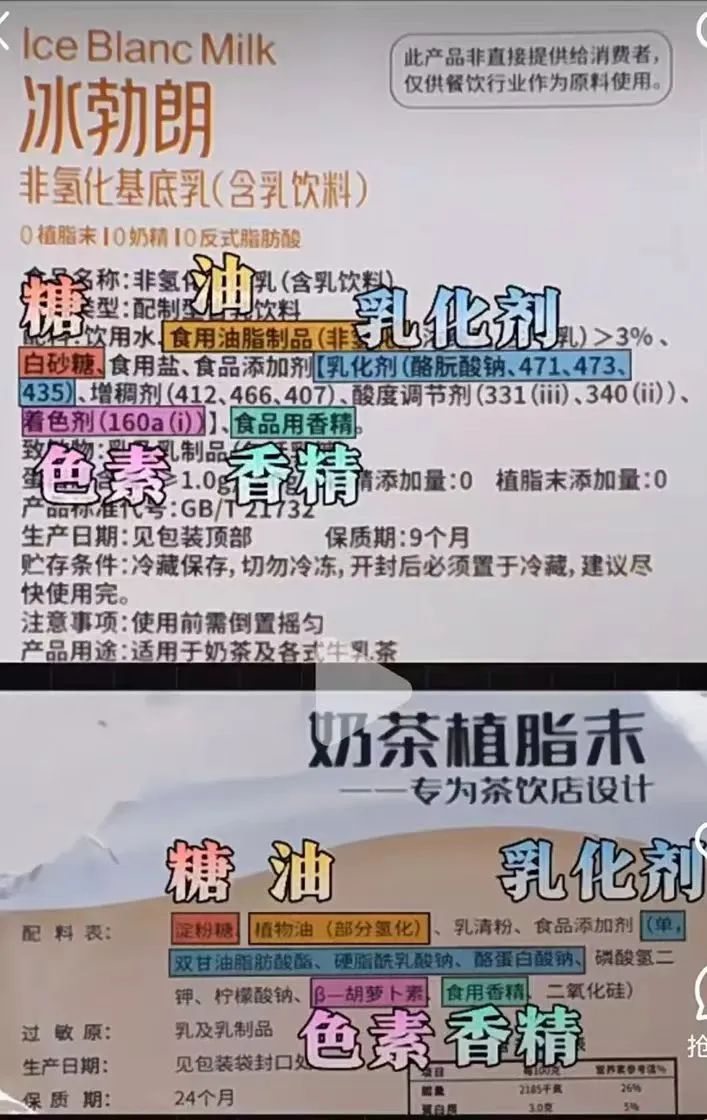
As the controversy escalated, Zhejiang Shengmana Dairy Co., Ltd., one of the major domestic suppliers of ice bloom, recently issued an official statement through its channels to clarify the so-called "liquid non-dairy creamer" claims circulating online. The company emphasized that ice bloom differs significantly from non-dairy creamer in terms of raw material composition and production process, and is not the non-dairy creamer substitute that the internet claims it to be. At the same time, ice bloom products comply with national standards, have been tested to be free of trans fatty acids, and their overall fat content is within a reasonable range.
The statement further noted that although the original review video that sparked the controversy has been taken down, it had already been widely circulated online, causing considerable damage to the company’s reputation and misleading consumers about the correct understanding of the product, thereby triggering unnecessary panic. The company stated that it will continue to monitor public opinion trends and reserves the right to take legal action to protect its own interests.
Synthesizing various perspectives and official responses, when choosing bubble tea or other dairy-containing beverages, consumers should pay closer attention to specific ingredient labels and nutritional information, rather than making judgments based solely on brand claims or market reputation. Understanding the differences between ice bloom and non-dairy creamer can help make dietary choices that better align with individual health needs.
The above content is compiled by CoffeeHunters, a coffee news website.


