








Introduction:In 2024, China’s coffee market experienced a significant wave of store closures. Data shows that although a total of 53,000 new coffee shops opened, the net increase was only slightly over 6,000, meaning more than 45,000 coffee shops chose to cease operations. This article delves into the common challenges faced by both chain and independent brands, including market saturation, soaring costs, and strategic adjustments, and through specific brand cases, reveals the truth behind this wave of closures and possible future trends.
Over the past year, China’s coffee market has undergone intense turbulence, with a large number of stores quietly exiting. According to industry statistics, around 53,000 new coffee shops were opened nationwide in the past twelve months, yet the overall net growth was only about 6,000, indicating that over 45,000 coffee shops have gradually shut down, pushing the market into a period of deep adjustment.
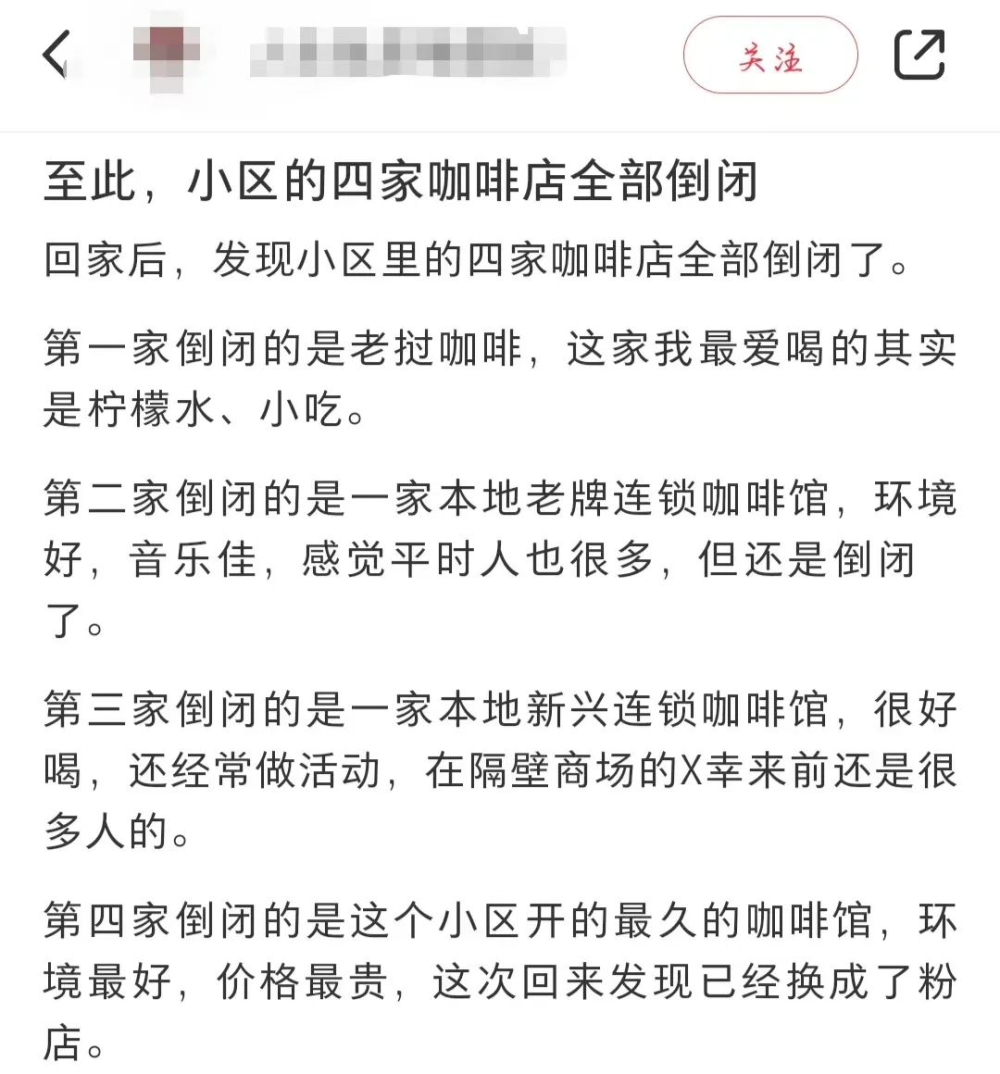
From corner independent shops to well-known chain brands, store closures have been rampant. Some members of the public have observed that their own neighborhoods, which once had four uniquely styled coffee shops—including an independent shop focusing on cozy spaces and a local brand with an affordable approach—have all closed down within a short period, with some storefronts even being subleased for other commercial uses. Such examples are just a microcosm of the nationwide closure trend.
Among the numerous closure cases, chain brands were not spared either. “Benlai Budangyou” (originally known for its fruit coffees) saw its number of outlets drop sharply by 190 in 2024, with its overall scale being halved; the specialty coffee brand Seesaw, embroiled in economic controversies, has gradually withdrawn from multiple cities and now has only 56 stores nationwide. In addition, established chains such as Costa, UBC Coffee, and Pacific Coffee also saw their store counts decline by 65, 40, and 126 respectively.
Even top-tier brands like Starbucks, Manner, and M Stand have adjusted their strategies in response to market challenges, closing some underperforming or high-rent older locations. This round of adjustments is not only due to the operational difficulties of individual stores but also reflects that the overall market is becoming saturated, prompting brands to seek more precise layouts.
Currently, many leading brands are focusing their new store openings in places with stable foot traffic and clear target demographics, such as schools, medical institutions, and transportation hubs, hoping to improve single-store performance through contextualized operations. Meanwhile, brands including Luckin Coffee and Cotti Coffee are also actively expanding into overseas markets—for example, Cotti has entered Qatar and Dubai in the Middle East, while Luckin entered Hong Kong and Southeast Asia at the end of 2024, attempting to find new growth points in the global market.
However, whether overseas expansion will succeed remains full of uncertainties. In addition to facing fierce competition from local brands, brands must also adapt to different consumer habits and market regulations, which pose a major challenge to both brand management and supply chain operations.
Besides intensified market competition, soaring costs are also a major reason why many coffee shop owners choose to exit. Recently, coffee bean futures prices have continued to rise, increasing for ten consecutive trading days and recently hitting a historic high of $4 per pound. For coffee businesses that rely on imported beans, this is undoubtedly adding insult to injury, further exacerbating raw material cost pressures.
With rents, labor, and raw materials all rising simultaneously, many small and medium-sized coffee shops are finding it increasingly difficult to cope. Some shop owners admit that current operations are like “living day by day,” and if the situation continues to worsen, they may have no choice but to shut down, exiting an increasingly challenging industry.
Overall, the 2024 coffee shop closure wave is the result of multiple factors acting together, including market saturation, rising costs, brand strategy adjustments, and global supply chain changes. For entrepreneurs who are still operating or interested in entering the coffee industry, understanding these challenges and market trends will help make more pragmatic decisions and improve long-term survival chances.
The above content is compiled by CoffeeHunters, a coffee news website.


