







Introduction:The mysterious abbreviations on bubble tea shop receipts—such as "SB" or "say sweet"—have sparked heated online discussions. Are these expressions of employee frustration or efficient shorthand methods? This article delves into how food and beverage industry workers balance efficiency and emotion under high-pressure working conditions, while decoding the real meanings behind common order abbreviations to help both consumers and professionals communicate better.
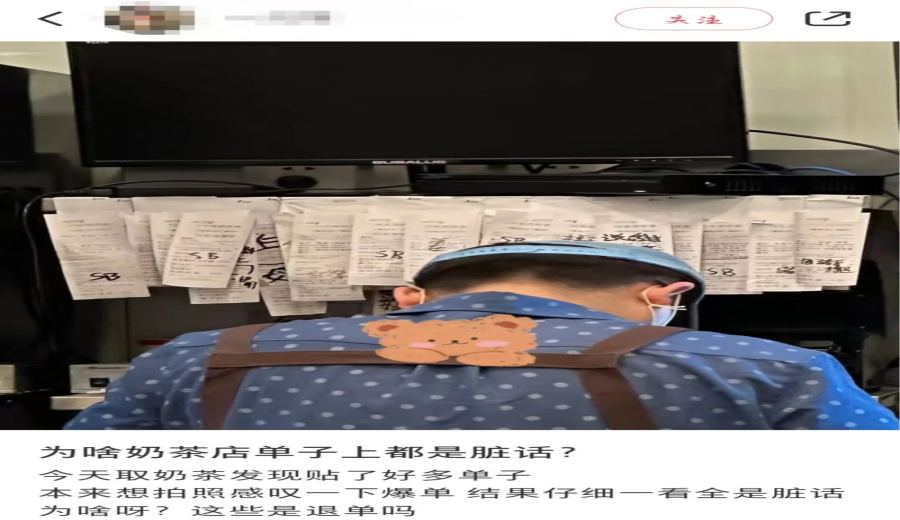
Recently, a photo of a bubble tea shop receipt went viral on social media. In the image, the order clip above the staff's workspace is stuffed with receipts, each scribbled with seemingly rude phrases like "SB" or "say sweet" in black marker, leading the photographer to initially assume they were all swear words. The photo quickly spread online, prompting lively interpretations from netizens and bubble tea industry workers alike.
From the angle of the photo, the orders are clustered above the staff’s work area, indicating that the shop might have been experiencing a rush of high-volume orders. Industry insiders note that during peak hours, bubble tea shops may need to process 3–5 orders per minute, forcing staff to quickly record and handle large amounts of information—circumstances that can give rise to such unique notation methods.
In response to the unusual markings on the receipts, many netizens offered rational analyses, suggesting that "SB" might stand for "less ice," while "say sweet" could be an alternative way for customers to request "less sugar." According to this interpretation, these phrases aren’t vulgar language as they may appear on the surface, but rather shorthand symbols used by staff to mark special order requests in a way they can quickly understand—an internal communication system.
Experienced customers have shared similar encounters, such as seeing abbreviations like "NT" written on McDonald’s receipts by employees. Those unfamiliar with the internal systems might misinterpret such letter combinations as inappropriate words. These industry-specific abbreviation systems often prove difficult for outsiders to decipher without context.
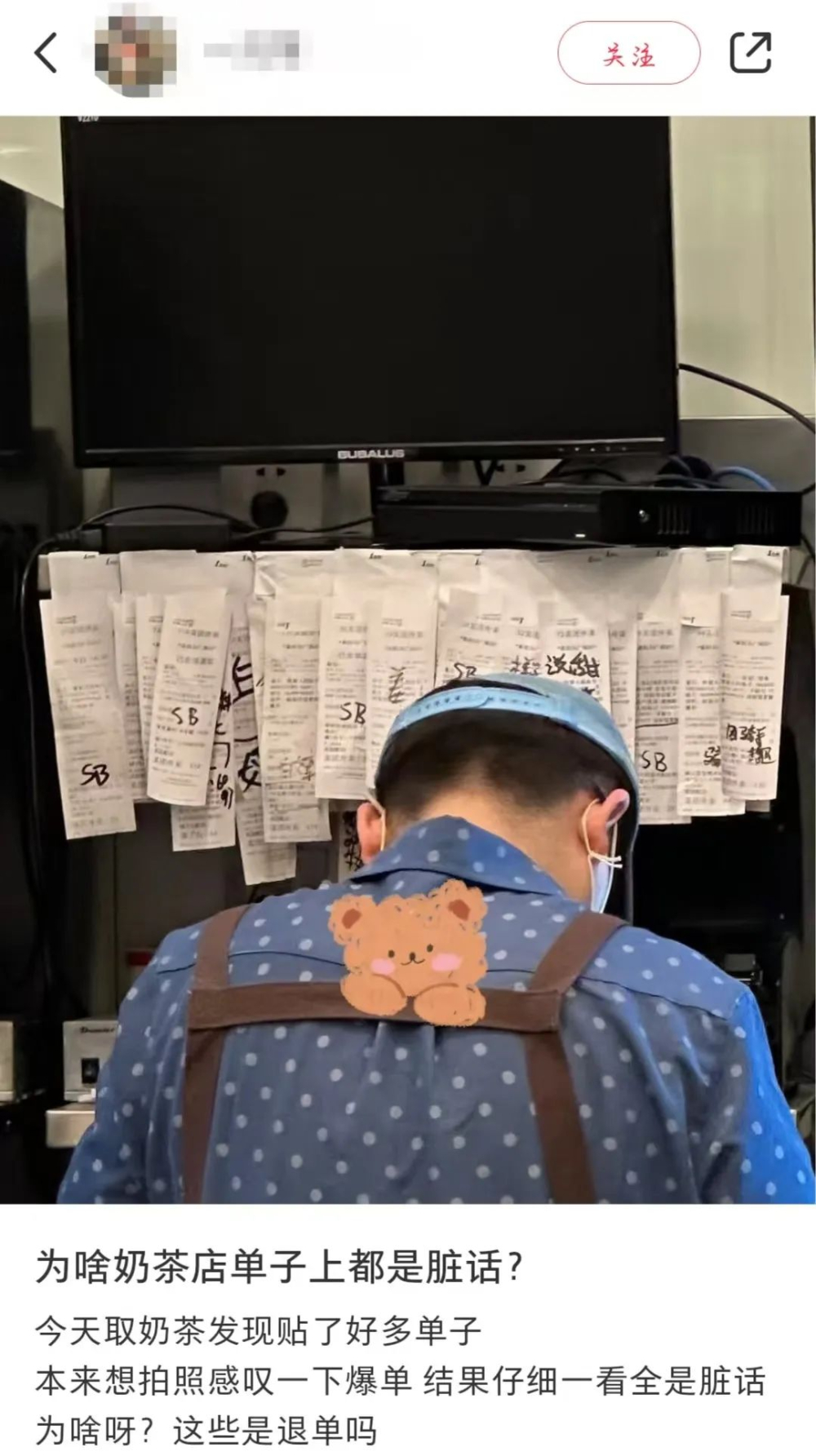
However, some keen observers also noticed that in addition to "SB" and "say sweet," some receipts contained longer phrases like "due to rider…" sparking speculation about whether these notes served as complaint records. Some speculated that the black text might document reasons for customer dissatisfaction or feedback related to negative reviews, serving as internal references for service quality improvement—rather than direct negative expressions about customers.
From the perspective of food and beverage industry workers, many frontline employees shared their real-world experiences, pointing out that in modern ordering systems, standard requests like “less ice” or “less sugar” are usually already displayed directly on order labels, eliminating the need for staff to memorize them separately. As a result, these special markings may more likely reflect individual emotional reactions and stress relief methods when dealing with particularly tricky orders under high-pressure environments.
Industry experts noted that under the dual pressures of understaffing and overwhelming order volumes, beverage shop employees typically stand and work 8–10 hours a day, handling over 100 orders—intensities that easily lead to accumulated stress. Against this backdrop, jotting down a few words on receipts to vent emotions can be seen as a psychological coping mechanism, unprofessional perhaps, but understandable.
Notably, most consumers have shown empathy toward this phenomenon, believing that minor complaints behind the scenes are only human as long as they don’t affect food quality or service safety. The industry suggests that consumers can reduce misunderstandings and additional pressure on staff by using clearer, friendlier order备注 methods—for example, selecting from the system’s standard options instead of entering special requests via free-text input.
This incident has ultimately triggered broad societal discussion on the working environment of food and beverage industry workers, underscoring the importance of fostering mutual understanding and establishing effective communication mechanisms in high-intensity service jobs. For consumers, understanding the work pressure of service staff; for professionals, seeking more professional methods of emotional management—these are the deeper insights brought forth by this event.
The above content is compiled by CoffeeHunters, a coffee news website.


