








Introduction:Global coffee bean prices have surged due to extreme weather and unstable yields, with some national roasters already announcing price hikes at the beginning of next year—ranging up to 30%. This article provides an in-depth analysis of the main drivers behind this price surge, including the impact of droughts in Brazil and Vietnam, threats posed by the La Niña phenomenon, and the widening supply-demand gap, along with practical information that both consumers and industry players need to be aware of.
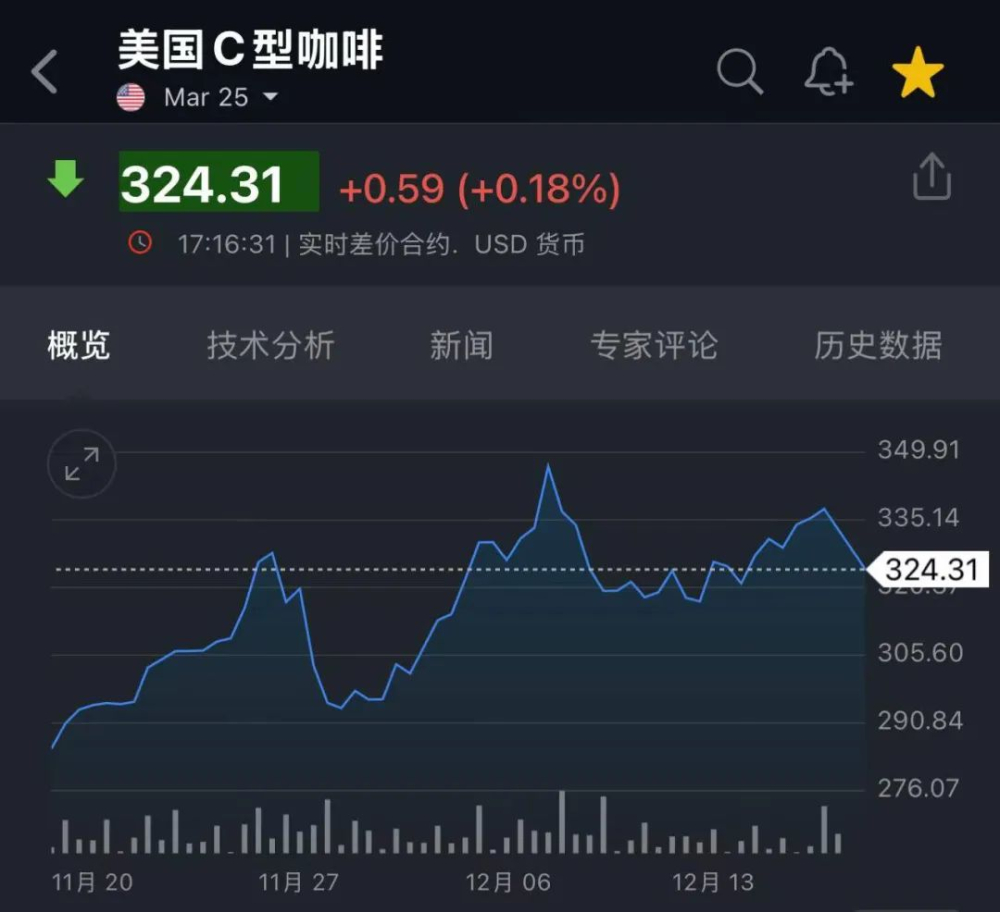
Recently, global coffee bean prices have continued to climb due to extreme climatic factors, with cumulative increases exceeding 80% so far this year. As the world’s second-largest coffee-consuming country, Brazil has seen local roasters facing cost pressures and subsequently raising product prices. Among them, international coffee giant JDE Peet's plans to raise average prices in the Brazilian market by up to 30% at the beginning of next year, with adjustments covering key product categories such as roasted and ground coffee, green beans, instant coffee, capsule coffee, and cappuccino.
Brazil is not alone; European roasters are also considering following suit with their own price increases. Although the U.S. Federal Reserve recently announced an interest rate cut, which briefly caused coffee futures prices to drop by 2.65%, overall prices remain high. The cut amounted to 25 basis points, adjusting the rate to between 4.35% and 4.5%, marking the third rate reduction since September this year. However, this has not fully alleviated market concerns about coffee supply.
< The recent decline in coffee futures prices is primarily due to adjustments in U.S. Federal Reserve monetary policy, shifts in speculative behavior, as well as strong export data from multiple countries leading to a temporary increase in supply. This has resulted in a rise in ICE-monitored inventories of both Arabica and Robusta coffee. Nevertheless, although futures prices have retreated somewhat, they remain at elevated levels, thereby pushing up domestic coffee consumption costs in Brazil. According to traders, JDE Peet's will raise the prices of multiple products next year, while German company Melitta has already increased prices by 12% recently, followed by a further hike of 25% this month in response to rising costs.
In the European market, some major roasters are planning to raise prices by around 10% at the end of December or early January next year. It is expected that by the end of March next year, consumers will clearly feel the impact of these price increases, with some markets even potentially seeing reduced consumption trends. Notably, Brazil, as the world’s second-largest coffee consumer after the United States, may shift its imports to other producing countries due to domestic price increases, which could affect price stability in other markets.
Currently, the market generally holds a conservative outlook on Brazil’s future coffee production, mainly due to ongoing adverse weather conditions. Although Minas Gerais—the state that is Brazil’s primary coffee-growing region—has seen rainfall return, last week’s precipitation was only 35.2 mm, just 65% of the historical average, with temperatures remaining high. The December average temperature exceeded 30°C, peaking at 36°C. Such a hot and dry environment is unfavorable for the formation and development of coffee cherries, and if the situation persists, production for the new season may decline once again.
Even more concerning is the climate forecast. The World Meteorological Organization notes that there is over a 50% chance of La Niña occurring in the next three months, which will further heighten market concerns about Brazil’s coffee output. Due to uncertain production prospects and continuously growing global coffee demand, several leading coffee trading firms have revised downward their estimates for Brazil’s coffee production and issued warnings: the global coffee market could face a supply shortage for the fifth consecutive year during the 2025–26 season, with the projected shortfall reaching as high as 8.5 million bags.
Faced with this wave of price increases, besides keeping an eye on real-time price movements, consumers and industry players should also pay attention to climate developments and yield forecasts in various producing regions. Understanding the origin characteristics, flavor profiles, and optimal brewing parameters of coffee beans can help make smarter purchasing decisions and find the most suitable coffee experience amid price fluctuations.
< >
The above content is compiled by CoffeeHunters, a coffee news website.


