







Introduction:When tea beverage outlets face overwhelming order volumes, stacking paper cups becomes a common practice—but it may raise food safety concerns. This article delves into the controversy behind the Heytea incident, analyzing the potential risks of food contamination caused by stacked cups, comparing how different brands regulate such practices, providing consumers with key indicators to identify hygienic operations, and uncovering the real challenges tea shops face during peak hours.
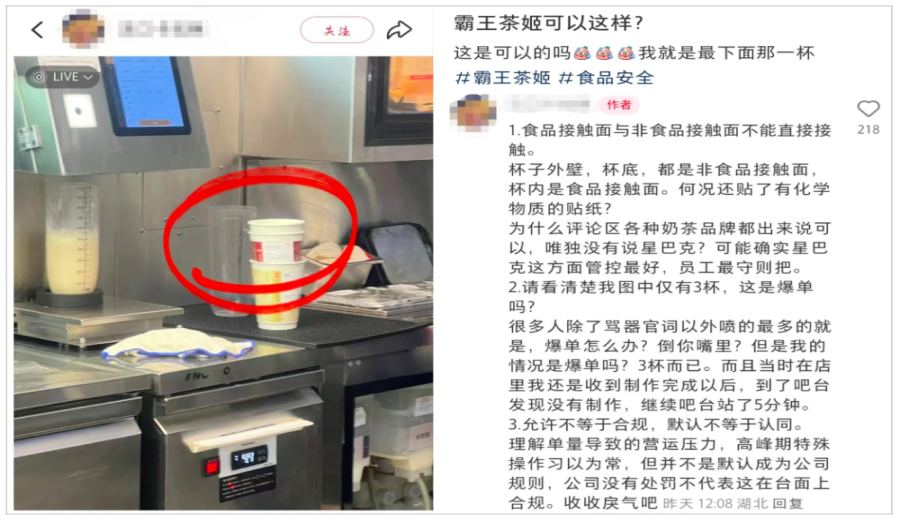
Recently, a customer picking up an order at a Heytea store noticed that staff had stacked labeled paper cups, with their drink ending up at the very bottom. This stacking method, where cup walls and interiors might come into contact, sparked worries about food contamination. The customer observed that the outside of the cups had labels, and if these came into direct contact with the inner food surface, it could pose a hygiene issue.
This situation triggered heated discussions on social media, with many bubble tea shop employees sharing practical insights, noting that unused paper cups are originally packaged in stacks by manufacturers, and that stacking cups is a common practice during peak hours to save space and improve efficiency.However, most consumers find this hard to accept, especially when compared to well-known brands like Starbucks, Luckin Coffee, and HEYTEA, which explicitly prohibit such practices.
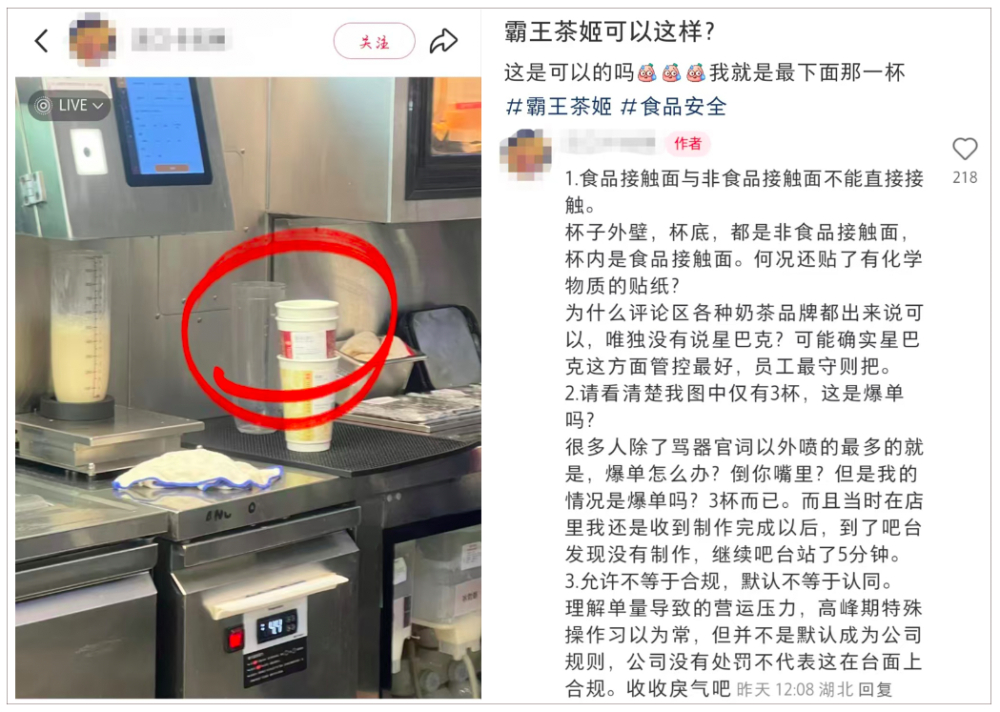
Some staff admitted that during surges in order volume, unfolding each paper cup individually not only takes up too much counter space but also increases the risk of accidentally knocking over cups while moving or turning, affecting service speed.As a result, stacking labeled paper cups into a "tower" has become common in some stores, even though this practice is considered a violation by certain chain brands.
Yet, many netizens disagree with the staff’s explanations. They shared photos taken at Starbucks and Luckin outlets showing that even during high-traffic periods, employees still arrange cups in sequence rather than stacking them. Some food industry professionals also stated,once cups are taken out of a stack, they should not be restacked to avoid contaminating the food-contact surface.
Industry insiders revealed that multiple brands, including Starbucks, Cha Bai Dao, Yi Dian Dian, Luckin Coffee, and HEYTEA, have explicit or internal policies prohibiting the stacking of labeled paper cups.HEYTEA goes further, classifying this as a serious violation—staff found doing so by supervisors face fines of up to 3,000 yuan per incident, and it is considered a cross-contamination risk. However, some practitioners admit that during extremely high order volumes, some stores tacitly allow such practices despite knowing they’re non-compliant.
Netizens analyze that the root of such issues lies in brands typically not allowing stores to pause orders during peak hours, causing production demands to suddenly exceed the store’s handling capacity.Employees, in their rush to fulfill orders quickly, often resort to stacking cups and other rule-breaking methods amid the chaos. Some suggest that if stores proactively shut down their ordering systems when overloaded, it could effectively reduce such problems—but in reality, platforms and brands rarely impose order limits, usually adopting a lenient stance toward employee actions.
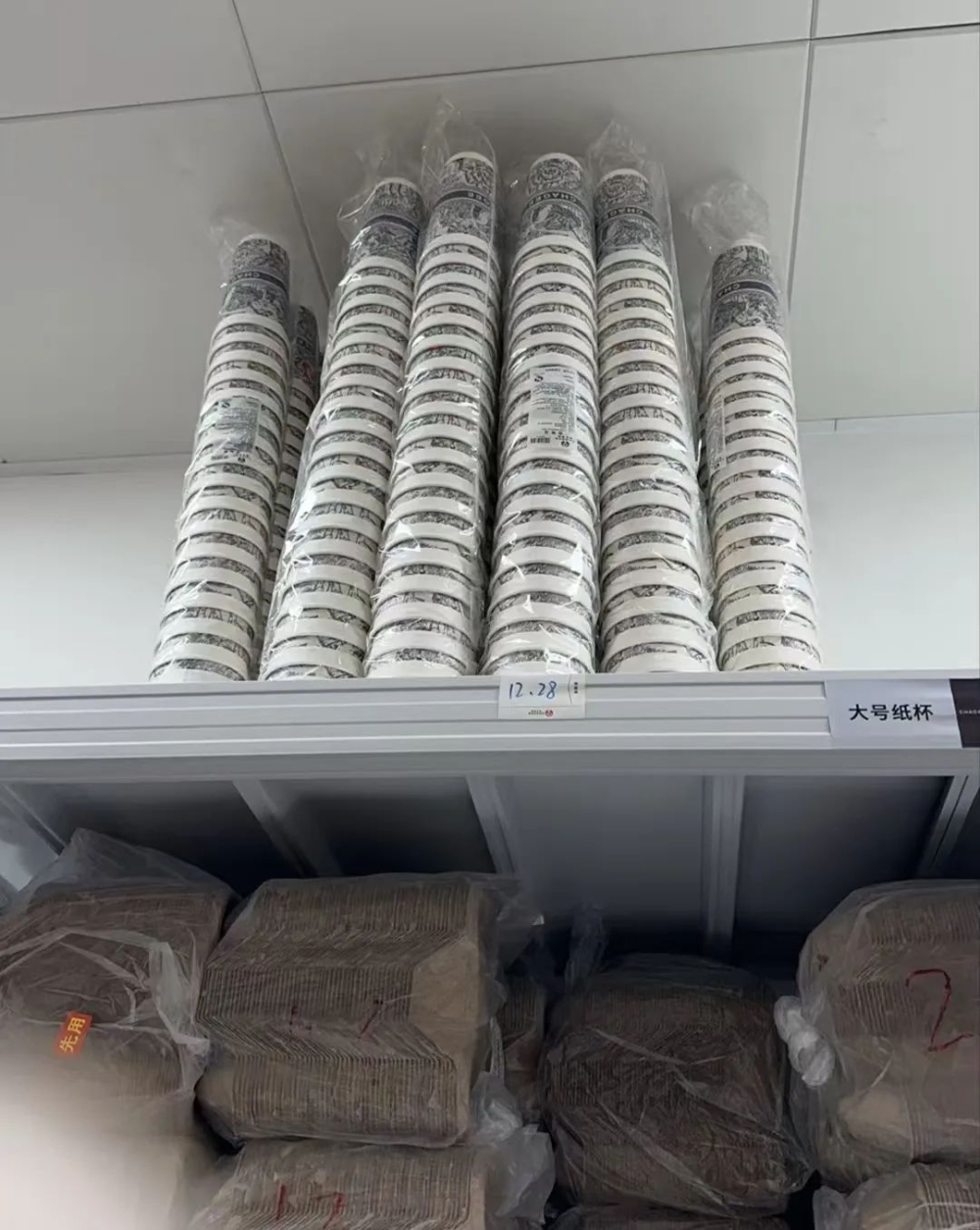
For consumers, recognizing hygienic practices is crucial. Experts recommend observing whether a store arranges labeled paper cups individually rather than stacking them, as one indicator of hygiene standards.Additionally, if the label on the outside of a paper cup might come into contact with the inner beverage, there is indeed a contamination risk, especially in high-temperature or humid environments. Understanding these details can help consumers make more informed choices when selecting drinks.
The above content is compiled by CoffeeHunters, a coffee news website.


