







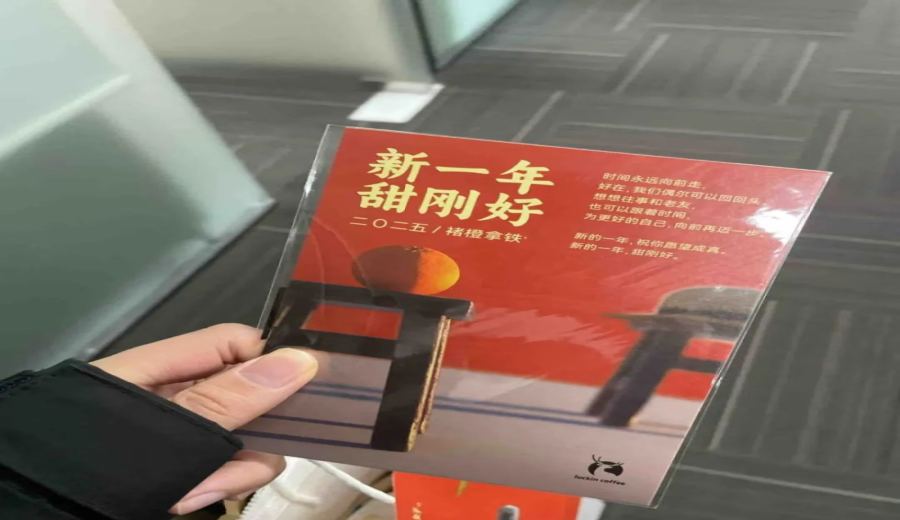
Introduction:At the end of 2024, Luckin Coffee collaborated with Chu’s Agriculture to launch a limited-edition Chu Orange Latte and co-branded merchandise, along with a “New Enjoyment Orange Scratch Card” included with selected meal sets, offering multiple rewards including 99 free coffees and 66 free coffees. However, many consumers discovered that the prize on the card could be revealed simply by shining a flashlight through the phone, without scratching off the coating, raising concerns about the transparency of the lottery and fears that staff might manipulate prize distribution.
Luckin Coffee recently launched a major year-end collaboration, teaming up with the well-known Chu’s Agriculture to release an upgraded version of the Chu Orange Latte, paired with a series of exquisite merchandise to attract the attention of coffee enthusiasts. To add fun to the event, the official campaign included a “New Enjoyment Orange Scratch Card” with select meal sets, featuring highly enticing rewards such as 500 grand prizes redeemable for 99 free coffees, 2,000 prizes for 66 free coffees, and up to 100,000 rewards for 1 free coffee. Even those who didn’t win the top prizes could still receive a 52% discount coupon for beverages.
This scratch card event was seen as the grand finale of Luckin’s year-end promotions, with many consumers eagerly awaiting the draw results, hoping for a pleasant surprise at the end of the year. However, many users quickly noticed what seemed to be a “light-leakage” issue with these scratch cards. According to tests by multiple consumers, by placing the unopened or unscratched back of the scratch card near a phone flashlight, one could faintly discern the prize content printed under the coating on the card, without actually scratching off the surface ink.
This discovery quickly sparked widespread discussion on social media platforms, with many netizens sharing their test experiences. Some even pointed out that even if the scratch card was still wrapped in its outer plastic seal, the same light-leakage technique could be used to preview whether a prize had been won. One consumer noted, “You don’t need to scratch it—just shine a phone light on it and you can see the result without even opening the package.”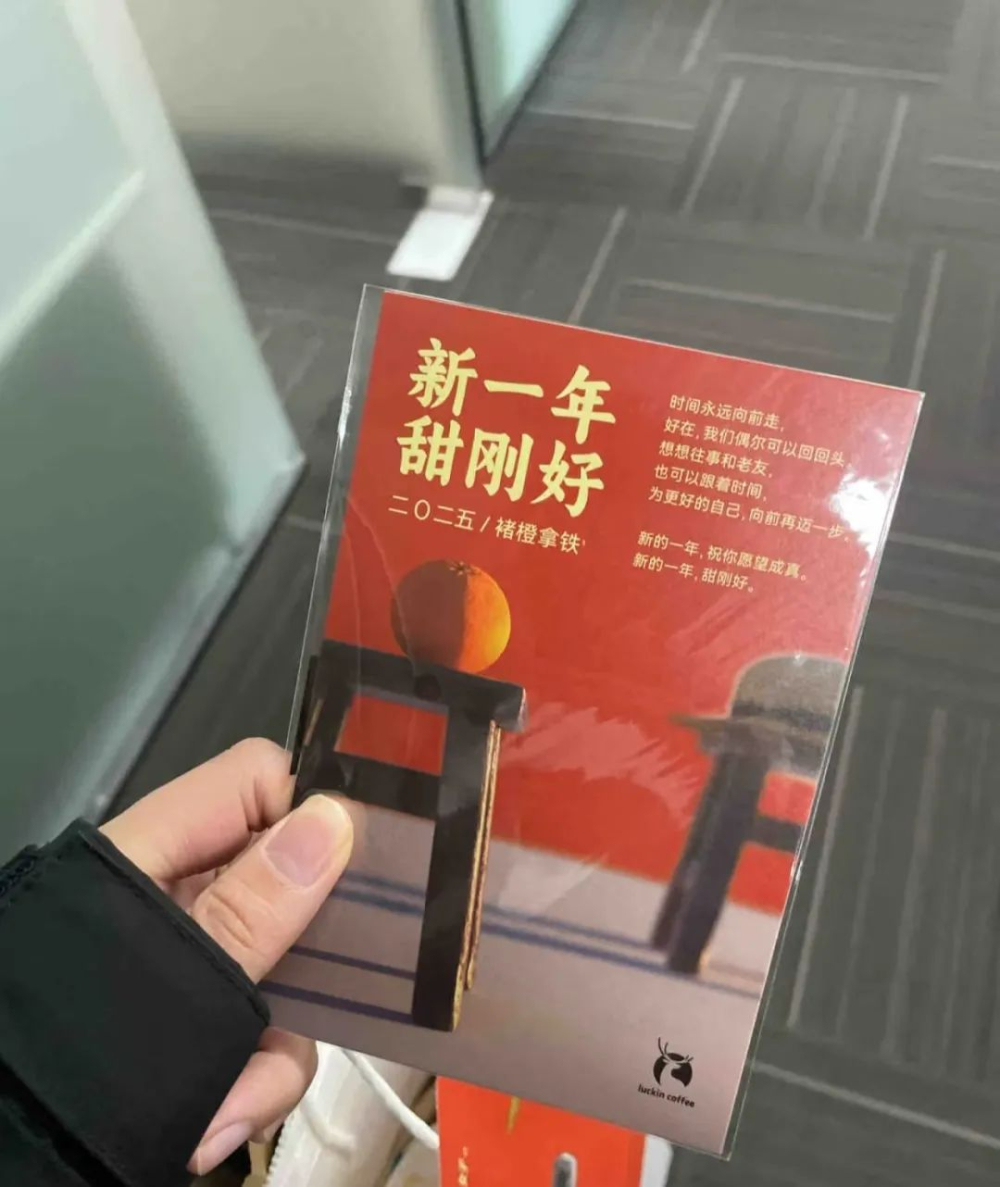 This method of operation cast a shadow of “predictability” over what should have been a luck-based lottery system.
As the light-leakage method became widely known, many users began to question the overall fairness of the event, particularly fearing that store employees might exploit this loophole to pre-screen and retain or resell scratch cards containing major prizes. Numerous online comments amplified these concerns, with some consumers mentioning, “The staff can tell right away if it’s a big prize and just keep it for themselves,” or “The guy already checked—they only have 52% off coupons left in the store,” fueling public worries about the transparency of prize distribution.
In response to the outside criticism, some Luckin store employees spoke out, emphasizing that staff already receive beverage benefits as part of their job perks and have no need to withhold customer rewards. Some also admitted that daily store operations are hectic, leaving no time to individually inspect the contents of each scratch card, and that they usually distribute them at random. However, these explanations did not fully appease consumer dissatisfaction, especially since similar scratch card events last year were also reported to have the same light-leakage problem, leading many to believe that Luckin had not improved the design based on past experience.
Experts pointed out that if the scratch card manufacturing process fails to properly control ink coverage and coating uniformity, it can very easily lead to light-leakage issues. They recommended that future event organizers use higher-quality opaque materials or improve printing techniques to ensure that each card remains completely unpredictable before being scratched, thereby maintaining the fairness of the event and the trust of participants.
For consumers, in addition to enjoying the pleasure of buying coffee, there is an increasing emphasis on the transparency and integrity of brand activities. This incident serves as another reminder to the industry that any form of promotional campaign, if lacking rigorous anti-fraud mechanisms, may undermine the consumer experience and brand reputation—even with abundant rewards—due to operational flaws.
The above content is compiled by CoffeeHunters, a coffee news website.


