








Introduction:A viral café located within a university campus in Shenzhen made headlines after refusing service to customers with dyed hair and those wearing Crocs. The café explained that the decision was to align with teaching facility regulations, but consumers felt the lack of clear public notice was inappropriate. This article delves into the differences in venue nature behind the incident, common dress code logic in cafés, and offers practical advice to help readers avoid similar awkward situations.
Recently, a popular café situated within a university area in Shenzhen sparked widespread online discussion after reportedly denying service to customers with dyed hair. According to media reports, some patrons were told by staff that due to “routine leadership inspections of appearance,” those with dyed hair would not be served, and were even asked to change seats. Even more surprisingly, a woman wearing Crocs also received a similar warning, raising questions about the café’s service thresholds.
As described by one customer, shortly after she visited this well-known café for a photo opportunity, a staff member approached her to inform her that the café does not serve customers with dyed hair, citing the need to comply with the school’s routine appearance checks. The staff then asked her to move to a different seat. At the same time, another woman wearing Crocs was also reminded about her attire. Although there were signs at the café entrance, one of which indicated that it is a “teaching support facility” and advised customers to mind their attire and behavior, there were no specific prohibited items clearly listed, such as dyed hair or Crocs.
The customer recalled that the staff spoke politely but seemed uncomfortable, leading her to believe they might have been following internal rules rather than deliberately excluding anyone. However, she also pointed out that if the café has unwritten restrictions on customers, these should be clearly stated at the entrance or on online platforms so that customers are informed in advance and can avoid a wasted trip. She believes that as a public-facing business, basic inclusiveness should be maintained.
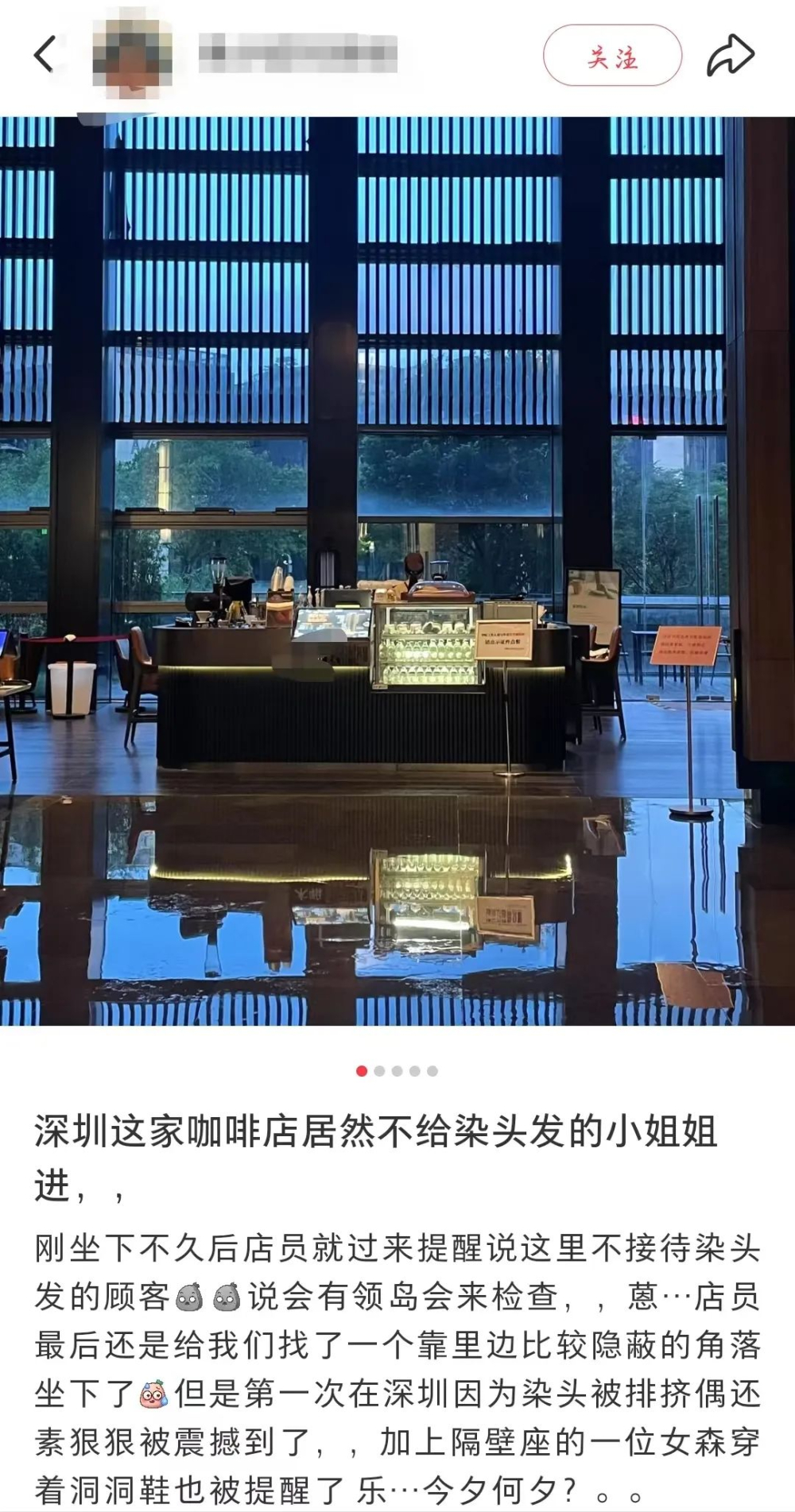
After the incident came to light, public reaction was mixed. Some netizens argued that as a public commercial space, cafés should not be “picky” and refuse entry based on dyed hair, Crocs, or even mini skirts, as it goes against the spirit of service. However, many others supported the café’s stance, arguing that business owners have the right to set their own reception standards, and that many cafés already clearly state rules such as “no children allowed” or “no photography,” with certain venues having the right to establish dress codes.
Notably, some customers who had previously visited the café shared their experiences, noting that they too were denied entry due to their attire—for example, being refused for “wearing flip-flops in summer” or “skirts above the knee.” These cases highlight the venue’s strict requirements regarding customer appearance, but the lack of transparently communicated guidelines can easily lead to misunderstandings and dissatisfaction.
In response to public scrutiny, the café’s staff explained on social media that because the café does not have a closed-door policy, it is difficult to completely prevent outside customers from entering. Therefore, for uninformed customers, they could only give quiet reminders. They emphasized that they were not deliberately excluding people with dyed hair, but were constrained by the nature of the venue and had to adhere to specific dress codes.
Reporters from Nandu Bay Finance & Economics also contacted the café and confirmed the staff’s statements. The official response stated that this café is not a regular retail outlet, but a teaching support facility located within a university, and therefore must comply with the school’s management requirements regarding appearance and grooming, which in turn imposes certain restrictions on the attire of customers entering the premises. This also explains why the signage at the entrance only vaguely mentions “mind your attire and behavior” without listing specific details.
For consumers planning to visit cafés within universities or other special venues, it is recommended to check the nature of the venue and its related regulations in advance, especially whether it is part of a teaching or institutional space. If the signage at the entrance is unclear, you may also proactively ask the staff about dress code requirements to avoid any negative impact on your dining experience due to appearance issues. Additionally, everyday styles such as dyed hair or casual footwear are generally not an issue in regular, publicly accessible cafés, but may carry additional restrictions in specific venues. Understanding these details can help enhance overall satisfaction with your visit.
The above content is compiled by CoffeeHunters, a coffee news website.


