







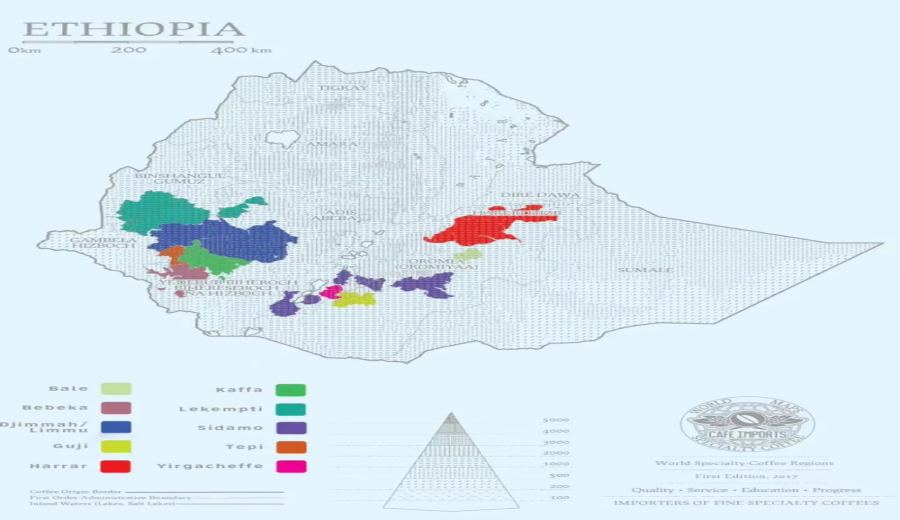
Introduction:Delve into the unique characteristics of coffee from Ethiopia’s Sidama and the Alo Village in Bench Maji, exploring everything from regional history and geographical conditions to the actual performance of renowned processing stations
Sidama is an exceptionally representative coffee-growing region in southern Ethiopia. The evolution of its name, geographical conditions, and the rise of its sub-region, Bensa, together form the knowledge framework of this coffee sanctuary. The shift from "Sidama" to "Sidamo" not only reflects historical background but also influences market perception. This article will guide readers through these contexts and focus on Alo Company in the Bensa area, analyzing how it crafts distinctive coffee flavors through high-altitude processing techniques.
When discussing Ethiopia’s renowned coffee regions, in addition to Sidama, Yirgacheffe, Guji, and Kaffa are equally well-known. However, what sets Sidama apart is its complex naming history: initially, this plateau south of Lake Awasa was called Sidama. After being incorporated into the royal territory in the late 19th century, it was renamed Sidamo, a name that was used for a long time and became the common term in the international market. It wasn’t until after 2020, when the administrative region was upgraded to the Sidama Region, that the official name was rectified to Sidama. Nevertheless, the consumer market still commonly refers to it as Sidamo, and the Ethiopian government has even registered the Sidamo® trademark to protect the authenticity of the region’s coffee.
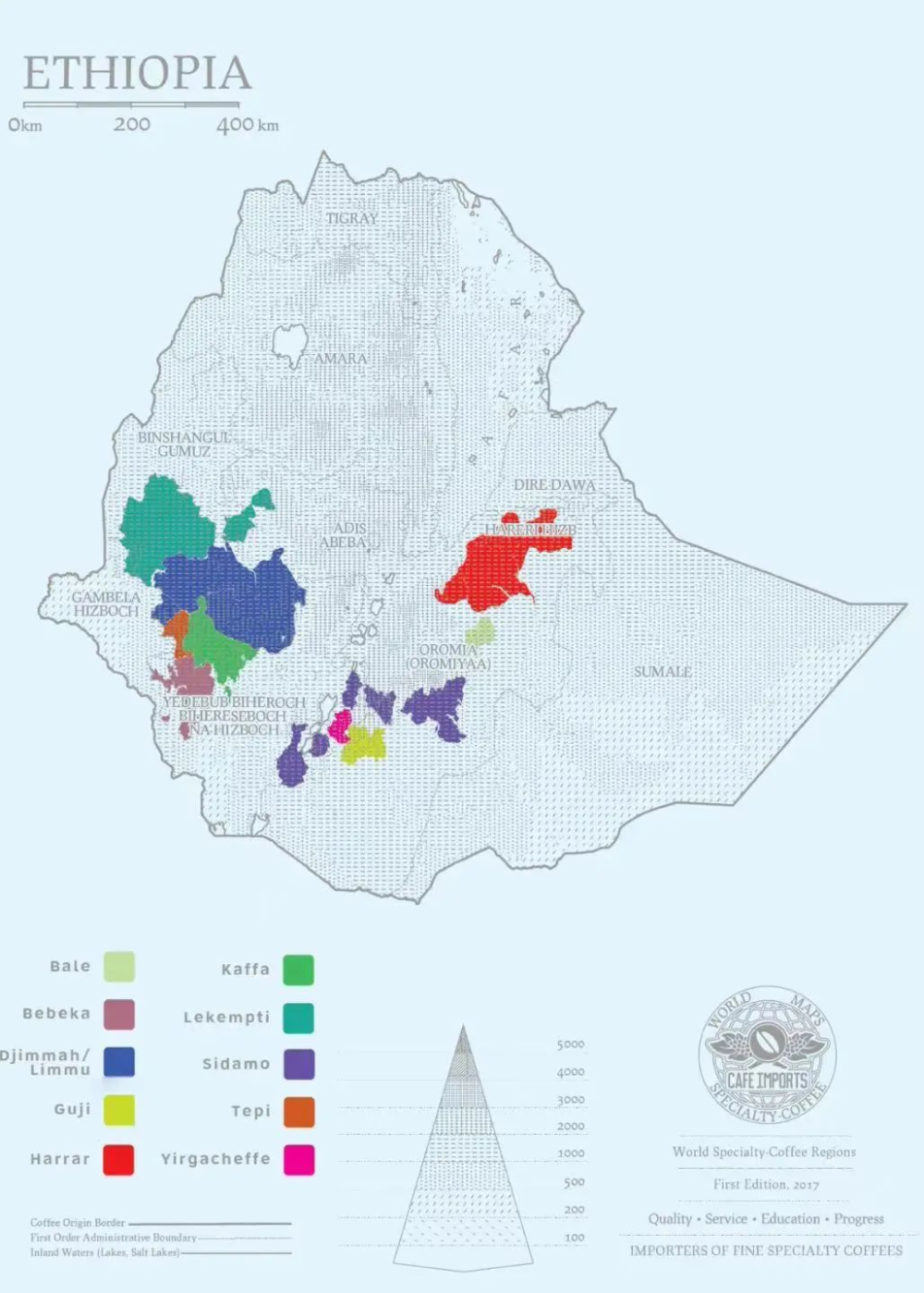
Sidama’s geographical conditions provide an excellent stage for specialty coffee: a microclimate with annual rainfall reaching 2,000 mm, fertile and well-drained volcanic soil, along with planting altitudes between 1,400 and 2,200 meters, allow coffee trees to accumulate sugars and complex flavors amid day-night temperature variations. Especially in the Bensa area, a rising star within Sidama, elevations can reach up to 2,300 meters, with some plots even climbing to 2,400 meters — such heights extend the ripening period of coffee cherries, allowing for more thorough accumulation of sugar compounds, ultimately yielding beans with high density and richly layered aromas.
The rise of Bensa is inseparable from Alo Coffee. This locally founded company, which has only been around for four years, was established by Tamiru Tadesse Tesema, who hails from Alo Village. Tamiru originally studied engineering but was inspired after witnessing fellow villagers winning COE (Cup of Excellence) awards, motivating him to explore Bensa’s potential. His first processing station was set up in his hometown of Alo Village, initially serving around 200 nearby coffee farmers by providing planting technique guidance and establishing stable purchasing channels. Today, Alo has expanded to eight processing facilities locally, all situated close to farming villages to ensure cherries can be processed quickly after harvest, maintaining freshness and quality.
Alo primarily cultivates the 74 series of varieties developed by JARC (Jimma Agricultural Research Center), including 74158, 74165, 7412, and 74110, among others. These varieties have undergone years of selection, are well-adapted to high-altitude environments, and possess strong disease resistance. Among them, the 74158 variety demonstrates exceptional performance under natural sun-drying processing: practical examples from the Hatessa processing station show that this bean, when brewed, releases delicate magnolia floral notes accompanied by subtle fermentation layers. The cup starts with a bright acidity of citrus and passion fruit, and finishes with sweet lingering notes of tropical fruits like pineapple. Overall, the flavor profile is clean and vibrant, making it ideal for drinkers who prefer fruity profiles.
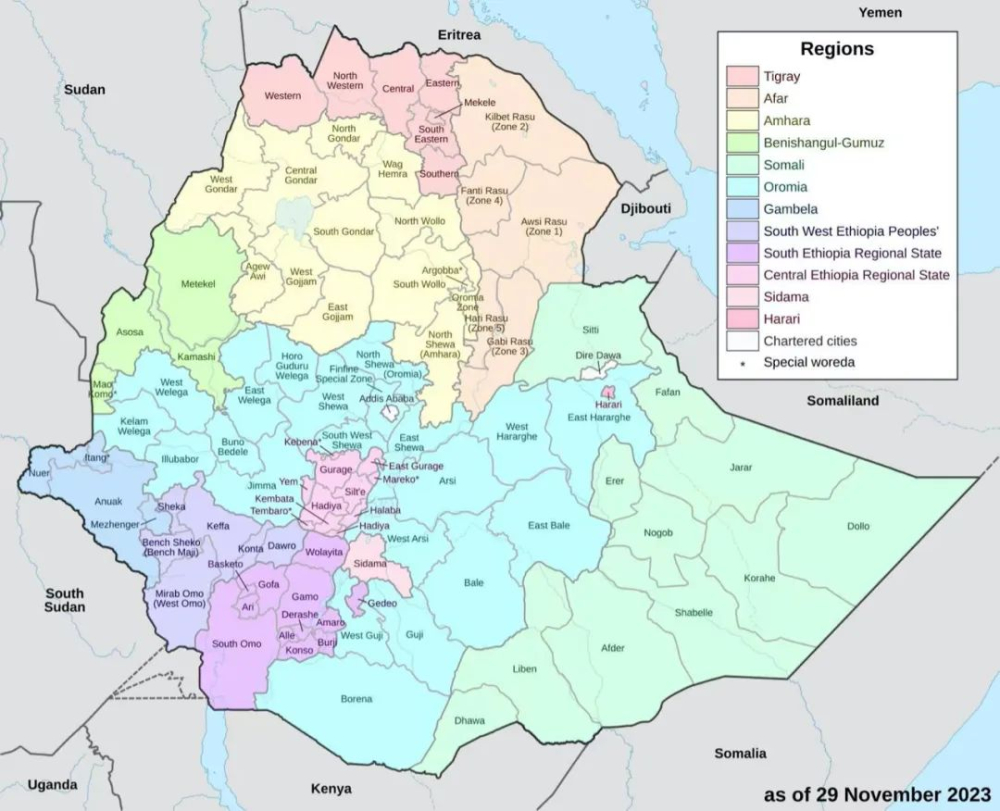
The influence of high altitude on coffee flavor cannot be overlooked. The day-night temperature variation in the Bensa area slows down the ripening of coffee cherries, not only extending the growth cycle but also increasing bean density — a key factor in forming rich aromas and full-bodied flavors. For coffee enthusiasts, understanding these underlying principles helps in selecting origins and processing methods more precisely, and in adjusting brewing parameters (such as water temperature and grind size) to highlight specific flavor characteristics.
In summary, the coffee story of Sidama and Alo Village in Bensa is woven together by geographical advantages, variety selection, and processing techniques. From the evolution of historical names to the actual flavor expression, every link is worth exploring in depth, offering valuable insights for enthusiasts seeking a deeper coffee experience.
The above content is compiled by CoffeeHunters, a coffee news website.


