







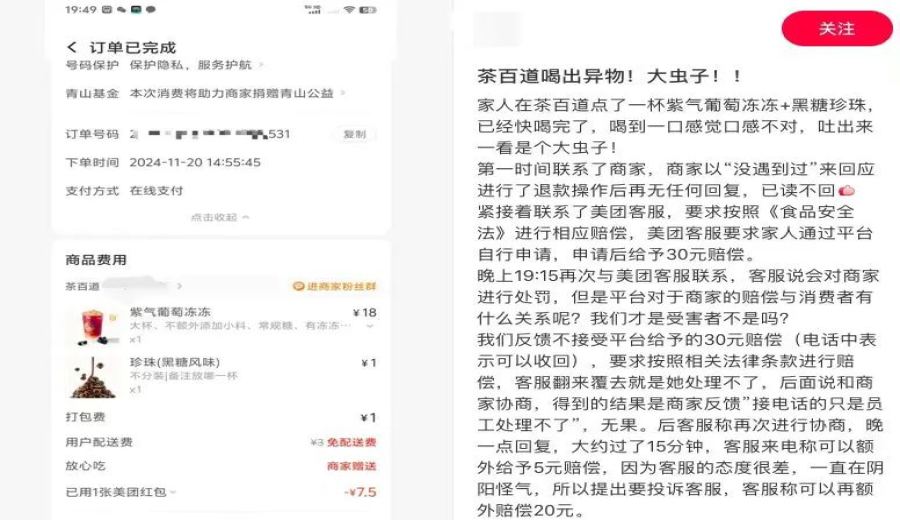
Introduction:A consumer found a foreign object in a drink from Tea Bai Dao — a bug hidden inside a tapioca pearl, sparking subsequent disputes over compensation. The merchant verbally agreed to pay 1,000 yuan in compensation but requested the consumer to sign a non-disclosure agreement and delete online reviews. Is such handling appropriate? What legal rights do consumers have? This article takes you through the full details of the incident and highlights key points for safeguarding your rights.
While enjoying a cup of purple grape jelly with added toppings, the consumer expected a sweet and tangy taste. Unexpectedly, when nearing the bottom of the drink, they bit into something unusual in the brown sugar tapioca pearl topping. Upon spitting it out, they were shocked to find it was an insect. This alarming discovery instantly ruined their appetite and raised serious concerns about food safety.
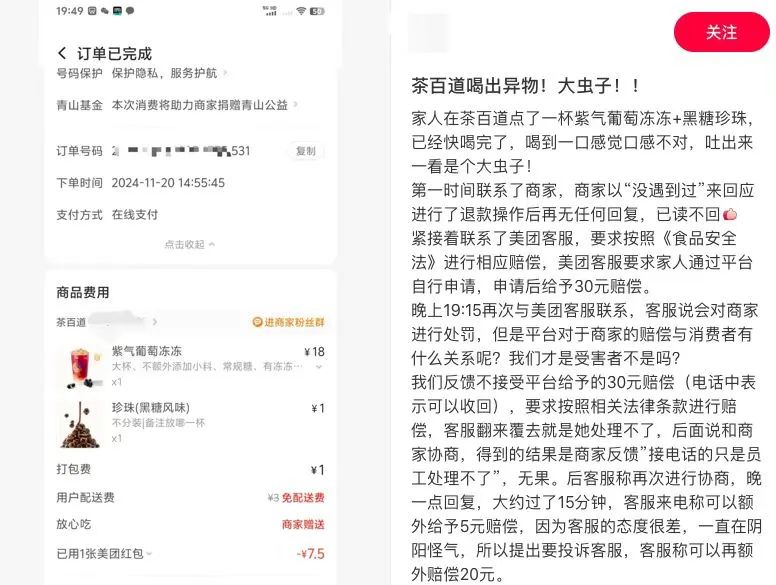
According to the family of the individual involved, the incident occurred on the afternoon of November 20th. The drink, which contained brown sugar tapioca pearls, was nearly finished when the consumer noticed an unusual texture in their mouth, prompting them to investigate further. They contacted the Tea Bai Dao store to report the issue, but the store claimed that “they had never encountered a similar situation” and only processed a refund before ceasing further communication.
Since direct communication with the store yielded no resolution, the consumer turned to a third-party platform to file a complaint, hoping to receive reasonable compensation according to relevant laws. However, even with the platform’s customer service mediating, the two parties could not reach an agreement on the compensation amount, and the insurance payout suggested by the platform also left the consumer dissatisfied.
The next day, a person claiming to be a representative from Tea Bai Dao contacted the consumer. After confirming the authenticity of the video and photos of the foreign object in the drink provided by the consumer, the store first explained that surveillance footage showed employees following proper procedures. They then stated they were willing to listen to the consumer’s specific demands.
According to the dialogue records between both parties, the consumer insisted on receiving reasonable compensation in accordance with the law, while the store indicated that the company had already disciplined the involved employee. They emphasized that the 1,000 yuan compensation demanded by the consumer would place too heavy a burden on the staff member and hoped to lower the amount.
Although initial negotiations were not smooth, ultimately, the merchant verbally agreed to pay 1,000 yuan in compensation, but with the condition that the consumer delete all online posts and comments related to the incident. This made the consumer suspicious, feeling as though they were being implied to be a “malicious claimant.”
Even more surprising was that after the two parties reached a preliminary consensus, the consumer received an agreement document provided by the merchant, which stated that compensation could proceed upon confirmation. The content and format of this agreement led the consumer to feel they were not asserting their legal rights, but rather accepting some kind of “gag order.”
In response, the consumer clearly stated that they could not accept the content of the agreement and refused to sign it. They believed they were entitled by law to reasonable compensation due to the food safety issue and should not be labeled with an unfounded “malicious” tag. Additionally, the consumer later drafted their own version of the agreement, but the merchant refused to sign it, citing that “certain clauses were not favorable to the company.”
As the two parties consistently failed to agree on the terms, and the local food and drug administration took note of the online public discourse and proactively contacted the store for a discussion. Currently, the consumer does not accept the store’s private settlement offer of 500 yuan. Both sides have expressed willingness to follow the proper procedures and await the results of the official investigation by the regulatory authorities.
This incident not only highlights potential issues within the beverage industry regarding food safety and consumer communication, but also reminds consumers to be clear about their rights when facing similar situations and to protect their interests through proper channels. If a foreign object is found in a drink, it is recommended to take photos or videos as evidence immediately and keep the purchase receipt for future complaints or reports.
The above content is compiled by CoffeeHunters, a coffee news website.


