







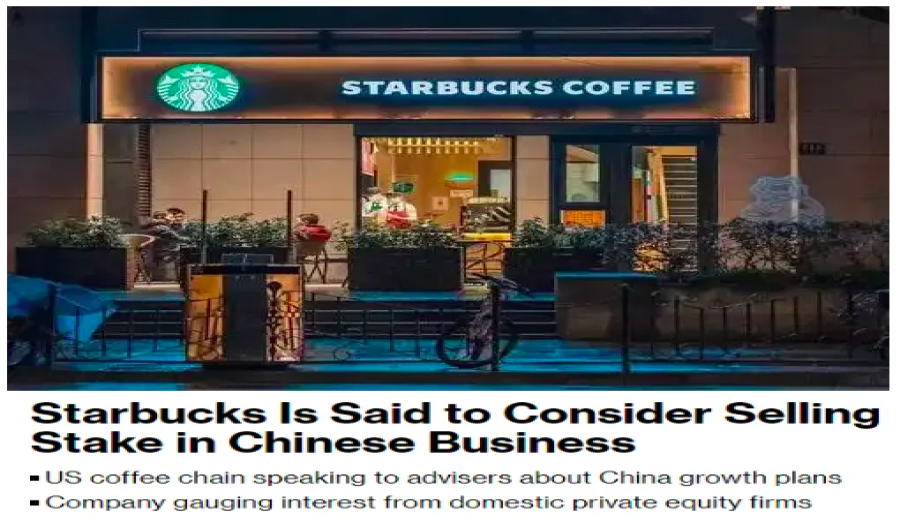
Introduction:Recent reports indicate that global coffee chain leader Starbucks is actively evaluating multiple strategic options in the Chinese market, including the potential sale of a partial stake and the introduction of a local Chinese partner. With rapid expansion by domestic brands such as Luckin, Starbucks is facing unprecedented competitive pressure in China, experiencing three consecutive quarters of same-store sales decline. The newly appointed CEO, Laxman Narasimhan, is set to visit China in December and is expected to provide a clearer outline for the future direction.
According to market sources, the internationally renowned coffee brand Starbucks is comprehensively assessing the future strategy of its operations in China, which includes the possibility of selling equity and establishing partnerships with local Chinese companies. This evaluation has entered a substantive stage. Starbucks management has not only engaged in in-depth discussions with its advisory team on how to expand in China, but has also informally approached several potential investors, including Chinese private equity firms, large enterprise groups, and local companies with industry backgrounds.
Although no final decision has been made yet, it is certain that Starbucks is carefully evaluating various possible options in the hope of finding a breakthrough in an increasingly competitive market. Particularly under the pressure of rapid expansion by domestic brands like Luckin Coffee, Starbucks’ performance in the Chinese market has seen same-store sales decline for three consecutive quarters, a situation that remains concerning.
Data shows that the Chinese market is Starbucks' second-largest globally. As of the end of September this year, Starbucks operates over 7,500 stores across more than 250 cities in China, accounting for approximately 19% of its total global store count. However, despite having such an extensive store network, Starbucks still struggles to counter the strong rise of domestic brands. So far this year, its sales performance in China has remained weak, with the latest quarter seeing a 14% drop in same-store sales.
Faced with such challenges, new CEO Laxman Narasimhan admitted during an internal meeting last month that the current competitive environment in China is “extreme,” and the overall macroeconomic climate also presents numerous difficulties. He further stated that Starbucks needs to rethink how to effectively expand its market share and continue seeking strategic partners that can contribute to the brand’s long-term development, although no specific directions have been disclosed yet.
As early as August this year, there were market rumors that former Starbucks CEO Brian Niccol had considered seeking a partner in China during his tenure, which was interpreted by the public as a possible signal of franchising. Although that personnel change occurred shortly after, his successor Narasimhan did not deny this direction during the fourth-quarter earnings call, instead showing a willingness to continue with such a strategy.
Market analysis suggests that if Starbucks does decide to sell a stake in its Chinese business, the cases of McDonald’s and Yum! Brands could serve as valuable references. Years ago, these two fast-food giants chose to sell partial equity to private equity firms in order to better cater to the needs of Chinese consumers, which successfully led to a doubling of their store counts in China within just a few years, and they continue to expand to this day.
This successful experience may offer Starbucks a useful example in seeking collaboration with companies that possess a deep understanding of the local market and resources, thereby further strengthening the brand’s localization capabilities. Notably, Narasimhan revealed in an interview with CNBC that he plans to personally visit China during the first two weeks of December for a market inspection, hoping to gain deeper insights into local operations and market trends.
This trip to China is seen as a crucial turning point in Starbucks’ future strategy. It is expected that after the visit, Narasimhan will provide a clearer direction for Starbucks’ next steps in China. Prior to that, the market generally anticipates that Starbucks will continue evaluating various possible partnership and equity adjustment options to address the current challenging market conditions.
Overall, whether Starbucks can stabilize itself amid this wave of competitive pressure, or even achieve growth against the trend, will depend on its ability to quickly adjust its strategy and collaborate with the right local partners. The coming months, especially Narasimhan’s trip to China, will be a critical period for observing the brand’s next moves.
The above content is compiled by CoffeeHunters, a coffee news website.


