







Introduction:Colombia’s coffee grading system, which incorporates altitude, defect rate, and green bean screen size, is one of the most detailed in South America. By understanding the Excelso grade, the 500g sample defect deduction standards, and the actual performance of washed Caturra from the Huila region, you can decipher the labels on green coffee sacks and grasp the key parameters that influence flavor.
Among the many coffee-producing countries, Colombia’s grading system is relatively complex and meticulous—especially when compared to most Central American countries that primarily use altitude as the basis for classification. In addition to altitude, Colombia also includes the ratio of defective beans and green bean screen size in its export standards, ensuring that every batch of exported coffee maintains a certain level of quality.
The Excelso grade, promoted by the FNC (Colombian Coffee Growers Federation), is one of the country’s primary export grades. Any green beans that meet export standards will have the words “Excelso-Café de Colombia” printed on their sacks, along with a Quality Certificate issued by the FNC, allowing buyers to clearly identify the grade and origin.
According to regulations, Colombian export-grade green coffee beans must have a screen size of 14 or higher, with at least 50% of the beans larger than 15. Additionally, no more than 5% of the beans can fall between sizes 12 and 14. Furthermore, the green beans must be free from insect damage, discoloration, or off-odors, with a uniform overall appearance. The flavor must be clean and free of impurities, and the moisture content must be controlled below 12.5% to ensure stability during roasting and extraction.
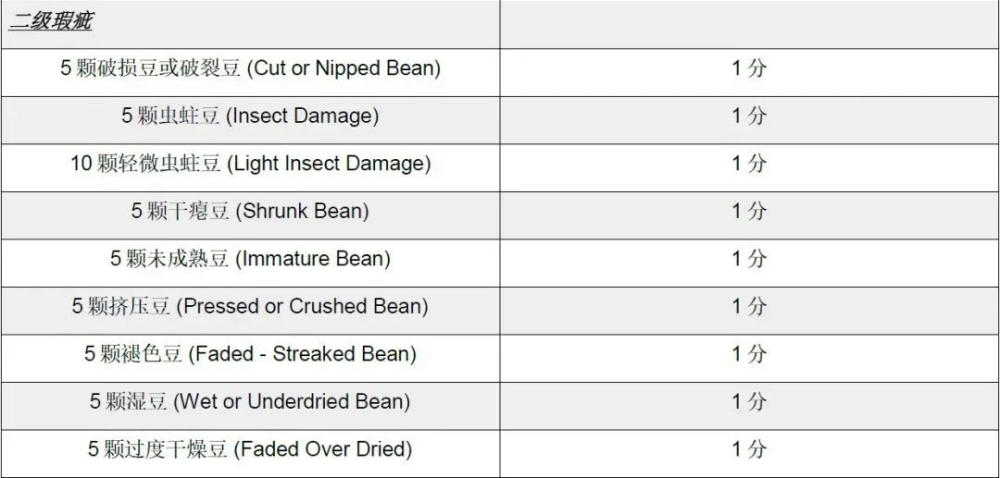
An even more critical aspect is the defect analysis conducted on a 500g sample of green beans. These defects are categorized into primary and secondary types, evaluated through a specific scoring system, and the total defect score must not exceed 24. This strict inspection mechanism effectively filters out high-quality and stable green beans, which is one of the key reasons Colombian coffee enjoys global trust.
The Colombian industry generally believes that plump, uniformly sized green beans usually indicate good maturity. Not only does this help develop a rich aroma profile, but it also allows for more even heat absorption during roasting, ultimately resulting in a consistent and balanced flavor. For this reason, screen size becomes one of the important criteria for grading.
Currently, the three most mainstream export grades in Colombia are: Excelso UGQ12*60 (approximately 1.5%), Excelso EP12*60 (about 10%), and Excelso Supremo12*60 (about 5%). The “12*60” in these codes represents the screen size specification and tolerance range, where larger numbers indicate bigger bean size.
Excelso UGQ12*60 (typically high-quality, Usual Good Quality) requires green beans to be 14 or above, allowing up to 1.5% of beans between 12 and 14, but all must still be larger than 12, with over 50% of the beans larger than 15. This grade is suitable for roasters seeking value for money and stable flavor.
Excelso EP12*60 (European Preparation) requires green beans to be 15 or above, allowing 10% of beans smaller than 15, but not below 12. This grade is common in the European market, with higher standards for size and appearance.
The highest-tier Excelso Supremo12*60 (about 5% of exports) is the grade with the highest screen size requirement, where green beans must be larger than 17, allowing up to 5% of beans smaller than 17, but still 14 or above. These beans typically have a firmer texture and richer aromatic potential.
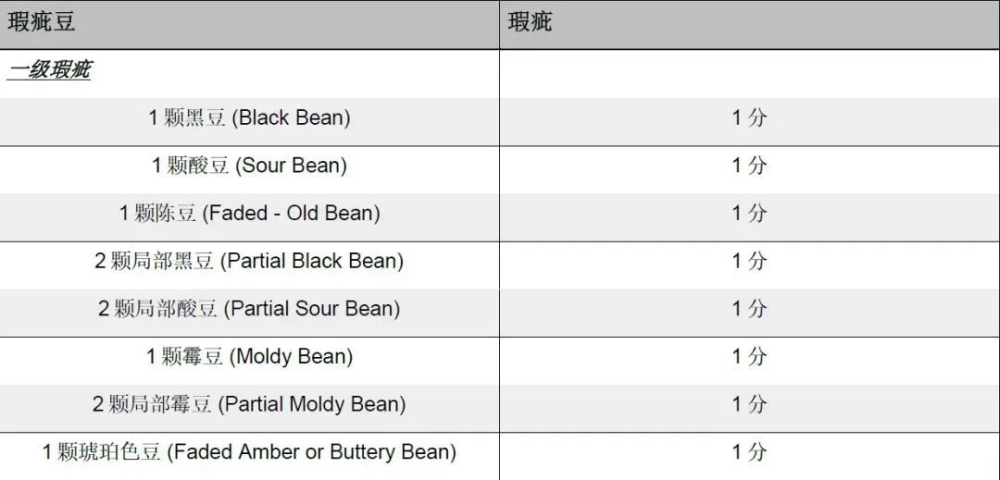
It’s worth noting that the Supremo 12*60 grade commonly used in Colombian exports also uses “12*60” to represent defect allowances: in a 500g sample, there can be a maximum of 12 primary defect beans and 60 secondary defect beans. This standard is widely applied to many well-known export batches, including many commercial specialty coffees such as Rosas Valley, Sidra, Maracaturra, and Geisha, all of which belong to the Supremo grade and are suitable for further exploration of cupping characteristics.
Colombian coffee farmers register and number information such as country, region, grade, and screen size during production, aiding subsequent green bean traceability. For example, a common sack label like “Colombia Huila Supremo SC17/18 FNC” clearly indicates the beans are from the Huila region, belong to the Supremo grade, use the SC17/18 variety, and are certified by the FNC.
Taking washed Caturra from the Huila region as an example, its cupping performance showcases the classic characteristics of Colombian coffee: rich nutty tones, soft chocolate aromas, accompanied by moderate acidity and clear sweetness. The overall flavor profile is balanced and layered, suitable for medium roasting to enhance its full-bodied foundation and flavor expression. After brewing, the cup reveals rounded acidity, delicate nutty aromas, and a caramel-like finish—an classic regional flavor that’s both suitable for everyday drinking and worthy of deeper exploration.
The above content is compiled by CoffeeHunters, a coffee news website.


