







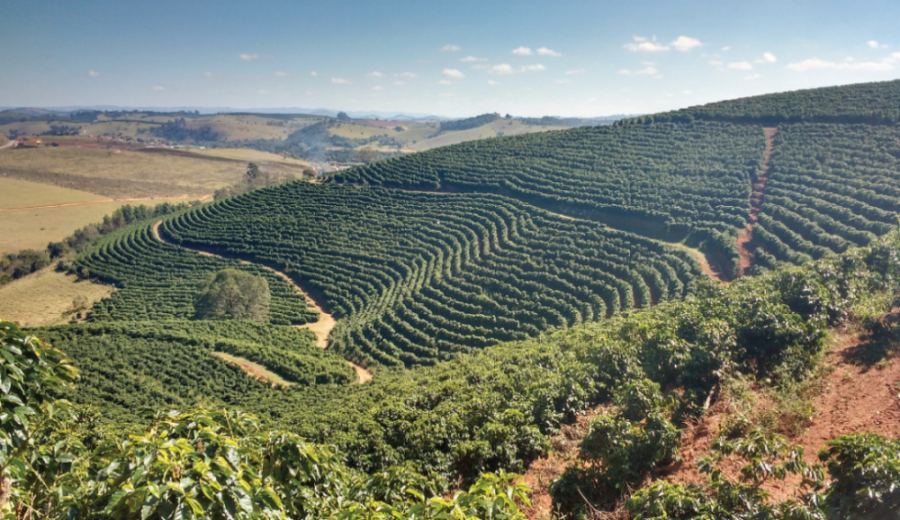
Introduction:Do you know why Brazil’s primary coffee variety is Red Bourbon? And why doesn’t Yellow Bourbon turn red when it ripens? This article delves into the evolutionary background of Brazilian coffee varieties, from Typica to Bourbon, and then to the emergence of Red and Yellow Bourbon. It explores the genetic reasons behind Yellow Bourbon’s lack of color change, including the key roles of anthocyanins and luteolin. We also provide flavor profiles and practical pour over recommendations for both Red and Yellow Bourbon to help you find the Brazilian specialty coffee beans that suit your taste.
As one of the world’s largest coffee producers, Brazil’s coffee variety evolution has always been closely watched. From originally being dominated by Typica to later introducing Bourbon varieties, the changes in varieties were not just about pursuing yield, but also involved disease resistance, adaptability, and market demand. Among the many branches, Red Bourbon and Yellow Bourbon have become the two mainstreams of coffee cultivation in Brazil, but what exactly sets them apart? Especially Yellow Bourbon—why does it remain yellow upon ripening, unlike typical Bourbon varieties that turn red?
Looking back in history, when coffee was first introduced to Brazil in 1727, the main variety cultivated was Typica. Although Typica is a classic and historic Arabica variety, it has relatively low yields and is susceptible to pests and diseases, offering limited economic benefits to farmers. By the 1860s, Brazil introduced the Bourbon variety, which had about 30% higher yield per unit than Typica. While its disease resistance was still limited, its overall performance was more stable, gradually replacing Typica as the dominant variety.
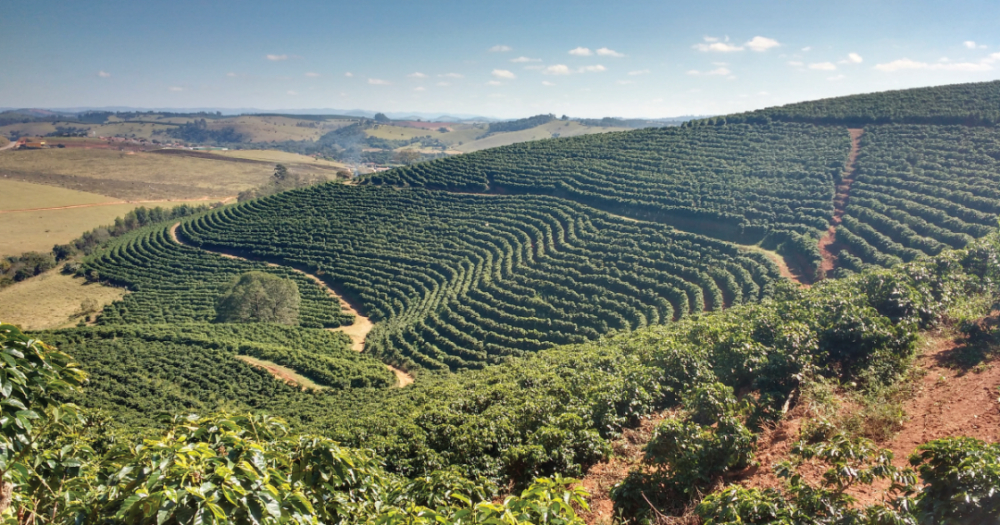
Bourbon was first planted in the Campinas region of southern Brazil, where the climate and soil conditions were very suitable for its growth. This allowed the variety to quickly adapt and expand to other areas, thereby influencing the coffee planting landscape across all of South and Central America. Over time, Brazilian agricultural research institutions, such as the Campinas Agronomic Institute (IAC), focused on breeding and selecting varieties better suited to the local environment. Among them, Red Bourbon and Yellow Bourbon stood out due to their strong adaptability and excellent flavor profiles, and they remain among the main varieties cultivated in Brazil to this day.
In terms of flavor and processing methods, many Brazilian specialty coffee beans, especially those aimed at entry-level drinkers, are based on Red Bourbon. The common processing method is honey processing, and during roasting, medium to dark roasts are preferred to highlight the typically low acidity of Brazilian coffee, while enhancing nutty, peanut, and cocoa-like aromatic layers. This combination of roasting and processing results in a rich and balanced mouthfeel, making it ideal for coffee lovers who enjoy bold flavors but prefer lower acidity.
So, what is Yellow Bourbon? Generally, the coffee cherries of the Bourbon variety turn from green to yellow, orange, and finally red as they ripen. However, a special variant emerged in Brazil where the cherries remain yellow even at full maturity, without turning red. To distinguish it from the more common red-fruited Bourbon, this variety came to be known as ‘Yellow Bourbon.’
According to records, Yellow Bourbon was first discovered in 1930 in Pederneiras, northeastern São Paulo state, Brazil. Local growers noticed that certain Bourbon plants produced cherries that remained a vivid yellow even when fully ripe, rather than turning the expected red. Initially, some speculated that it might be a mutation of Red Bourbon, while others believed it was related to a Typica variant called ‘Amerelo de Botocatu’ (discovered as early as 1871 in São Paulo state, characterized by its yellow fruit).
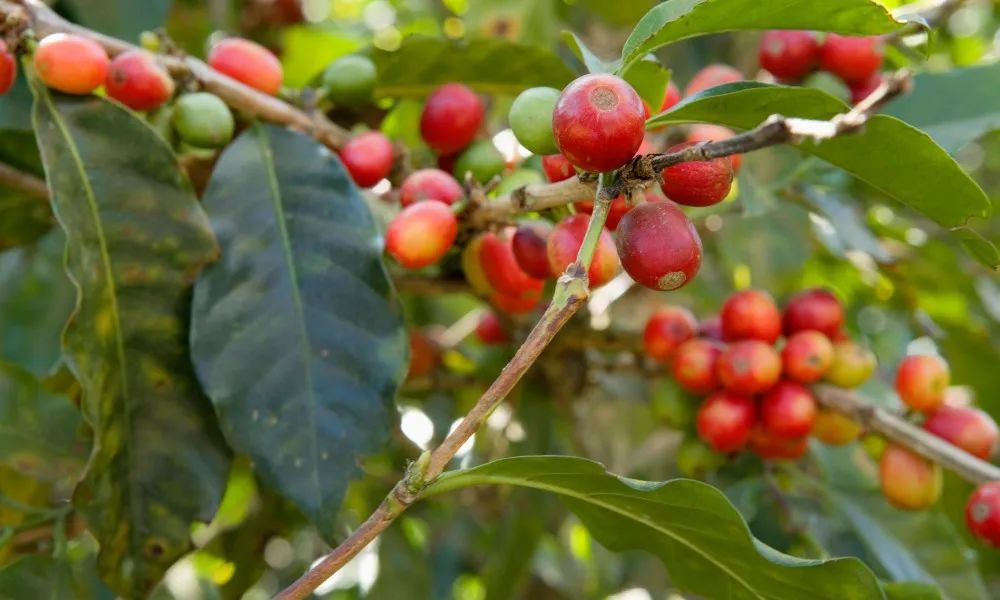
As for why Yellow Bourbon cherries don’t turn red? Scientific research has uncovered the genetic secret behind it. In 1942, botanist Professor Krug studied this phenomenon and named the gene controlling fruit color ‘Xanthocarpa,’ derived from Greek—‘Xanthus’ meaning yellow, and ‘carpus’ meaning fruit. Further analysis revealed that the color of coffee cherries is primarily determined by two types of plant pigments: one is ‘anthocyanin,’ which determines whether the fruit can appear red; the other is ‘luteolin,’ a type of flavonoid that appears as yellow crystals.
In simple terms, the gene controlling anthocyanin expression comes in dominant and recessive forms. If a coffee plant carries the dominant XcXc gene combination, the fruit will exhibit a red color; but if the gene is recessive (XCXC), anthocyanins will not be expressed, and the yellow of luteolin becomes dominant, resulting in the fruit’s unique yellow appearance. This is the genetic principle behind why Yellow Bourbon cherries remain yellow upon ripening.
When it was first discovered, Yellow Bourbon became highly sought after by farmers due to its high yield and excellent cup quality. However, in the following years, growers found its yield to be less stable than initially thought, and its disease resistance significantly weaker, requiring more meticulous field management. As a result, it is better suited for cultivation at altitudes above 1000 meters. Currently, Yellow Bourbon is mainly concentrated in high-altitude regions of Brazil such as Mogiana in São Paulo state, where the large diurnal temperature variation helps the fruit accumulate richer aromatic compounds.
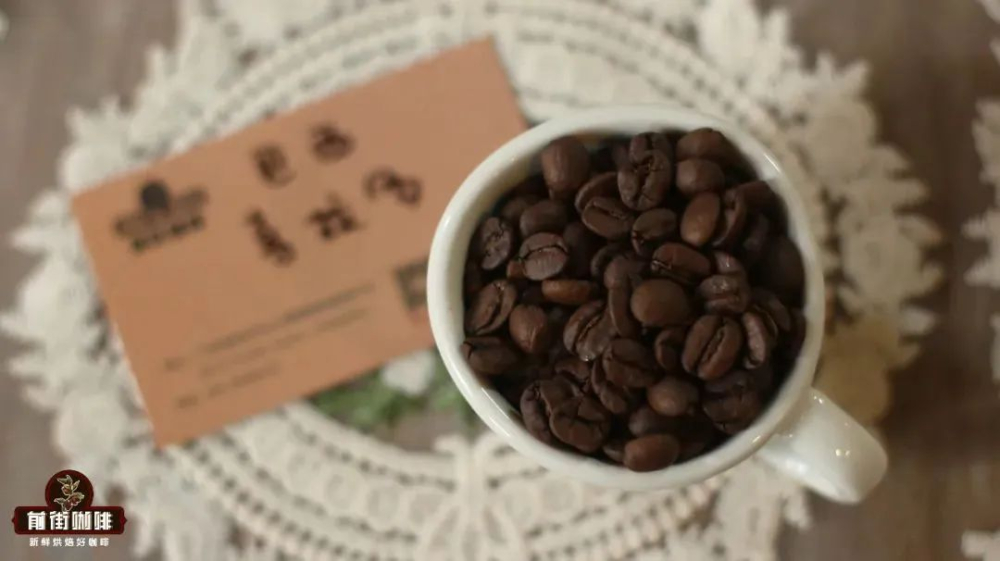
If you want to personally experience the unique flavors of Yellow Bourbon, look out for specialty coffee beans from high-altitude regions labeled as Yellow Bourbon. These beans, when medium to dark roasted, can exhibit a rich yet smooth character, suitable for brewing with a variety of methods such as pour over, moka pot, French press, or even siphon. Based on cupping experience, Yellow Bourbon usually has a gentler acidity compared to Red Bourbon, with a refreshing sweetness and a creamy texture. Its flavor profile often includes notes of sugarcane, nuts, chocolate, and peanuts. It has a smooth and delicate mouthfeel, with a clean and lingering aftertaste.
In summary, Brazil’s Red Bourbon and Yellow Bourbon not only differ visibly in fruit appearance but also involve complex genetic mechanisms and adaptive evolution. Whether you prefer the classic, bold, and low-acidity flavors or want to explore the mellow and sweet characteristics of Yellow Bourbon, understanding the origins and traits of these varieties can help you make more precise choices when selecting coffee beans, and bring out their most captivating flavor potential during brewing.
The above content is compiled by CoffeeHunters, a coffee news website.


