








Introduction:Recently, Tea&Berry has required its stores to fry tapioca pearls on-site, triggering strong feedback from frontline staff. The brand aims to enhance beverage flavor through freshly made pearls, but the added preparation process has also increased the workload for employees. This article delves into the craftsmanship details of handmade pearls, the practical challenges faced by staff, and the brand’s balancing act between innovation and labor.
In recent months, Tea&Berry has frequently launched new flavored beverages, including wheatgrass juice, sweet pepper fruit and vegetable tea, and Divine Strawberry, continuously generating market buzz. However, the brand recently mandated that stores install wok equipment and distribute cassava starch, requiring employees to hand-roll tapioca pearls and fry them on the spot, sparking strong resistance among frontline workers.
While bubble tea enthusiasts are excited about this new approach, believing that hand-fried pearls offer better texture and flavor, and may even be healthier, the production process behind it has left staff overwhelmed. Unlike using pre-made pearl mix, hand-fried pearls require time-consuming and labor-intensive steps—from kneading and rolling to frying.
The steps for making hand-fried pearls are intricate.Staff must first mix cassava starch with water to form a dough, then divide and roll it into uniformly sized pearls. These are then continuously stir-fried in a wok over medium-low heat to prevent sticking or burning. The entire process takes about thirty minutes and demands precise control of heat and technique.
According to internal staff, since the brand launched its “Super Vegetarian” series, daily preparation of various fresh juices and vegetable drinks has already consumed significant time and energy. Add to that frequent rush orders, and employee stress is already at its limit. Now, with the addition of hand-fried pearls, early-shift staff often have to manage the entire process alone—the workload is imaginable.
Many employees have posted on social platforms, saying things like “I just want to quit,” “My morning shift is already dead inside,” and “I can’t take this anymore.” Some have even resigned due to the unbearable additional workload. Stores with only one early-shift employee, in particular, struggle under the growing number of preparation tasks.
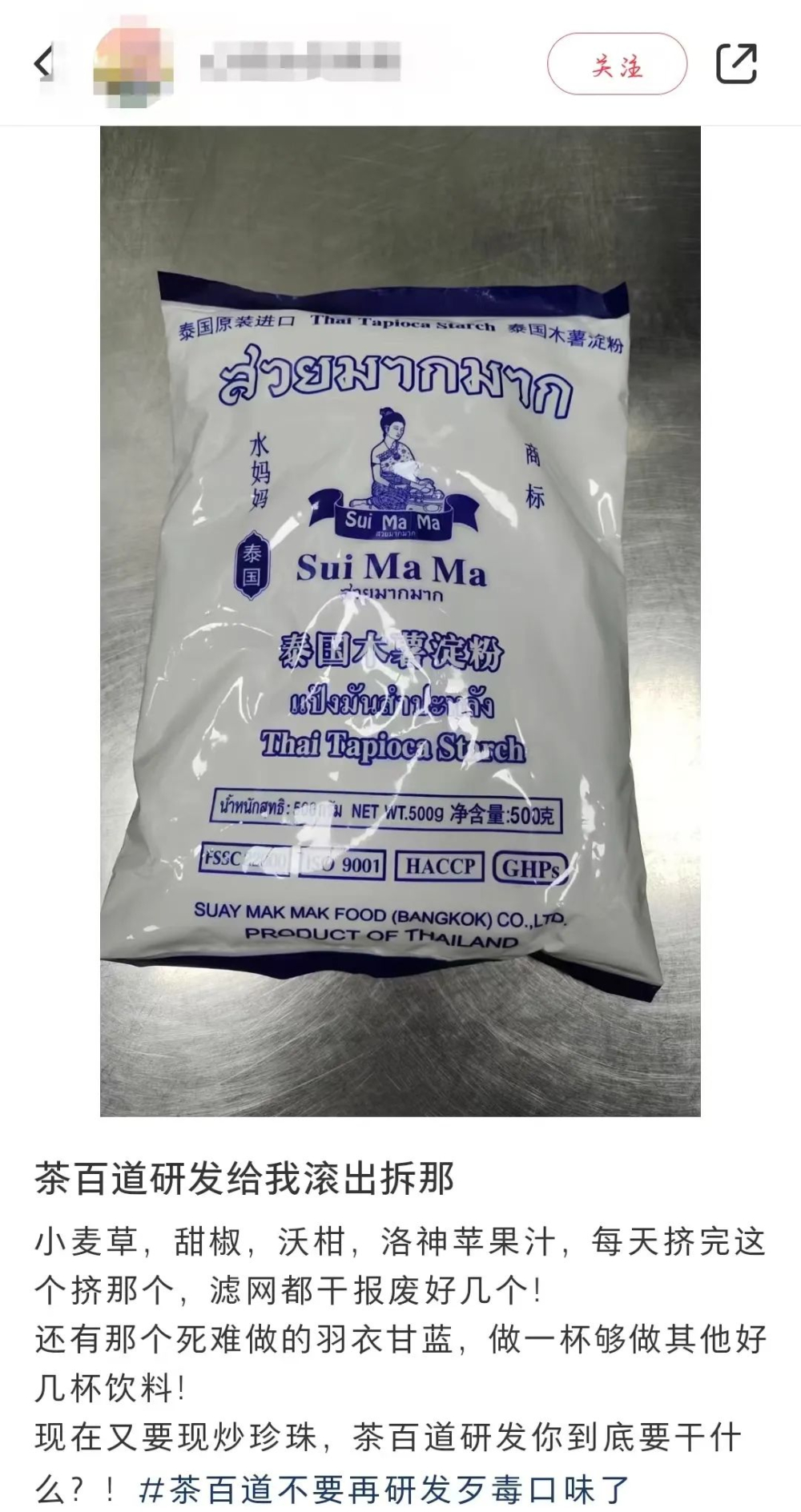
Although the brand may intend to boost product differentiation and customer experience through hand-fried pearls, in practice, failing to adjust staffing and process design accordingly can instead exacerbate the burden on frontline workers, ultimately affecting service quality and staff retention.
Some employees have also suggested that if the brand simplified its existing complex beverage procedures or phased out poorly received products before launching new ones, it might ease store pressure. Additionally, they urge the R&D team to experience frontline work firsthand to truly understand the challenges staff face.
Overall, while Tea&Berry’s hand-fried pearl initiative is well-intentioned, it also highlights that amid rapid expansion and innovation, the brand must also consider the specific working conditions and staffing of its employees to sustain growth in the fiercely competitive tea beverage market.
The above content is compiled by CoffeeHunters, a coffee news website.


