







Introduction:Recently, Heytea has frequently been in the news for store closures in multiple cities, drawing widespread market attention. Not only have long-standing stores shut down, but new outlets have also not been spared from closure. What exactly is behind this wave of "store closures"? This article delves into the operational strategy adjustments made by Heytea since September, the specific changes in its tightened franchise policy, and the impact of these adjustments on the brand and the market, helping readers stay updated on the latest trends in the tea beverage industry.
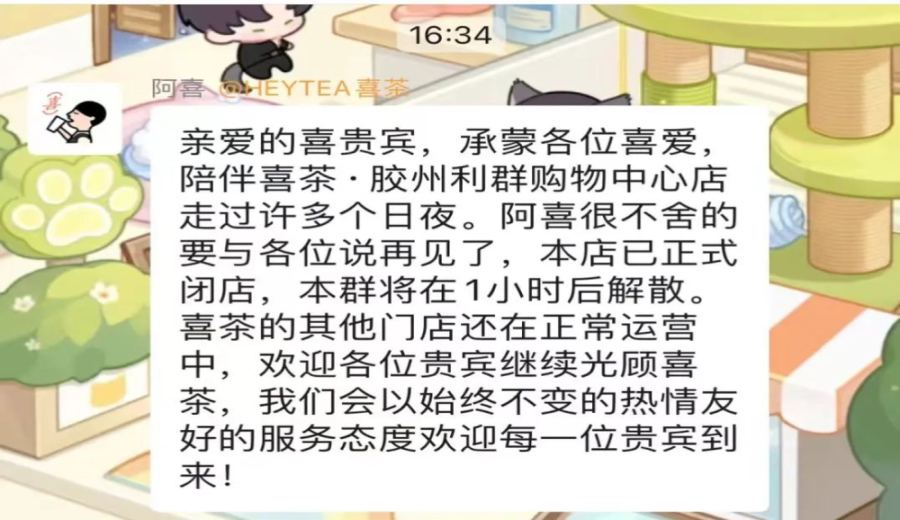
Since early November, reports of Heytea store closures in various cities have sparked extensive discussion among consumers and industry insiders. Many customers have found that their regular branches have suddenly ceased operations—not for renovation or upgrades, but for permanent closure. According to statistics, in November alone, multiple outlets closed, including the Ganzhou Market Store in Zhangye, Gansu; the Guofang Department Store Store in Lanzhou; the Zijinjiang Campus Store at Zhejiang University; the Liqun Shopping Center Store in Jiaozhou, Shandong; the Yinchuan Impression City Store in Nanning, Guangxi; and the Wannian Huadi Fortune Plaza Store in Mount Emei.
Among the stores affected by this wave of closures are some that have been in operation for over a decade and represent flagship locations in their respective areas, as well as newer stores that had been open for less than half a year and once drew long queues. Whether old or new, all these stores now face the removal of signage, equipment recovery, and store subleasing, leaving many familiar customers feeling nostalgic.
The industry generally believes this round of closures is related to an internal letter released by Heytea in September 2024. The letter stated that the brand will no longer blindly pursue short-term expansion speed or market share, nor will it engage in price wars or product homogenization. Instead, it will focus more on the quality of individual stores, operational efficiency, and brand differentiation, while appropriately controlling the pace of store densification, emphasizing "quality" over "quantity."
At the same time, internet users claiming to be Heytea city partners revealed that the brand’s recent franchise policies have undergone significant adjustments, with overall application thresholds raised and reviews becoming stricter. It has been noted that the current approval rate for franchise applications is low, and even applications for new locations submitted by experienced franchisees are mostly unlikely to be approved. In addition, the brand has canceled its end-of-year subsidy measures, accelerating market elimination and showing a trend of "restricting new store openings and encouraging existing stores to cease operations."
Further information indicates that Heytea now has higher requirements for the location, size, and image of new stores. Future new openings will no longer consider small street-side kiosks but will instead favor larger spaces within shopping malls or complex commercial buildings, with recommended sizes of about 60 to 80 square meters. Meanwhile, decoration standards have also been raised, leading to relatively higher overall investment costs.
Industry estimates suggest that, taking 80 square meters as an example, current decoration costs range between 250,000 and 300,000 RMB, while the total investment may reach as high as 800,000 or even 1,000,000 RMB. Although the brand no longer mandates the purchase of specific smart devices, other decoration, equipment, and entry costs remain a significant burden.
Such a shift also aligns with the strategic direction mentioned in Heytea’s internal letter—not blindly pursuing expansion and internal competition, but focusing on improving the operational quality and brand value of individual stores. The transition from a past mindset of "expansion first" to one of "steady management" also leaves more room for the market to observe its future development.
In summary, Heytea’s recent store adjustments and tightened franchise policies are not just a strategic shift for a single brand, but also reflect the intensifying competition and changing consumption trends in the broader tea beverage market. For aspiring entrepreneurs looking to enter the tea beverage franchise space, understanding the brand’s strategic changes and the market environment will help make more pragmatic decisions.
The above content is compiled by CoffeeHunters, a coffee news website.


