







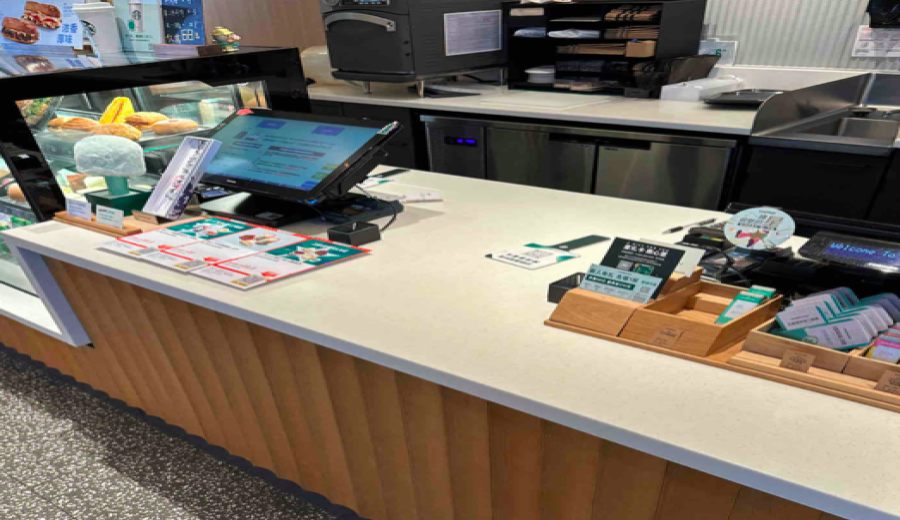
Introduction:Some Starbucks outlets have begun piloting a new measure by turning order screens—originally for internal use only—toward customers, aiming to promote more approachable and interactive service. However, this new initiative has not only left many customers confused by its complex operations but also inadvertently exposed internal sales scripts, sparking doubts from both employees and consumers. This article delves into the background of this adjustment, its actual implementation, and firsthand feedback from frontline staff, offering insight into the service challenges and areas for improvement behind the change.
Recently, Starbucks implemented a new measure in some outlets: rotating the order screens—which were previously operated solely by staff—toward customers, allowing them to place orders independently or assist in ordering when staff step away from the counter. However, what was initially intended to enhance service warmth has instead led to considerable confusion and controversy in practice.
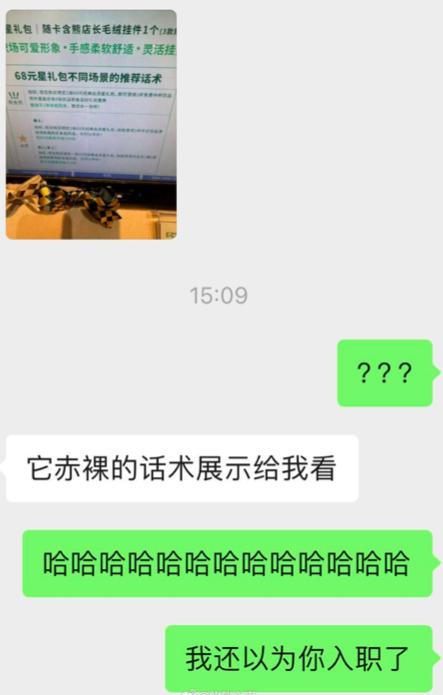
Many customers reported that when standing in front of the order screen, they were faced not with an intuitive interface but rather a menu system more cumbersome than the official app or mini-program. Some netizens even mentioned seeing internal information such as “recommended scripts for promoting the 68 RMB Starbucks gift pack in different scenarios” displayed on the screen, leaving them not only startled but also puzzled as to why Starbucks would show such material to customers.
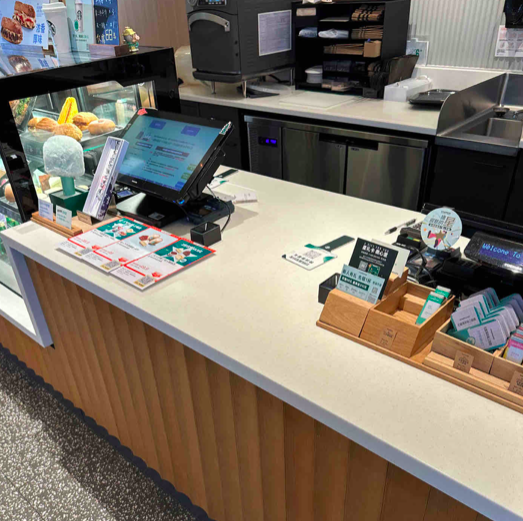
According to insider sources at Starbucks, this adjustment is seen as part of the brand’s strategy to “return to its roots as a community-oriented café.” Some management hope that by having staff step away from the counter and interact with customers in a more casual, close-up manner, the overall customer experience can be improved. There is also speculation that during peak hours, familiar customers can use the screen facing them to place orders independently, helping to streamline the process and reduce pressure on baristas.
However, in reality, these order screens are not designed with the clear and simple operation flow found in the self-service POS systems of certain fast-food brands. Most customers, when confronted with the illuminated screen, often feel at a loss and have to repeatedly try different options to find the right one, resulting in an experience far less smooth than using the official app. As a result, staff admit that unless there is sufficient manpower and a dedicated person to assist, customers operating the screens themselves often lead to low checkout efficiency or even accidental triggering of internal system information.
Notably, when the order screen is turned toward the customer, internal sales scripts and other materials not meant for public viewing may also be accidentally displayed, leading to further awkward situations. One employee mentioned encountering customers who reacted uncomfortably after seeing these internal scripts, negatively affecting the overall service atmosphere.
In stores where staffing is tight, the situation becomes even more challenging. In some outlets with only a single barista on duty, staff not only have to assist customers in real time with the order screens facing them but also quickly return to the counter to prepare drinks once the order is placed and then deliver the finished products to customers. One employee described it as: “Running back and forth inside and outside the counter all by yourself—it’s really hectic, especially during peak times, when you feel like you’re spinning non-stop like a top.”
Additionally, some employees have complained that to adapt to this new mode of operation, they have to frequently move between the counter and customers during peak hours, “running around for orders and weaving in and out of the queue,” which not only significantly increases physical exertion but also makes it difficult to maintain the level of service quality that should be provided.
Although Starbucks hopes that through this adjustment, staff can engage more closely with customers and create a warm, community-café-like interactive experience, frontline employees generally believe that the current implementation method not only fails to improve efficiency but also adds to their workload and may leave customers feeling confused and inconvenienced. For the brand, finding a balance between enhancing customer engagement and ensuring smooth service will be a key challenge in future adjustments.
The above content is compiled by CoffeeHunters, a coffee news website.


