







Introduction:Starbucks has slashed its bonus payout ratio to 60% for the current fiscal year, with senior management even canceling performance-based salary increases—reflecting the challenges posed by three consecutive quarters of same-store sales decline in the U.S. market. The newly appointed CEO has introduced service upgrades such as handwritten cup labels and ceramic cups, but an 8% sharp reduction in employee numbers may offset the impact of these reforms. This article analyzes the reasons behind the changes in the bonus mechanism, uncovers the truth behind operational data, and explores the balance between service optimization and workforce allocation.
The global coffee chain giant Starbucks is facing an unprecedented compensation adjustment crisis since its founding. According to the latest financial report data, the company has cut this fiscal year’s employee bonus payout ratio to60%, while senior management has completely canceled performance-based salary increases—an HR adjustment measure rarely seen in the past decade.
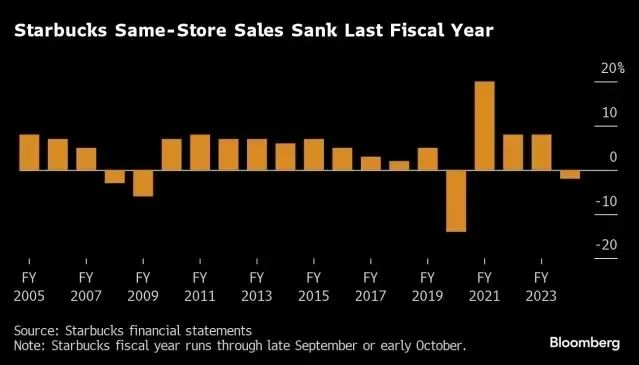
The continuous downturn in financial performance is the main reason. For the fiscal year ending September 29, Starbucks’ overall operating profit declined by approximately8%, marking the largest drop in recent years. Of particular note is the U.S. market, where same-store sales have declined for three consecutive quarters, with this quarter’s drop reaching7%—the first instance of negative same-store sales growth since the outbreak of the COVID-19 pandemic in 2020.
The bonus calculation mechanism reveals more details: approximately70%of the weight is tied to the company’s overall performance, with only30%linked to individual performance. This is in stark contrast to the commonly seen 50-50 weighting in the industry, meaning that even if employees meet their individual KPIs, they may still face an overall pay cut. Compared to the double-digit revenue growth seen in previous years, this year’s revenue increase of less than1%has further fueled employee dissatisfaction.
A series of reform measures introduced by new CEO Laxman Narasimhan have attracted much attention. These include simplifying the complex beverage preparation process, streamlining menu items, and reviving the tradition ofhandwritten cup labelsthat had gradually disappeared after 2012. The company has also introduced third-space elements such as ceramic mugs and comfortable seating in an attempt to reinvigorate the social aspect of its stores. These adjustments directly address the three most common customer complaints: long pickup wait times, high order error rates, and reduced product selection.
However, the effectiveness of these reforms faces serious challenges.The data showing an 8% reduction in store staff numbers during the same periodhas raised questions—while 513 new U.S. stores were added, the workforce was adjusted in the opposite direction. Industry experts point out that if the service team is not expanded accordingly, additional tasks such as cleaning ceramic cups and providing handwritten services may instead increase the burden on existing employees, ultimately affecting the quality of customer service.
From a global perspective, although it has not yet been confirmed that this bonus adjustment has affected the Asian market, the operational difficulties it reflects are nonetheless instructive. Starbucks is currently in a critical transformation phase, and how it balances cost control with maintaining service standards will determine whether it can regain market competitiveness. For industry practitioners, this case provides a valuable sample for observing compensation structure design and workforce allocation.
The above content is compiled by CoffeeHunters, a coffee news website.


