







Introduction:Indonesian Sumatran Mandheling coffee is renowned for its full-bodied flavor. Among them, Lintong Mandheling and Golden Mandheling, though both G1-grade beans processed using the wet hulling method, differ in origin, selection standards, and flavor profiles. This article delves into the distinctions between the two, exploring everything from regional environments and the origins of their processing methods to quality grading details, helping you grasp key selection criteria and brewing references.
Indonesian Sumatran Mandheling coffee is globally celebrated for its rich, bold taste and unique spicy character, making it a popular starting point for many coffee enthusiasts exploring dark roast flavors. Among the many Mandheling offerings, Lintong Mandheling and Golden Mandheling often appear on specialty coffee menus and are frequently compared. Both employ Sumatra’s signature wet hulling process and are classified as top-tier G1 beans, yet they exhibit clear differences in origin, variety selection, and final flavor profile.
Firstly, the term “Mandheling” actually stems from a misunderstanding. It originally referred to an ethnic minority in Sumatra, Indonesia—the Mandailing people—rather than a coffee variety or specific growing region. Over time, the term has come to represent Sumatran coffee, especially in international markets.
Coffee in Sumatra is primarily grown in the northwestern part of the island, concentrated in two major regions: the Aceh Special Autonomous Region and North Sumatra Province. Among these, the Lintong region around Lake Toba and the Gayo area in Aceh Province are two well-known Mandheling-producing areas. These regions typically sit at elevations between 1,100 and 1,600 meters, featuring fertile volcanic soil, abundant rainfall, and a cool climate—ideal conditions for growing Arabica coffee trees.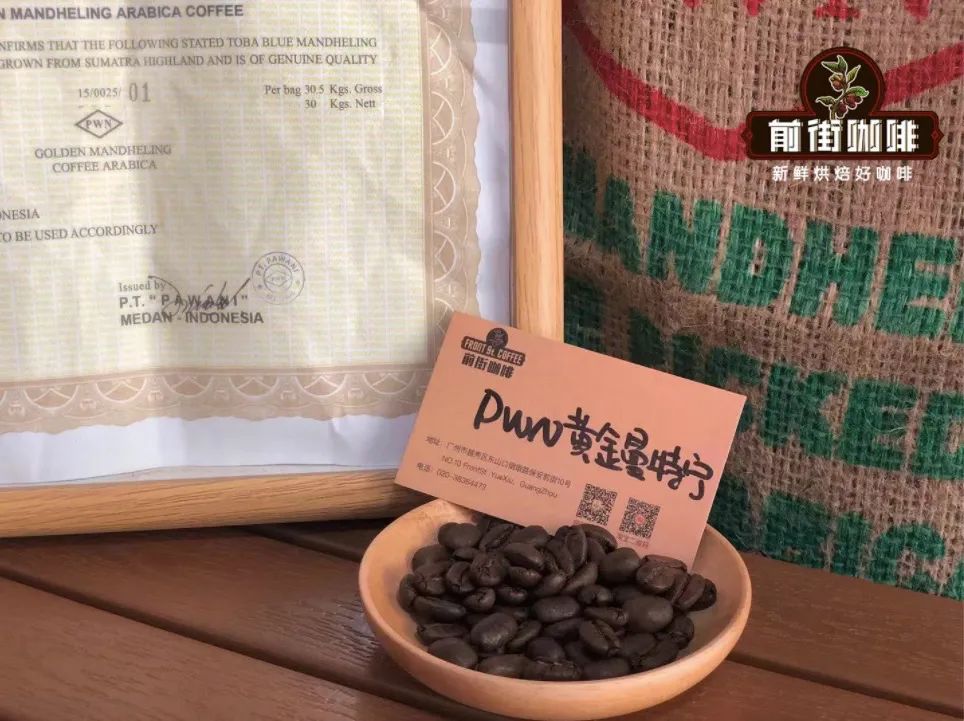
Lintong Mandheling is produced in the Lintong region of Lake Toba, south of Sumatra’s provincial capital Medan. This area is one of Sumatra’s historically significant coffee-growing regions. The Lintong Mandheling beans from this region mostly come from the locally common Ateng variety (the local name for Catimor), and are processed using Sumatra’s distinctive wet hulling method. This method arose due to the region’s humid, rainy climate and frequent typhoons. To accelerate bean dehydration and reduce fermentation risks, farmers remove the mucilage layer and then hull the beans while they still retain some moisture. This results in its characteristic bold body and low acidity. When brewed, Lintong Mandheling often exhibits notes of herbal plants, dark chocolate, and caramel, with a syrupy mouthfeel and a sweet, lingering finish.
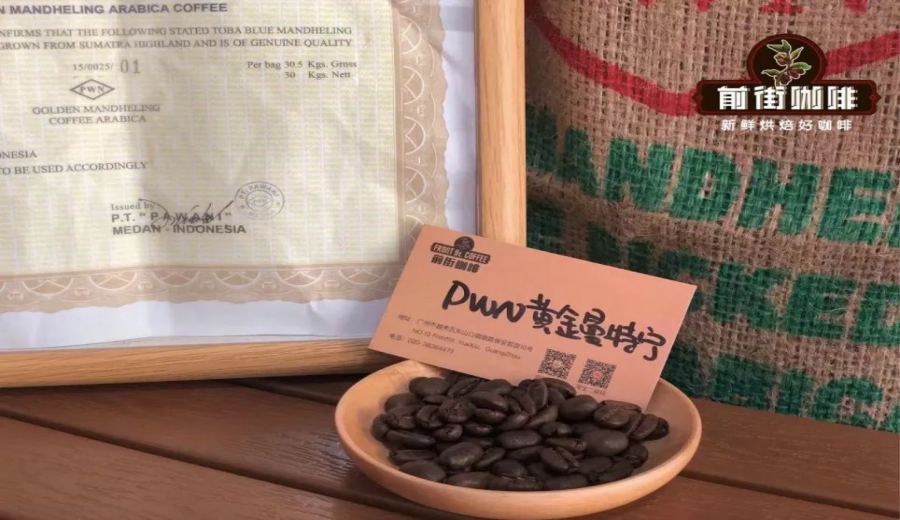
In contrast, Golden Mandheling is regarded as a premium representation of Mandheling. This coffee is specially selected and exported by Indonesia’s well-known export trading company PWN (N.V. Pawani Medan Company), which registered “Golden Mandheling” as its own trademark. As such, only products from PWN can be legitimately called Golden Mandheling.
Initially, PWN’s Golden Mandheling mainly came from the Lintong region, but it gradually shifted to the higher-elevation Gayo region. The Gayo region, located in Aceh Province, sits at an altitude of about 1,300 to 1,600 meters, with the area around Lake Tawar serving as its main cultivation hub. This region not only benefits from superior elevation but has also, in recent years, surpassed Lake Toba in both variety quality and production volume, becoming an emerging premium hub for Mandheling coffee.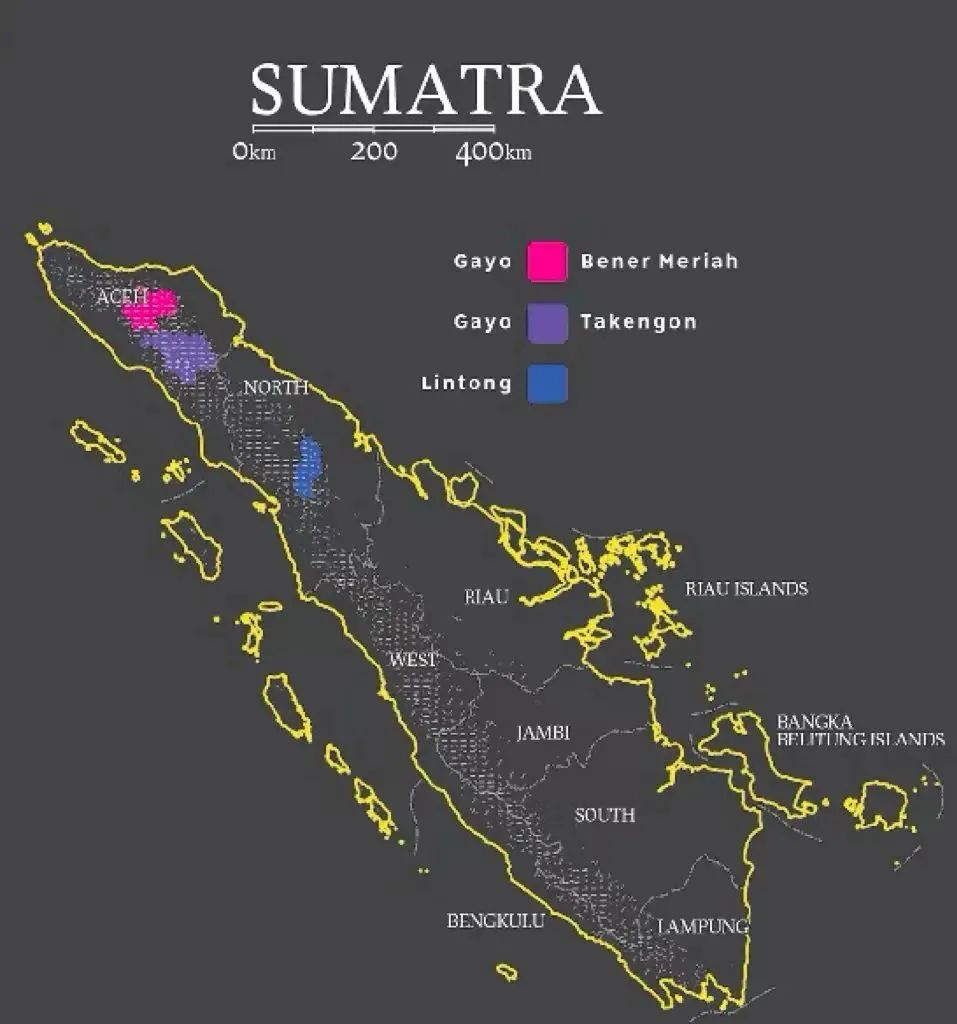
In terms of quality control, although both Lintong Mandheling and Golden Mandheling meet Indonesia’s national G1-grade standard (the highest grade with the lowest proportion of defective beans), PWN applies stricter secondary screening to Golden Mandheling. On top of the G1 classification, they perform three additional rounds of manual hand-picking to eliminate beans that are too small, have visual defects, or are irregularly shaped, ensuring that every selected bean is plump, uniform, and has an extremely low defect rate. This significantly enhances the overall cleanliness and flavor consistency of the coffee, and is also the main reason why Golden Mandheling commands a higher price than regular Mandheling.
In terms of flavor profile, although Golden Mandheling and Lintong Mandheling both use the Ateng variety and the wet hulling method, the differences in altitude and selection processes result in a more refined and layered taste. Common flavor notes include toasted bread, pine, caramel, and dark cocoa. The mouthfeel is cleaner and crisper, with sweetness concentrated in the aftertaste, and the overall flavor structure is richer and more diverse than that of Lintong Mandheling. For coffee enthusiasts who pursue flavor detail and quality consistency, Golden Mandheling is undoubtedly a more advanced choice.
In summary, although both Lintong Mandheling and Golden Mandheling are G1-grade wet-hulled Mandheling beans from Sumatra, they each have unique characteristics in terms of growing environment, selection standards, and final cupping performance. Understanding these differences can help you choose the Mandheling coffee experience that best suits your personal taste preferences and budget.
The above content is compiled by CoffeeHunters, a coffee news website.


