








Introduction:Tanzanian coffee is gradually making a name for itself in the global specialty coffee market, but the "AA," "AB," and other labels commonly seen on its packaging often leave many consumers puzzled. These letters are actually grading codes for Tanzanian Arabica coffee beans, categorized by British screen sizes that reflect the beans' size and potential quality. This article delves into the various grade standards of Tanzanian coffee beans, including the specific screen size requirements and screening details for AAA, AA, A, B, PB, and other grades, to help you choose the right beans more precisely.
As one of Africa’s top three coffee-producing countries, Tanzania’s Arabica coffee has garnered significant attention in the international specialty coffee scene in recent years. When purchasing Tanzanian coffee beans, consumers often see markings such as "AA" or "AB" on the packaging—these are actually quality grading labels for the country’s Arabica beans. Similar to Kenya, Tanzania also uses British screen sizes (bean size) as the basis for grading, though the actual standards between the two countries still differ.
The official grading logic in Tanzania is straightforward: the larger the coffee bean, the higher the perceived quality. Therefore, based on the screen size of green beans passing through different sieves, coffee beans are divided into multiple grades, including AAA, AA, A, B, PB, C, E, F, AF, TT, and others. Among these, AA and AB are the two most common labels consumers encounter, but it’s important to note that "AB" is not an officially recognized grade—it refers to a blend of Grade A and Grade B beans.

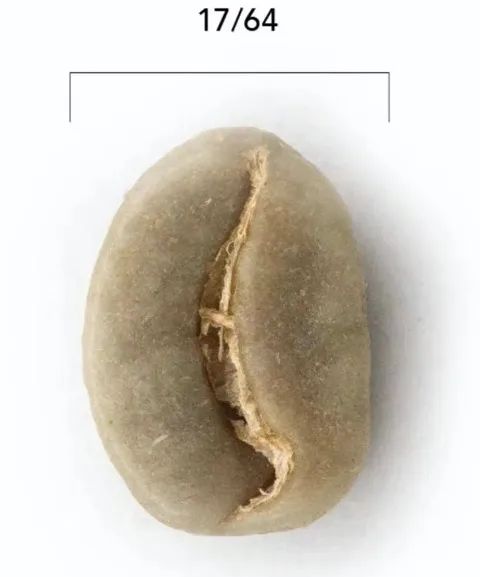
Among the various grades, Grade AAA is the highest level, requiring a screen size of 19 or above. However, due to the extremely low yield of such large beans, they are very rare in the market. In comparison, Grade AA is a more commonly available high-quality grade, with beans ranging from 17 to 18 screen sizes. Specifically, 18-screen beans must account for over 90% of the lot, 17-screen beans for at least 8%, and the minimum screen size for the entire batch must not be below 15.
Grade AF includes beans sized between 14 and 17 screens, with 17-screen beans making up over 90%, 15–16 screen beans at least 8%, and all beans no smaller than 14 screens. Grade A beans range from 14 to 15 screens, with 15-screen beans required to be at least 98% of the lot, and none below 14 screens. Grade B shares the same screen range as Grade A (14–15), but only requires over 90% of the beans to be 15 screens, with the overall size also no less than 14 screens.
Grade PB is a special category referring to "peaberry" beans—coffee cherries that develop a single round seed instead of the usual two flat beans. This grade requires over 95% of the beans to be 14 screens, and allows a small number of floaters, though they must not exceed 5%. Grade C beans are primarily 14 screens, with at least 90% meeting this requirement. Grade E, commonly known as "elephant beans," refers to unusually large coffee beans, usually formed by the fusion of two beans. This grade requires over 90% of the beans to be 18 screens, with the remaining 10% ranging between 15 and 18 screens.
Grade TT has a screen range of 14 to 16, with 15–16 screen beans making up at least 90% and 14-screen beans no more than 10%. Grade F typically consists of defective or lower-quality beans that have been screened out from other grades. As for the earlier 17-grade comprehensive grading system proposed by the Tanzanian Coffee Board—which included parameters like defect rates and cupping performance—it was ultimately not widely adopted due to implementation challenges and market acceptance issues. Today, screen size grading remains the mainstream method.
In short, while Tanzanian AA and AB grade coffee beans are commonly found in commercial products, "AB" is not an official standard grade—it is actually a blend of Grades A and B, generally using the Grade B screen size as the baseline. If you’re aiming to select higher-quality Tanzanian coffee, it’s recommended to prioritize AA or AAA grades, paying attention to their screen sizes and grading criteria, so you can enjoy a richer and more balanced flavor profile.
The above content is compiled by CoffeeHunters, a coffee news website.


