







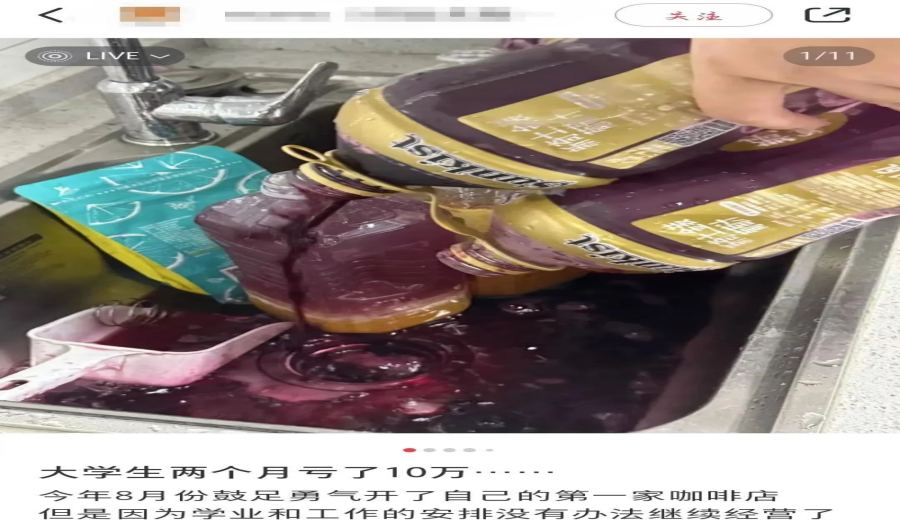
Introduction:Many university students with dreams of entering the coffee industry embark on entrepreneurial ventures, only to fail quickly due to improper equipment choices. One young entrepreneur operated for just two months before incurring a loss of one hundred thousand yuan, with the key issue being an automatic coffee machine that the industry jokingly refers to as a "toy machine." This article delves into how mismatches between equipment and ingredients can impact operations, and explores how independent coffee shops can avoid common pitfalls in a highly competitive coffee market.
Many university students dream of opening a coffee shop, hoping to turn their passion into a business. However, reality is often full of challenges. One young entrepreneur invested in launching a coffee shop but ended up losing as much as one hundred thousand yuan within just two months, ultimately having to close the shop and sell off the equipment. This case sparked heated discussions online, especially since the automatic coffee machine she used was dubbed by insiders as a "toy machine," becoming a focal point of attention.
From an outside perspective, the entrepreneur appeared to be quite thoughtful in her ingredient selection, using quality materials such as NFC juices, syrups, and fresh milk. However, what surprised many netizens was that her main coffee equipment was an automatic coffee machine widely considered unsuitable for professional coffee operations. This machine, dubbed a "toy machine" in the industry, is viewed by professional baristas as lacking in both performance and stability to meet the demands of daily service.
According to observations and analysis by netizens, this coffee machine is suspected to be a model from the German brand Franke, but the specific model has since disappeared from the market. There are even speculations that it might be a discontinued second-hand device. Such equipment is typically found in places with low coffee quality requirements, such as office pantries, buffet restaurants, or chain convenience stores—not in independent coffee shops that prioritize flavor and customization.
Many netizens, upon seeing the carefully selected ingredients paired with this "outdated" coffee machine in photos, expressed strong feelings of dissonance. Some pointed out that this was a classic case of "software in place but hardware holding things back," while others bluntly stated that if they saw a shop using such equipment, they would leave without hesitation. For consumers who truly care about coffee flavor, the professionalism of the equipment often directly influences their purchasing decisions.
Of course, some netizens believe that automatic coffee machines are not entirely unusable. However, compared to major chain brands like Luckin, independent coffee shops already lack an advantage in ingredient costs. Adding subpar equipment performance makes it even harder to strike a balance between price and quality. They emphasize that crafting a good cup of coffee relies not only on high-quality coffee beans and milk but also on a professional machine capable of precisely controlling extraction parameters, as well as a barista with basic technical skills operating it.
In this case of entrepreneurial failure, many netizens believe that the "toy machine" was one of the key reasons behind the operational difficulties. Even if the entrepreneur put great effort into ingredients and service, if the core equipment fails to deliver stable and high-quality extraction, it is ultimately difficult to earn customer trust and repeat business.
It is worth mentioning that even with both "software and hardware" in place, independent coffee shops still face immense challenges in the current market environment. According to statistics from “Narrow Door Food Eyes,” as of October 15, the number of newly opened coffee shops nationwide in the past year reached 61,576, but the net increase was only 13,850, meaning that 47,726 stores closed during the same period, with an overall closure rate exceeding 77%. Just two months later, this figure rose by nearly 20%.
As leading brands such as Starbucks, Luckin, and Cotti continue to expand and further densify their market presence, the survival space for independent coffee shops is being increasingly squeezed. Faced with brand influence, price competition, and changing consumer habits, many physical stores with insufficient competitiveness or poor business strategies often struggle to sustain long-term operations.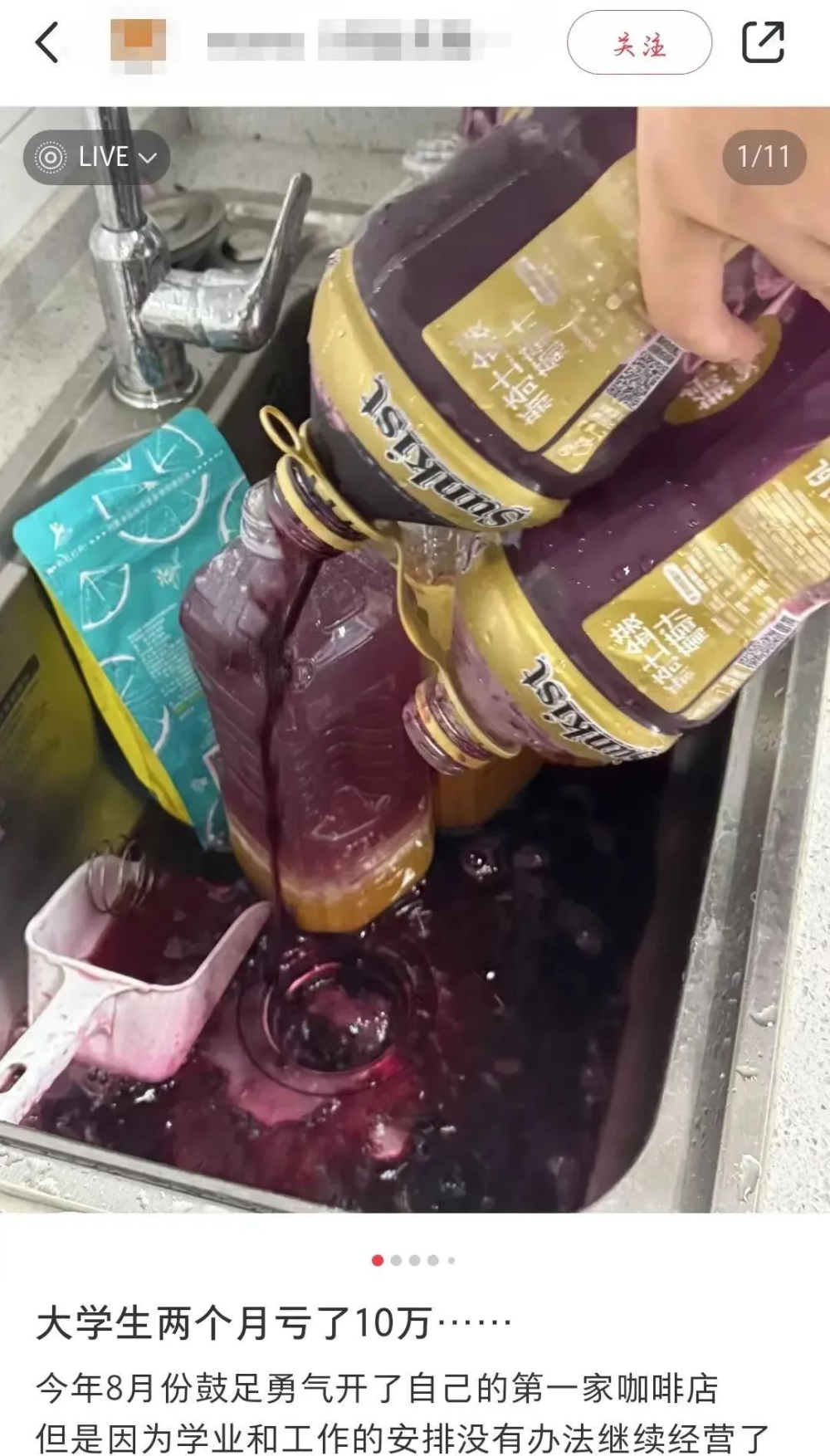
This case of a university student’s entrepreneurial failure is not just a summary of personal experience, but also reflects the fact that the entire coffee industry is undergoing a period of intense reshuffling. Whether seasoned professionals or newcomers to the market, all need to make more precise judgments in equipment selection, ingredient pairing, and market positioning in order to stand firm in this competitive landscape.
The above content is compiled by CoffeeHunters, a coffee news website.


