








Introduction:Did you know that ordering an iced Americano in Italy might earn you some strange looks? From the arrival of coffee in Venice in the 16th century to espresso becoming the national drink, it took Italy centuries to elevate espresso into a cultural symbol. This article delves into the evolution of Italian coffee culture—from religious resistance to nationwide adoration, from steam-powered machines to lever extraction—exploring why espresso is considered the “authentic coffee” in the hearts of Italians, and why iced Americanos face such cultural coldness here.
What happens if you order an iced Americano in Italy? This internet joke actually reflects the evolution of Italian coffee culture. From the first introduction of coffee beans at the Venetian port in the 16th century, to it being seen as the “devil’s drink,” then sanctified by the Church as the “drink of God,” followed by the technological innovations of steam-powered and lever-operated espresso machines, Italians spent centuries finally integrating espresso into their daily lives and souls. This article will guide you through the development of Italian coffee culture, uncovering why espresso is seen as the “true coffee,” and the cultural background behind the cold reception of iced Americanos. It also includes brand-related observations and sharing.
When you see a question online like: “Is it really illegal to order an iced Americano in Italy?” The answer, of course, is no. But the subtext is: coffee is everywhere in Italy, so why is a drink as common as iced Americano in other countries almost nowhere to be found in Italy—even regular iced coffee is hard to come by? The same beverage, considered a must-have pick-me-up in many parts of the world, becomes an unaccepted outsider in Italy. The reasons behind this are worth exploring.
The connection between Italians and coffee dates back a long time. As early as 1580, coffee beans originating from Africa and the Middle East entered Italy via the Venetian port. At the time, coffee was an exclusive enjoyment of the upper class. Since coffee came from the Middle East and the Ottoman Empire, many Christians regarded it as a “Muslim drink,” even jokingly calling it the “devil’s drink.”
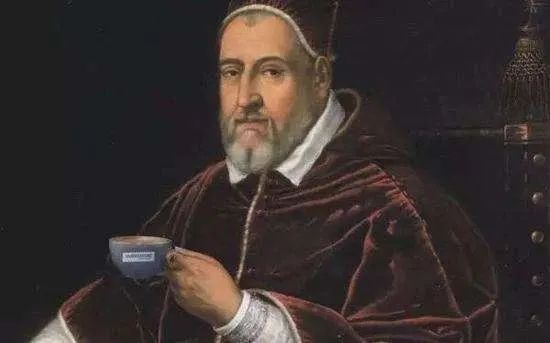
It wasn’t until the early 17th century that things began to change. Pope Clement VIII at the time had a particular fondness for this black beverage, even personally performing a “baptism” for coffee, officially incorporating it into Christian culture and giving it the esteemed title of “drink of God.” Then, in 1645, Europe’s first dedicated coffee shop opened in Rome, which was also Italy’s earliest café. From then on, coffee quickly became popular all over Italy, becoming an indispensable part of daily life.

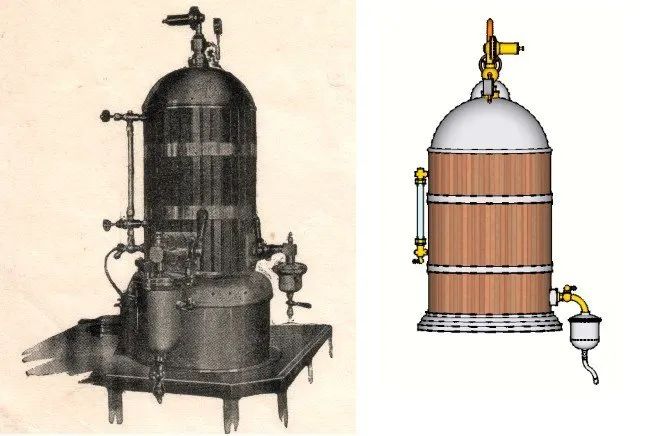
Italians’ influence on coffee lies not only in drinking habits but also in the innovation and improvement of equipment. Early coffee preparation mainly relied on traditional Turkish coffee pots, which required filtering after brewing—a cumbersome process. With the arrival of the Industrial Revolution, efficiency-focused Italians began to reform coffee-making methods. In 1884, Angelo Moriondo from Turin obtained the patent for the first steam-powered coffee machine. However, this machine relied entirely on steam heating, making the temperature difficult to control, often resulting in overly bitter and poorly tasting coffee. It was later gradually improved through continuous modifications by many people.
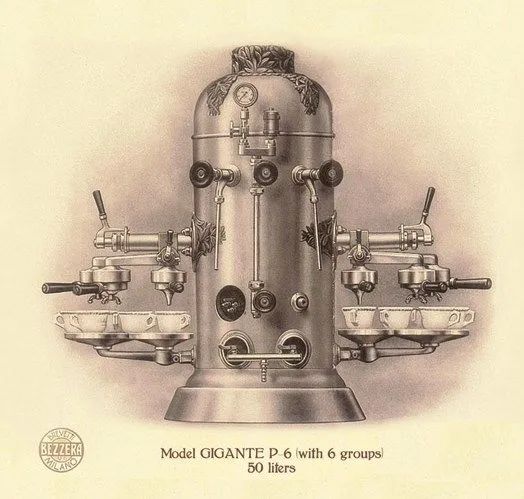
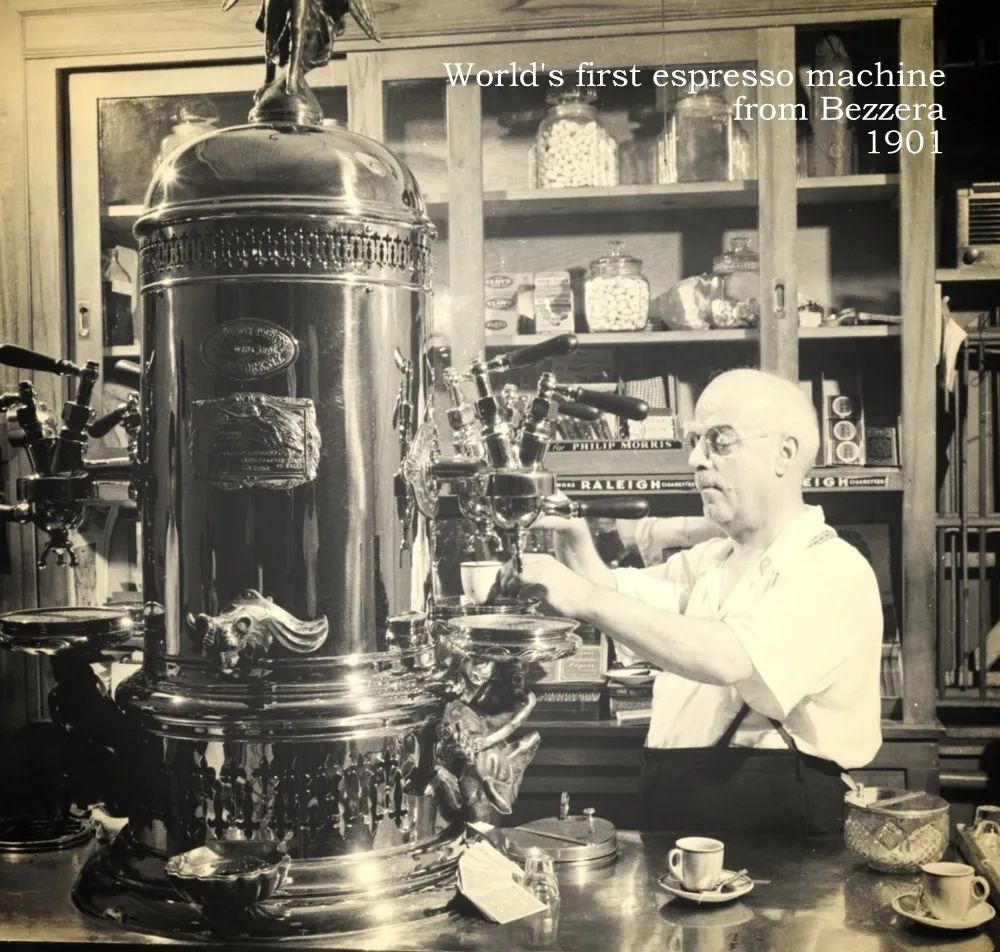
Entering the 19th century, Milan manufacturer Luigi Bezzera made a significant breakthrough on this basis, designing the world’s first steam-pressure coffee machine prototype. This machine featured a detachable handle and a modular structure, enabling fast coffee extraction under high pressure, greatly improving both efficiency and flavor performance.
As this new type of coffee machine became more widespread, more and more Italians began to fall in love with this quick and intense coffee. The term “espresso” was officially included in the Italian dictionary around 1920, referring to concentrated coffee made using pressurized equipment. Initially, the flavor of this coffee was not particularly appealing, but once people understood the principle of high-pressure extraction behind it, Italians demonstrated their enthusiasm for technology, committed to continuously improving coffee machines to make the coffee taste smoother and more consistent.
Among them, Milan engineer Achille Gaggia’s innovation in 1938 was crucial. He added a lever mechanism to the coffee machine, increasing the extraction water pressure from the original 1.5 bar to 9 bar, causing a thick layer of dark brown crema to form on the surface of the coffee. This not only enhanced the visual appeal but also improved the overall flavor. More importantly, this technology made the extraction volume of each cup more consistent, laying the standard for modern espresso.
With the advancement of coffee machine technology, Italian coffee culture also gradually took shape. Unlike in many other countries, Italian cafés emphasize fast and efficient service, which pairs perfectly with the small servings of espresso. Customers typically quickly drink an espresso, have a brief chat with friends, and then leave—this has become part of Italian life.
In Italian cafés, customers usually just say to the barista: “I’ll have a single espresso.” This coffee is mostly dark roasted, with a strong bitter taste, sometimes blended with Robusta beans to enhance the crema layer. Many people stir in a little bit of white sugar before drinking, then consume it in one go to enjoy the intense coffee experience. A single espresso in Italy usually costs just 1 euro (about 35 New Taiwan Dollars), making it a very affordable choice.
For most Italians, only espresso can be called the “real coffee.” Compared to specialty coffees that emphasize single origins or light roasts, they prefer coffee that is intense, rich, and even slightly bitter. There’s even a notion that the function of coffee is to “aid digestion,” rather than simply to provide a caffeine boost. Therefore, Italians are accustomed to having an espresso after every meal, feeling that the meal feels incomplete without it.
Going back to the original question: If you order an iced Americano in an Italian café, will you get kicked out? Although most Italians still stick to tradition, with the exchange of global coffee cultures, some cafés are willing to offer iced Americanos to foreign tourists. However, if you walk into a traditional café focused solely on espresso, ordering an iced Americano might only earn you a raised eyebrow—and a combination of espresso with ice and water instead.
Finally, let’s revisit a humorous video that once circulated online: An Italian ordered an espresso, but the waiter secretly added water, and when it was served, he exclaimed: “What is this? This is basically a pile of…!” Then he stormed off in anger. Though it’s a joke, it reflects Italians’ insistence on the purity of coffee.
In summary, the evolution of Italian coffee culture—from the misunderstood “devil’s drink” to the national-level “empire of espresso”—is a remarkable journey that blends religion, technology, and the aesthetics of life. The reason iced Americanos are not favored there is not just about taste preferences, but also a reflection of differences in cultural identity and coffee philosophy.
The above content is compiled by CoffeeHunters, a coffee news website.


