








Introduction:Have you noticed that the milk foam in your homemade hot latte quickly dissipates or separates, affecting the overall taste and latte art presentation? In fact, the stability of milk foam is closely related to the thickness of the bubble film, the condition of the espresso’s crema, and the details of the frothing and pouring process. This article delves into the three main reasons why milk foam breaks down rapidly, and offers practical solutions to help you create longer-lasting, finer, and more visually appealing foam—enhancing the overall quality of your latte.
Many coffee enthusiasts who brew at home often encounter this issue: the milk foam, which initially looks dense and creamy, starts to collapse or separate after just a short while, and may even lose all shape once poured into the coffee. This happens because milk foam is essentially a structure where countless tiny bubbles are encased in a thin liquid film. Over time, the liquid gradually seeps out from the film, making the bubble walls thinner and thinner until they eventually burst. Therefore, the eventual dissipation of milk foam is a natural phenomenon.
However, if the foam collapses within just a few minutes—as shown in the image, becoming completely shapeless—it indicates a problem with the foam’s stability, with the rate of defoaming being significantly abnormal. Understanding the reasons behind this is the key to effective improvement, helping you achieve longer-lasting foam, more beautiful latte art, and a better-balanced flavor.

Generally speaking, the overly rapid dissipation of milk foam mainly stems from three factors: first, the poor quality of the foam itself, including issues related to frothing temperature, bubble distribution, and fineness; second, the condition of the espresso’s surface crema being too “dry” or lacking smoothness; and third, improper techniques during the brewing process—such as flawed frothing or pouring methods—that further accelerate the breakdown of the foam. Below, we’ll analyze these causes one by one and provide specific suggestions for improvement.
Let’s start with the quality of the milk foam. The key to creating stable and fine foam lies in controlling the frothing temperature and the uniformity of the bubbles.The ideal milk frothing temperature is generally recommended to be between 55°C and 65°C. Beyond this range, the protein structure is prone to damage, reducing the stability of the liquid film. Additionally, the foam should be fine and have good fluidity; foam that is too coarse or too dry tends to collapse quickly. As mentioned in the article “What Kind of Milk Foam Is Best for Latte Art?”, fine and dense foam is the foundation of latte art—and the same applies to maintaining foam stability.

Next, let’s take a look at the condition of the espresso’s crema. The crema on top of an espresso is not only a source of flavor but also plays an important role in interacting with the milk foam. If the crema is too “dry”—meaning it has a hard structure, lacking elasticity and smoothness—its fusion with the foam becomes less smooth, causing the foam to spread unevenly and fail to stabilize properly. This situation is common in espressos that are roasted too dark, ground improperly, or extracted unevenly. Therefore, ensuring your espresso has a smooth and elastic crema is a crucial factor in maintaining foam stability.
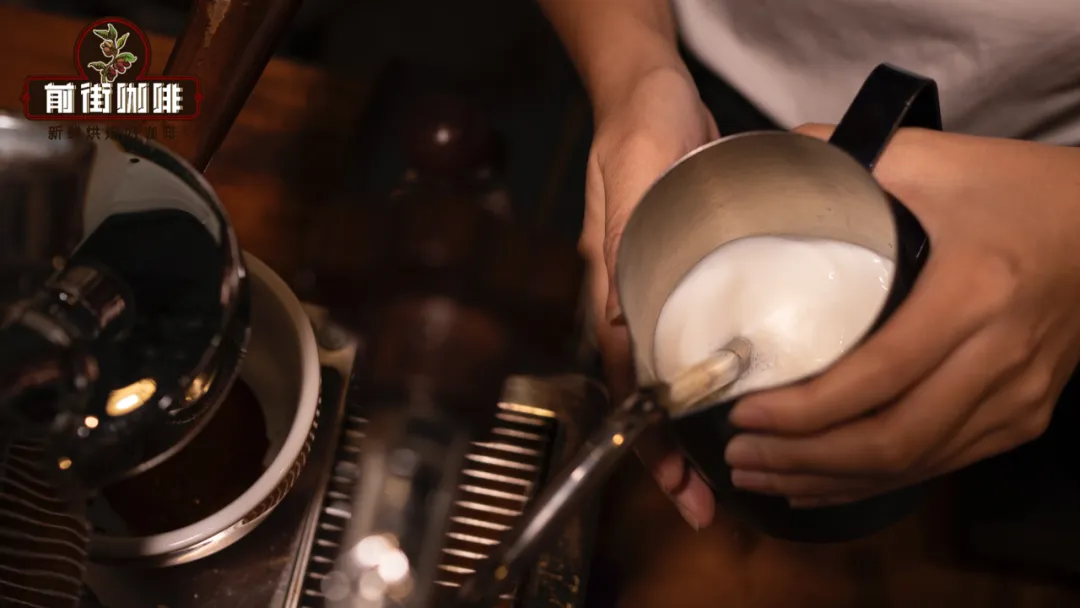
Finally, and perhaps the most overlooked aspect: various mistakes made during the process. These include the air-to-milk ratio during frothing, the angle and distance of the steam wand, the rotation speed of the milk, and most critically, the “pouring and blending” step. Frothing with too much air introduces large bubbles, preventing the liquid film from evenly encapsulating them and resulting in a fragile structure. When pouring the foam into the espresso, failing to blend it properly can prevent the foam and coffee crema from mixing evenly, leading to localized collapse or rapid separation. It is recommended to keep the pitcher low and pour in steady circles during blending, allowing the foam and coffee to fully integrate—this can effectively slow down the rate of foam breakdown.
In summary, if you want your latte foam to be more durable and stable, consider improving in three areas: refining your milk frothing technique by controlling the right temperature and fineness; paying attention to the condition of the espresso crema to ensure it is smooth and elastic; and optimizing your brewing process, especially the techniques used in frothing and blending. With these practical adjustments, you can not only extend the life of your foam but also elevate both the taste and visual appeal of your latte.
The above content is compiled by CoffeeHunters, a coffee news website.


