








Introduction:Alo Village is located in Bensa Town, Sidama Region, Ethiopia, and has been a focal point for specialty coffee enthusiasts worldwide in recent years. The coffee from this area, cultivated at high altitudes and processed using meticulous anaerobic natural methods, develops unique and layered floral and fruity aromas. This article will comprehensively explore this COE-winning Alo Coffee — from brand origins, regional environment, processing techniques, to actual cupping performance — taking you deep into its captivating flavor profile, which unfolds like magnolia, passion fruit, and dried apricot.
Alo Coffee is a premium coffee brand from Alo Village, Bensa Town, Sidama Region, Ethiopia. In recent years, it has garnered widespread attention for its outstanding performance in international competitions. The brand was founded by Tamiru Tadesse Tesema, a local who, in 2021, won the COE (Cup of Excellence) with an anaerobic natural-processed bean of the 74165 variety. This achievement instantly turned this small village, situated at over 2,400 meters above sea level, into a rising star in the coffee world. Alo Coffee not only represents a refined expression of premium coffee flavors but also showcases the pinnacle of Ethiopia’s highland cultivation and traditional processing techniques.

When it comes to the flavors of Alo Coffee, many coffee professionals and consumers can discern a series of vivid layers during cupping: upon first smelling the dry grounds, the fresh aroma of magnolia flowers mingles with tropical fruit notes such as pineapple and mango, with subtle fermented scents detectable upon closer nosing. On the palate, the bright acidity of passion fruit and ripe pineapple intertwine, while the finish offers a rich aftertaste reminiscent of stone fruits like yellow peach and dried apricot. The overall profile is balanced and multi-dimensional. Such a flavor profile not only reflects the characteristics of high-altitude cultivation but also highlights the refined artistry of sun-drying processing.
So, what is the significance behind the name “Alo”? Alo Coffee PLC was established in 2020 as an Ethiopian company focused on exporting coffee beans from the Bensa area of Sidama Region. It is widely regarded in the industry as a representative specialty green coffee brand. The founder, Tamiru Tadesse Tesema, holds an engineering background and previously worked as a teacher. However, seeing the potential of his hometown’s coffee, he resolutely entered the coffee industry. In 2021, he entered coffee beans produced in Alo Village into the COE competition, not only winning the championship with an anaerobic natural-processed 74165 variety but also securing fifth place with a natural-processed 74158 variety — propelling Alo Village to overnight fame.

Alo Village is located in the northeast of the Sidama Region, in one of the highest-altitude mountainous areas of Bensa Town, enjoying a uniquely advantageous geographical position. According to regional data, coffee in Bensa is generally grown at elevations ranging from 1,800 to 2,300 meters, but Alo Village stands out, with some planting areas reaching up to 2,400 meters. Such altitude not only slows the ripening process of coffee cherries but also results in denser beans with more intense aromas. Additionally, the cooler temperatures at high altitudes lead to longer drying times and a slower, more stable fermentation process — key factors contributing to the delicate floral and fruity notes that define Alo Coffee.
The success of Alo Coffee is inseparable from Founder Tamiru’s deep connection to his hometown and his commitment to quality. He returned to his roots in 2020 to establish the company and built a dedicated green coffee processing station in Alo Village. The station integrates the harvest of coffee cherries from over 200 smallholder farmers in the surrounding area and handles all post-harvest processing centrally. He also places strong emphasis on technical training for farmers to ensure that each step — from harvesting and sorting to processing — meets high standards, while maintaining full traceability. Beyond that, Tamiru actively engages in social initiatives, allocating part of the profits to support local education infrastructure, demonstrating strong corporate social responsibility.
In terms of production regions, Alo Coffee beans mainly come from Bensa Town and nearby villages, including the most renowned Alo Village, as well as Bombe Village, Murago Village, and Bashiro Gute (located in Bona Zuria Woreda). These villages are within a 20-plus-minute drive of each other. Processing stations are distributed across the region — for example, the main station Main, along with Hatessa and Chilaka, are located in Bensa; Morke is in Bura; Mewa and Hurro are in Nensebo; and Gute is in Bona Zuria. This setup ensures that coffee cherries can be processed quickly, preserving freshness and processing quality.
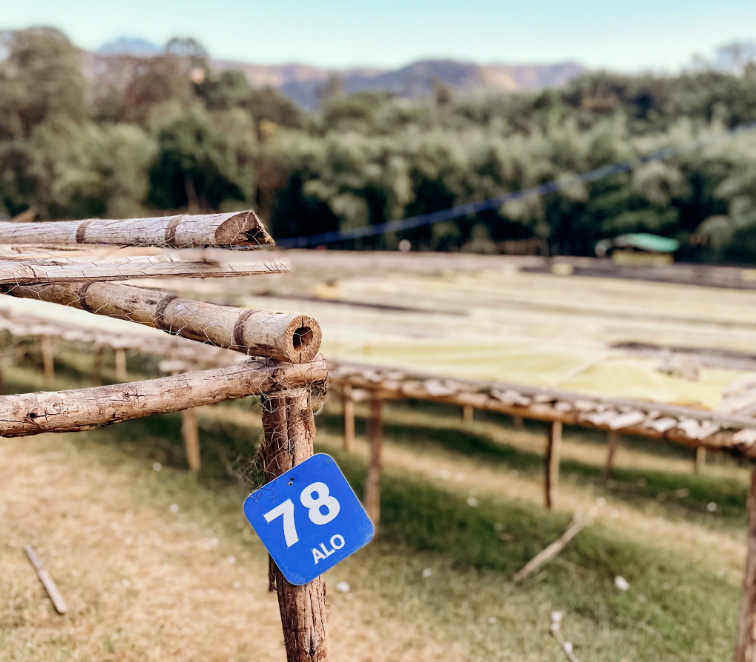
In terms of processing methods, Alo Coffee employs high-standard natural (sun-dried) processing. First, farmers handpick only fully ripe coffee cherries and transport them to the Hatessa processing station for initial sorting. Before the official sun-drying begins, another round of sorting is conducted based on skin color to eliminate overripe or underripe cherries, ensuring that only uniformly colored, consistently ripe cherries proceed to the next stage. Next, these carefully selected coffee fruits are spread thinly on raised drying beds, and during the first three days, they are frequently turned to prevent mold growth and uneven heating that could lead to off-flavors. The entire sun-drying process typically lasts between 14 to 18 days, until the moisture content reaches the desired range, after which the beans are bagged and stored.
Through actual cupping, the distinctive charm of Alo Coffee becomes evident. In the dry aroma phase, prominent notes of magnolia, pineapple, yellow peach, and green mango leap out, accompanied by a refreshing fermented scent that creates an intense tropical orchard atmosphere. During the sip, the bright acidity of tropical fruits stands out — particularly the vibrant and lively acidity of pineapple, passion fruit, and perfumed lemon — paired with gentle fermentation tones and subtle floral hints. As the cup cools, the stone fruit notes of yellow peach and dried apricot gradually emerge, leading to a long and layered finish. This paints an unforgettable flavor chapter for this coffee from a small highland village in Ethiopia.
The above content is compiled by CoffeeHunters, a coffee news website.


