







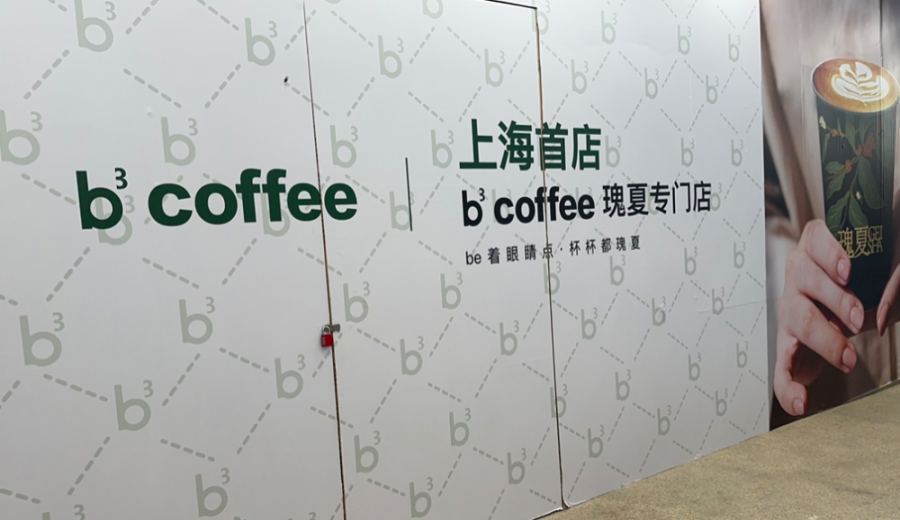
Introduction:A Shanghai coffee shop that had not yet opened for business sparked widespread discussion after choosing the English abbreviated name “b³ Coffee,” which, in the local Shanghai dialect, happens to sound like the derogatory term “biǎn sān” (meaning “good-for-nothing” or “wretch”). The incident not only landed the brand in negative public opinion but also raised questions about how businesses should approach localization in naming. This article delves into the details of the incident and its social repercussions, while also exploring how brands can avoid inadvertently touching on cultural sensitivities when operating across regions.
Inside a shopping mall in Shanghai, a coffee shop still under renovation unexpectedly became the focus of local community discussion due to the store name “b³ Coffee” displayed on its construction fence. Although the shop had not officially opened to the public, many passersby who saw the name felt it was inappropriate.
According to several local Shanghai netizens, when “b³ Coffee” is pronounced in the Shanghainese dialect (Shanghaihua), its homophone is extremely close to “biǎn sān kā fēi”—a term in the Shanghai dialect that carries clear derogatory connotations, used to describe someone as sleazy, unrefined, or even insulting. This discovery quickly caused an uproar on social media platforms.
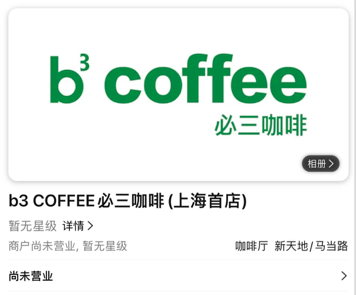
Faced with the controversy, some netizens tried to downplay the issue, suggesting that “b³” could be interpreted as the mathematical symbol “b cubed” or simply called “b to the third power coffee,” in an attempt to give the brand the benefit of the doubt. However, the situation worsened when the brand itself registered the Chinese name “必三咖啡” (which literally translates to “Must-Three Coffee” or colloquially as “Bi-San Coffee”) on a third-party platform, leaving even those who initially wanted to defend the brand speechless.
As a result, many netizens joked in the comments section: “Drink Bi-San Coffee, enjoy a low-life life,” “Suggest pricing it at 180 RMB per cup, it fits the vibe,” “The boss’s Shanghainese skills are really something else,” “Walk in and say, ‘B3, help me brew a coffee.’” Others drew parallels to other brands that had previously sparked similar controversies in Shanghai, such as “Xita Laotai Tai Roast Meat” and “Xunxi Milk Tea,” creating a series of humorous yet thought-provoking jokes.
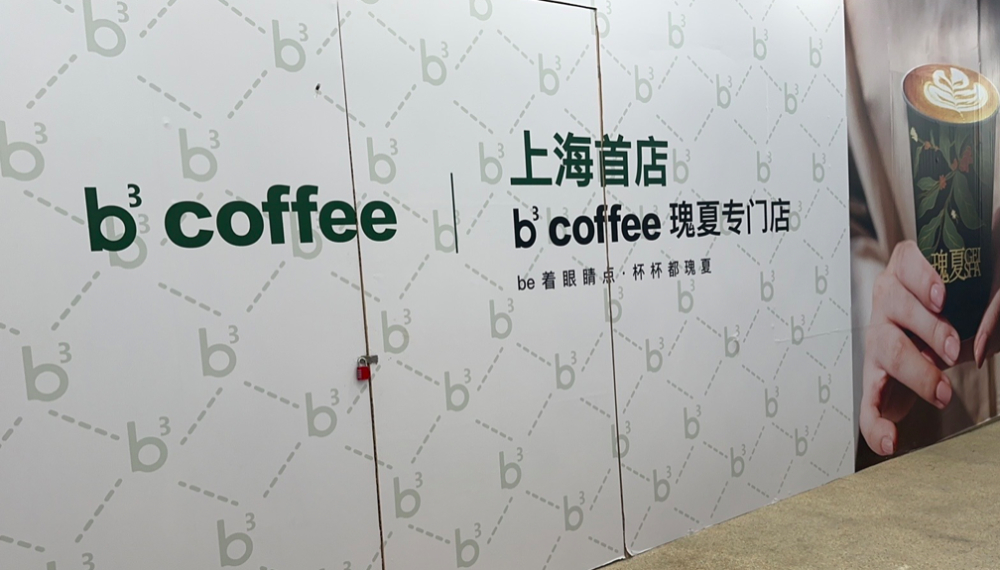
Although many of these comments were made in jest, many netizens admitted that once they understood the association between the store name and “biǎn sān,” they felt a sense of rejection. One comment read: “A store name like this makes people uncomfortable just looking at it; it creates a bad first impression.” “Even if the product is great, I wouldn’t want to patronize it,” and “It feels like the shop owner is making fun of local culture and lacks basic respect for consumers.”
In fact, the store name did succeed in drawing attention and brought a certain level of exposure for the brand on social media. Many coffee enthusiasts began paying attention to its opening news, and the brand’s visibility rapidly increased in a short period. However, at the same time, this controversy-driven traffic left the shop with a negative label in the minds of local consumers even before it had officially opened.
Industry insiders pointed out that although a store name may seem like a small matter, it is the most direct medium through which a brand first meets consumers. If the name causes misunderstandings or conflicts with local culture, it may not only affect consumers’ first impression of the brand but could also lead to preconceived biases about product quality. Once such negative associations form, it may be difficult to reverse established stereotypes, even if high-quality products are offered in the future.
In response, many netizens have called on brands to pay more attention to “when in Rome, do as the Romans do” when entering new markets—especially in regions with significant differences in language and cultural background—choosing store names carefully to avoid using words or homophones that might cause misunderstandings or carry derogatory meanings. Ignoring local cultural sensitivities for the sake of momentary creativity or international appeal could ultimately backfire and even impact the brand’s long-term development.
In summary, the case of “b³ Coffee” serves as a reminder to all coffee brands aiming for cross-regional operations: naming is not just about creative thinking—it is also about understanding and respecting local culture. Only by thoroughly understanding the language habits and cultural taboos of the target market can a brand truly build a popular and positively perceived image.
The above content is compiled by CoffeeHunters, a coffee news website.


