







Introduction:The 2024 Brazil COE (Cup of Excellence) competition marks its 25th anniversary milestone. This year’s results unveiled a number of rare coffee varieties that stood out, among which Arará and Topázio captured attention with their unique genetic backgrounds and impressive flavor profiles. This article delves into the breeding history, agronomic characteristics, and competition performance of these two varieties, while exploring their potential impact on the specialty coffee industry—guiding readers to understand the diverse possibilities of high-quality coffee right from the source of the variety.
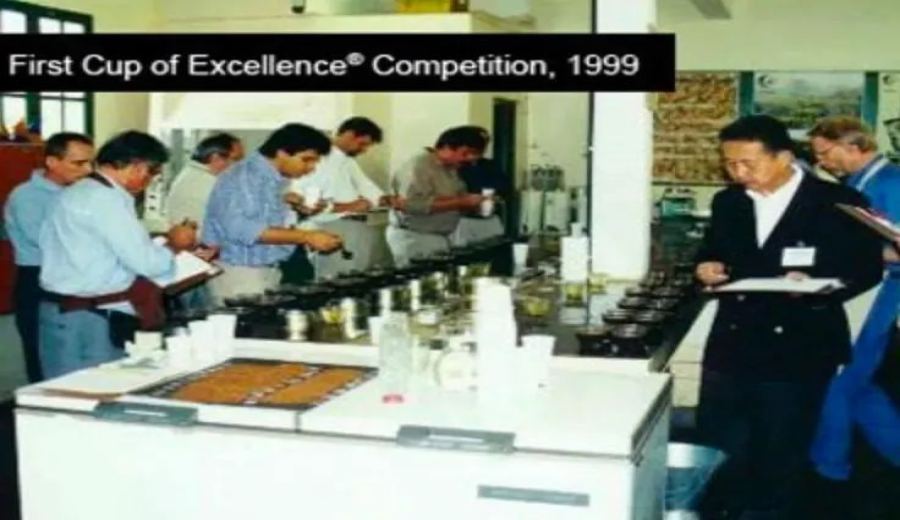
The Cup of Excellence (COE), established in 1999 by the non-profit organization the Alliance for Coffee Excellence (ACE), has become the most authoritative competition platform in the global specialty coffee sector. Through rigorous judging and public auctions, the competition helps coffee farmers showcase the potential of high-quality beans while increasing their income. The 2024 Brazil COE competition coincides with its 25th anniversary in the country, maintaining its traditional three processing categories: Natural (sun-dried), Washed + Honey, and Experimental. Ultimately, rare varieties such as Arará and Topázio sparked widespread discussion.
Among the many finalists, Arará and Topázio garnered significant attention due to their special breeding backgrounds and outstanding competition performances. These two varieties not only exhibit distinctive flavor profiles but also reflect Brazilian coffee farmers’ efforts in variety innovation and sustainable cultivation. A deeper understanding of their origins and traits can help coffee enthusiasts appreciate the charm of differentiated specialty coffee right from its roots.
The story of the Arará variety dates back to 1988, when researchers at the Instituto Agronômico de Campinas (IAC) in Brazil noticed a group of coffee trees bearing unusually yellow fruit during a farm inspection. These trees not only had a compact structure and dense fruiting, but also demonstrated excellent resistance to pests and leaf rust while maintaining high yield. Identified as a hybrid offspring of Yellow Catuai and Obatã, the variety was officially introduced to farmers in 2012.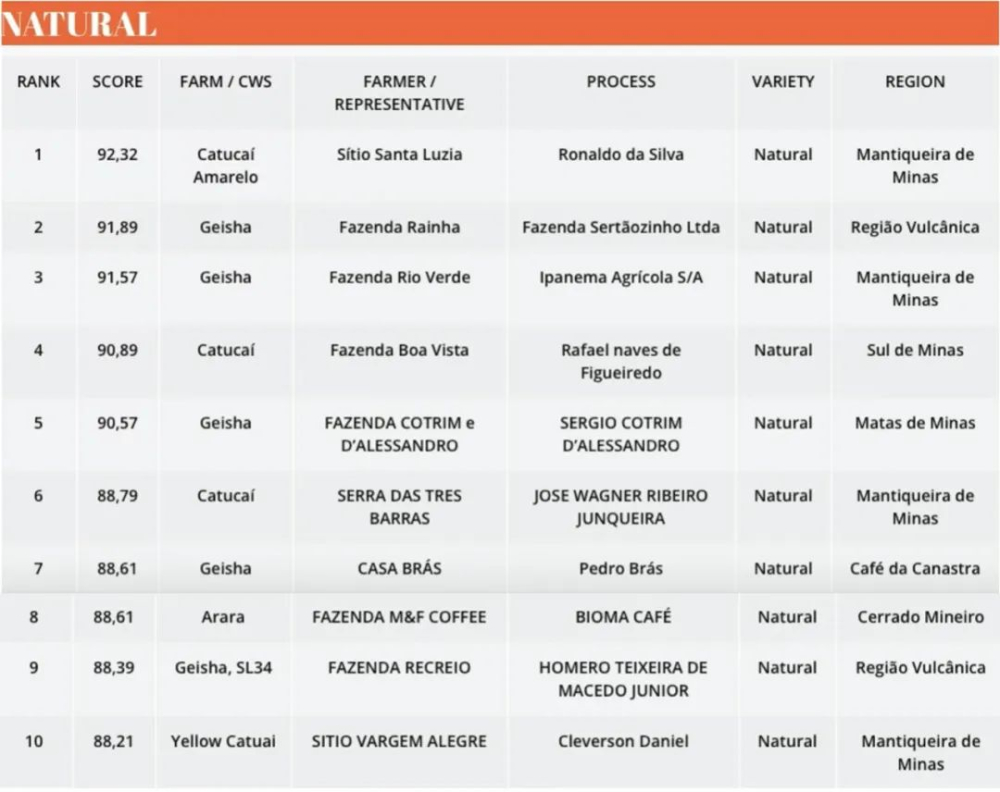
The yellow fruit of Arará is highly adaptable, capable of withstanding drought and common diseases, while also offering a rich and layered flavor profile. This has gradually brought it into the spotlight in international competitions. Though its first appearance in the Brazil COE in 2018 was unremarkable, its 2024 victory in first place within the Experimental category proved its potential—when grown at high altitudes, the variety often exhibits bright lemon acidity, winey notes, and tropical fruit undertones, making it a choice for roasters seeking new flavor dimensions.
Another highlighted variety, Topázio, has an even longer breeding history. Developed artificially by Brazil’s IAC between the 1960s and 1970s, Topázio resulted from the crossbreeding of Mundo Novo and Catuai, followed by two backcrosses with Catuai to ensure stability in quality and tree structure. This variety retains the compact plant size characteristic of Catuai—not only yielding highly, but also benefitting from its yellow fruit which is easier to harvest, plus a longer lifespan, making it a staple in many coffee farms.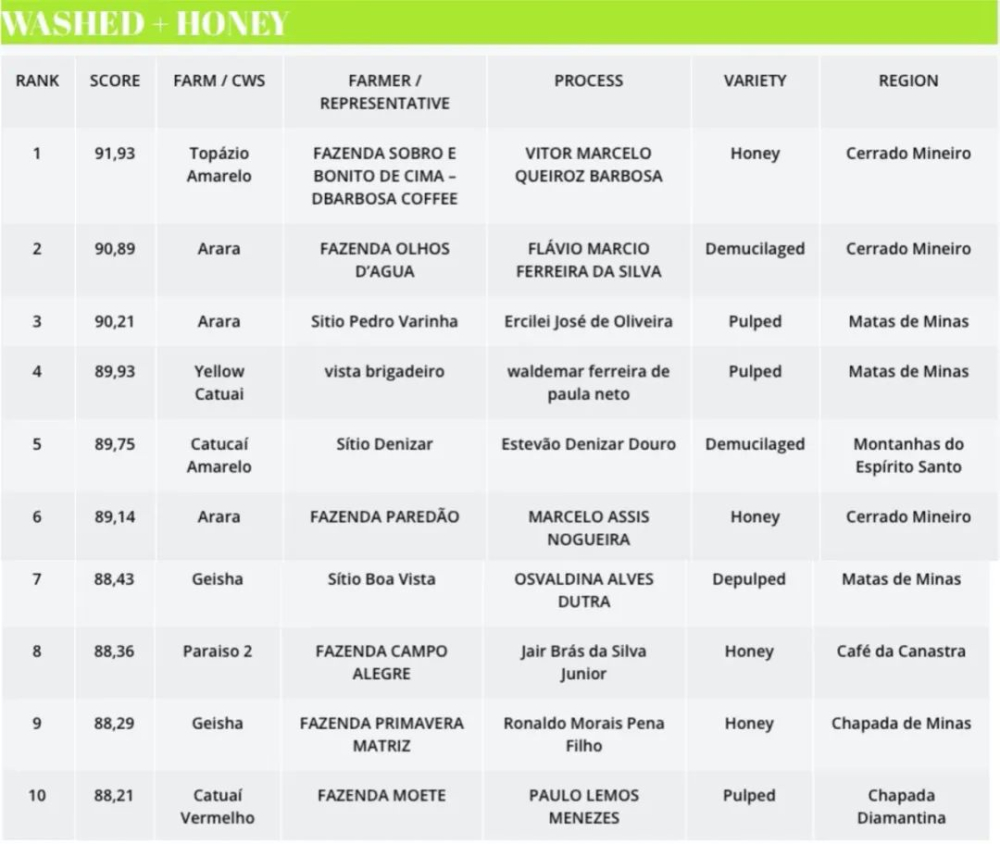
In the 2024 COE competition, Topázio scored 91.93, winning the championship in the Natural and Honey processing categories, showcasing its flavor potential under special processing methods. Experts noted that when subjected to high-temperature drying processes, Topázio often releases intense caramel sweetness, nutty tones, and gentle citrus acidity, all in excellent balance. Its compact tree structure also makes it easier for farmers to manage, suiting a planting model that values both efficiency and quality.
This year’s Brazil COE competition divided entries into distinct categories: the Natural (sun-dried) group emphasized fruity aroma and sugar transformation; the Washed + Honey group highlighted cleanliness and bright acidity; and the Experimental group encouraged innovative processing exploration. Arará and Topázio each demonstrated diverse performances across different categories, reflecting Brazilian coffee farmers’ precise mastery of varietal characteristics and processing method pairings.
For coffee enthusiasts, understanding the breeding stories and flavor features of Arará and Topázio not only deepens the tasting experience but also reveals the spirit of innovation and sustainability behind the specialty coffee industry. The rise of these rare varieties marks a pivotal step as Brazil transitions from a traditional bulk coffee supplier to a discoverer of refined and nuanced flavors.
The above content is compiled by CoffeeHunters, a coffee news website.


