







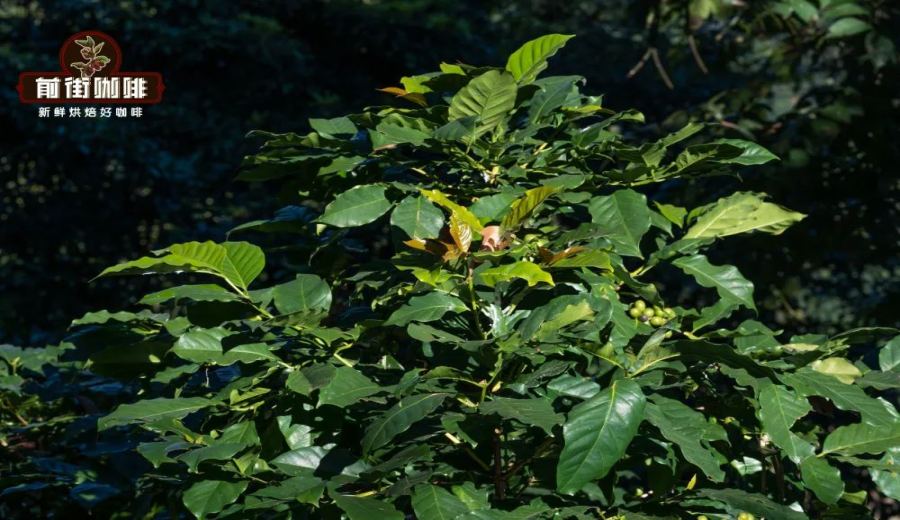
Introduction:As one of the oldest varieties of Arabica coffee, Typica stands out with its elegant flavor profile and distinctive appearance, drawing attention from both coffee enthusiasts and growers. This article delves into the origins of Typica, its tree morphology, branch spacing, cupping flavors, and growing conditions. It particularly highlights how branch spacing affects harvesting and management, and explains why Typica from Jamaica’s Blue Mountains can exhibit stronger disease resistance and more stable quality in its unique terroir.
Typica is one of the most historic and representative varieties within Arabica coffee, widely recognized for its refined cup characteristics and highly identifiable appearance. Not only beloved by coffee lovers, it is also a key variety for tracing the origins of many specialty coffees. This article will analyze Typica from multiple perspectives including its origins, scientific naming, plant morphology, cupping flavors, and cultivation requirements, with a special focus on the characteristics of its branch spacing and how the local terroir of Jamaica’s Blue Mountains enhances its disease resistance and stability.
As an elder statesman among the Arabica family, Typica has played a pivotal role in the history of coffee cultivation. It not only showcases delicate and layered flavors, but also possesses a highly recognizable appearance, which attracts many coffee enthusiasts to explore its background and traits. Understanding Typica is not only a taste of history, but also the first step in comprehending the evolution of coffee varieties.
The industry generally regards Typica as the foundational variety from which many Arabica mutations have derived. Its origins can be traced back to the coffee native regions of southwestern Ethiopia, making it one of the most important sources of this variety. Although it was introduced to the Arabian Peninsula via trade as early as the 9th century, it wasn’t until 1913 that it officially received the botanical name “Coffea arabica L. var. typica Cramer.” This name, given by botanist Cramer, designates it as the “typical representative” of Arabica coffee — hence the term “typica.”
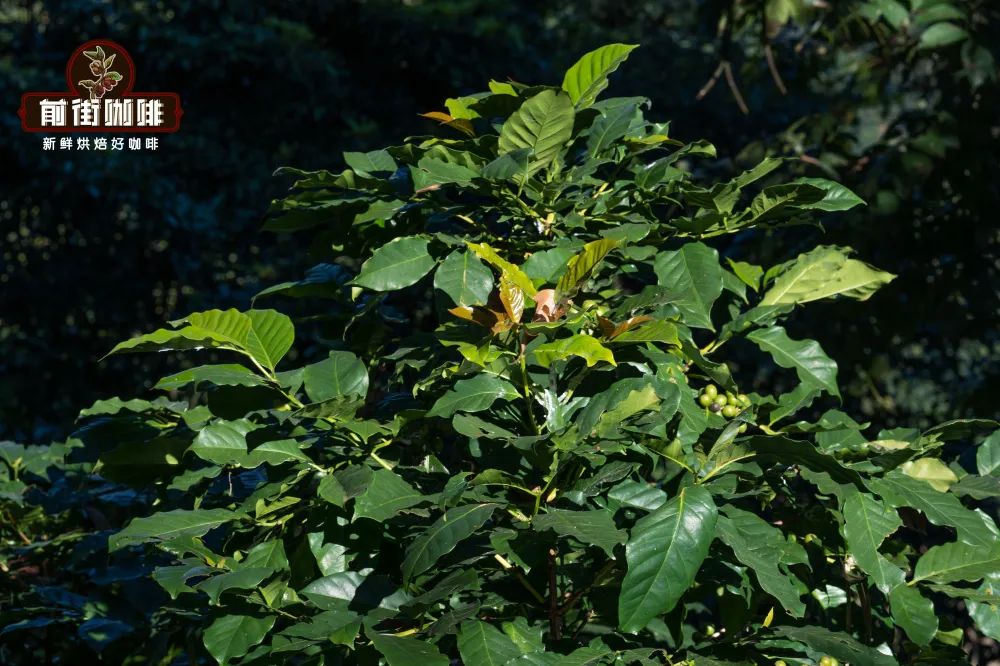
Typica is easily recognizable primarily due to its distinct plant characteristics. The most notable of these is the reddish-bronze hue of its new shoots or young leaves, earning it the nickname “red-tipped coffee.” This trait is especially pronounced in the seedling stage and serves as one of the key visual indicators for identifying Typica.
In terms of overall tree shape, Typica features a conical canopy, with the angle between lateral branches and the main trunk typically maintained at50 to 70 degrees, with branches slightly angled outward. The trunk is relatively slender, and the overall height can reachabout 5 meters (16.5 feet), and may even be taller in some natural growing environments. Such height and branch distribution lead toboth branch spacing and the distance between nodes on the same branch being longer than those of other varieties. Therefore, when planting, it is essential to leave sufficient space to facilitate ventilation and harvesting.
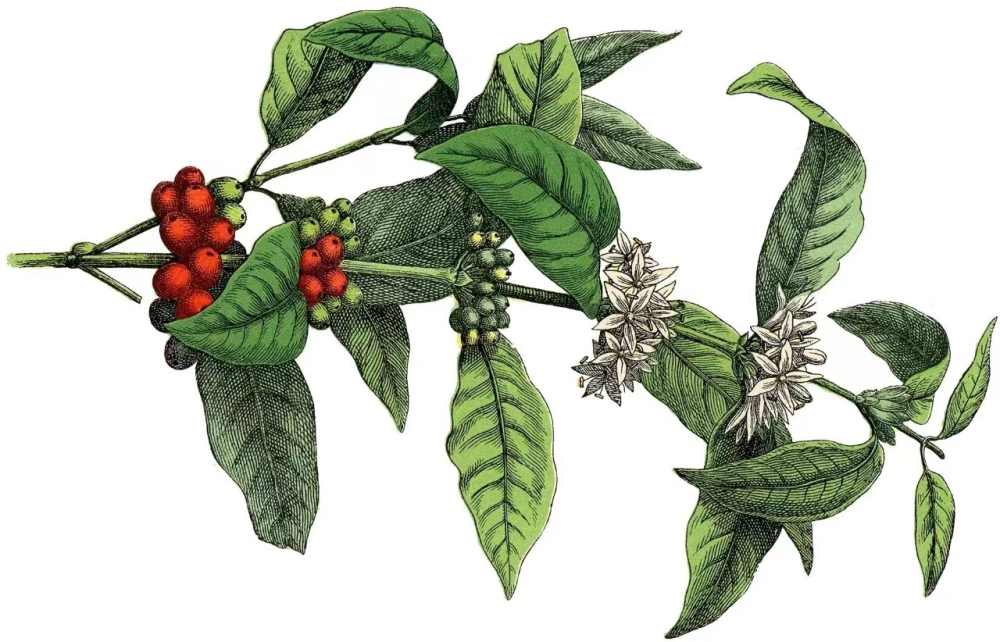
Additionally, coffee beans produced by Typica are usually larger in size, with an elongated shape and pointed ends on both sides, resembling the form of an egg — another distinctive feature of its bean morphology. In terms of cupping performance, Typica often exhibits bright citrus acidity paired with a soft, sweet aftertaste. Its overall flavor is described as “clear and elegant,” representing a classic flavor profile cherished by many coffee evaluators.
However, Typica also comes with several challenges. Its yield is relatively low, it requires specific altitude conditions, and, more importantly, it is very susceptible to diseases, especially common ailments such as coffee leaf rust and berry disease. Coffee leaf rust was first discovered in the Lake Victoria region of East Africa in 1861, and later spread to Brazil in the 1970s, eventually affecting coffee-growing regions worldwide. Once infected, plants often fail to recover and ultimately wither and die, resulting in significant economic losses for farmers.
For this reason, many growers have gradually abandoned Typica in favor of more disease-resistant varieties. However, Typica is very particular about its growing environment; it needs to be cultivated innon-frost high-altitude regions, where the higher the altitude, the more pronounced the diurnal temperature variation, helping to slow down fruit ripening and thereby accumulate richer flavor compounds. Ideal growing conditions also includeample rainfall, good sunlight, well-drained and fertile soil. These factors limit the cultivation areas for Typica, but they also contribute to its unique flavor potential.
Currently, there are still a few regions around the world that persist in cultivating Typica, among which Jamaica’s Blue Mountains are the most representative. On this island surrounded by the sea and blessed with a unique climate, Blue Mountain Typica has gradually evolved over more than two hundred years of adaptation and domestication, developing stronger disease resistance — particularly against coffee berry disease — compared to typical Typica varieties. Both its overall yield and quality have become more stable. This also explains why Blue Mountain coffee can maintain its high-quality and premium-priced market position.
Growing Typica coffee with pure and elegant flavors requires precision at every step, from terroir conditions and plant management to harvest ripeness and post-harvest processing. That’s precisely why Typica coffee from renowned regions such as Blue Mountain and Kona is so precious, and why we gain a deeper appreciation for the skill, time, and natural gifts behind a great cup of coffee.
The above content is compiled by CoffeeHunters, a coffee news website.


