







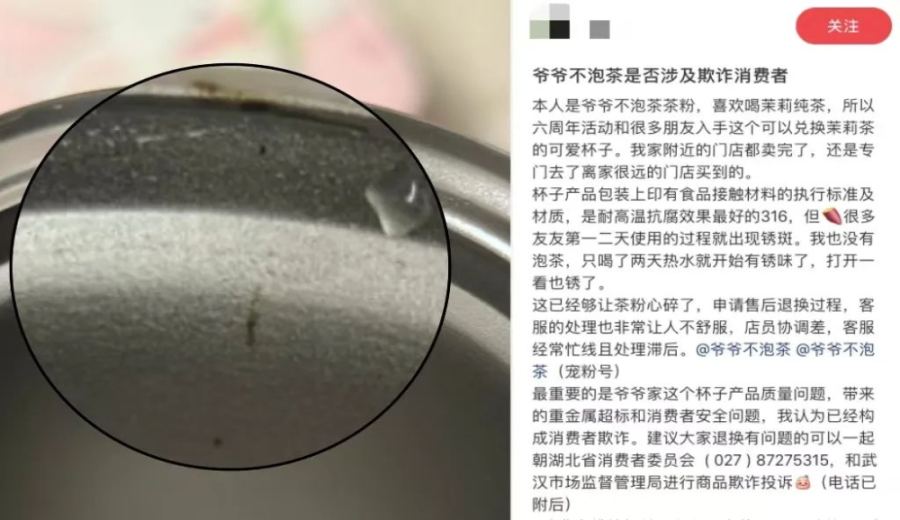
Introduction:A limited-edition garden thermos cup released by the bubble tea chain brand "Grandpa’s Not Brewing Tea" to celebrate its sixth anniversary sparked market scrutiny after some consumers noticed rust marks and an unusual odor around the rim following use. The brand confirmed after testing that the inner liner is made of 316 stainless steel but acknowledged that the rust spots were due to a manufacturing defect, and promptly initiated a recall process. This article delves into the characteristics of 316 stainless steel, common causes of rusting, and key points consumers should know when asserting their rights over defective products.
In recent years, bubble tea chains have not only focused on beverage innovation but have also frequently launched limited-edition merchandise to attract fan collectors. To celebrate its sixth anniversary, Grandpa’s Not Brewing Tea specially launched a limited-edition item called the "Garden Thermos Cup," which combines exquisite design with practical functionality and quickly became a sought-after collector’s item among fans. However, some consumers reported noticing rust spots on the rim after using it, along with an accompanying strange smell, raising concerns about the product’s quality.
The thermos cup sparked considerable discussion on social platforms, with multiple users sharing similar experiences — the cup developed faint rust marks after just a few days of use, and an unidentified odor could be detected when opening the lid. According to the product packaging, the inner liner is made from austenitic stainless steel SUS316, which theoretically offers excellent high-temperature resistance and corrosion resistance, and should not develop rust under normal usage conditions in such a short time.
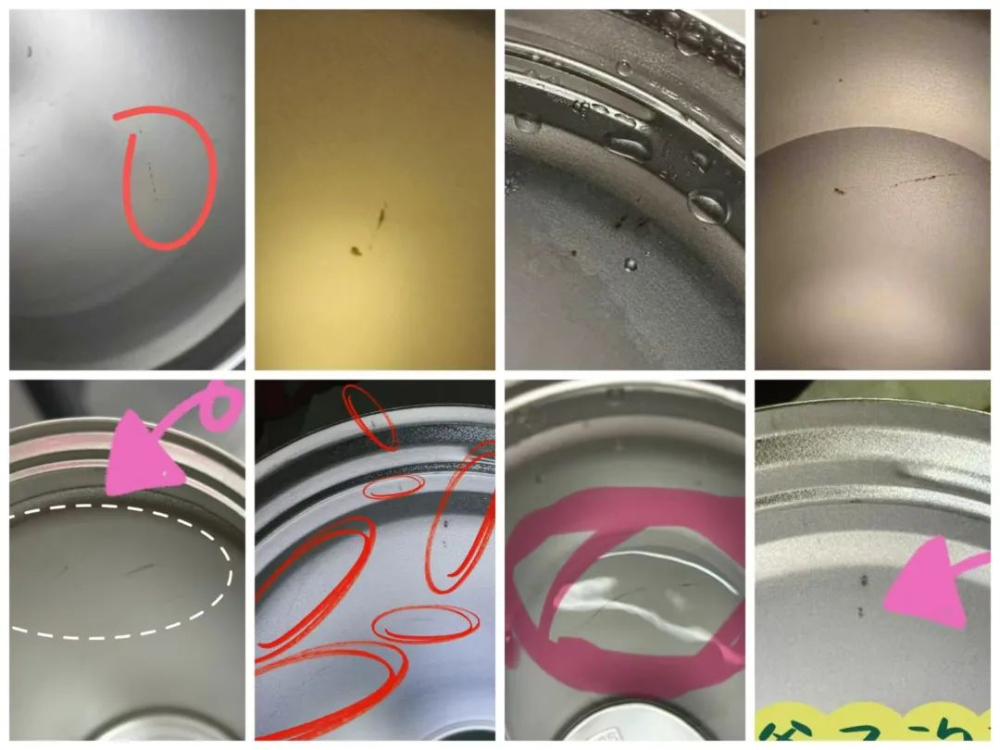
Nevertheless, the reality has led consumers to question the product’s safety, worrying that long-term exposure might result in excessive heavy metal leaching, potentially affecting health. At the same time, more and more users on social platforms have posted photos showing varying degrees of rust and surface scratches on their own thermos cups, suggesting the issue is not isolated.
In response to consumer concerns and complaints, after-sales service at some stores failed to satisfy, with some unable to provide effective solutions, while responses from the official customer service were delayed or met with busy lines, making it difficult to resolve the issue promptly. Some netizens suggested reporting such cases to relevant regulatory authorities to prompt the brand to address and resolve the matter.
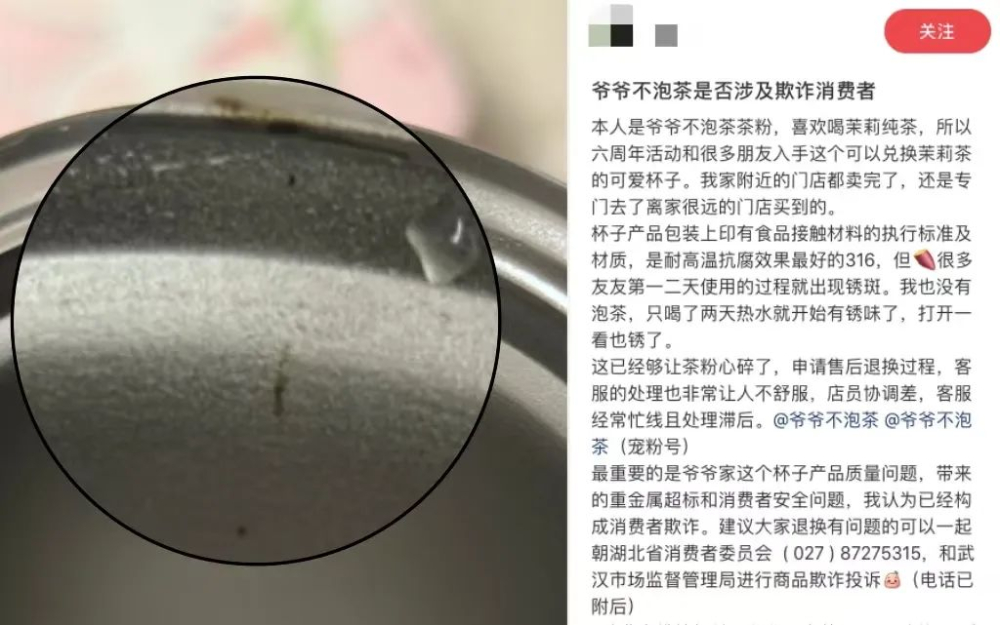
It wasn’t until October 22 that, following media reports on the incident, the brand finally responded, stating that it had received consumer feedback and emphasized that not all cups exhibited rust issues. Later that day, Grandpa’s Not Brewing Tea officially released a statement on its Weibo account, explaining that upon learning of the situation, the brand immediately initiated an internal investigation and sent the affected batch of thermos cups to a legally qualified testing facility for quality inspection, while also publishing preliminary investigation results to the public.
The brand stated that prior to the product’s launch, it had conducted rigorous audits of the commissioned manufacturer’s qualifications, production processes, quality certifications, and product functionality, confirming that they met standards before releasing the product for sale. The inspection report, issued by Shanghai Lelang Testing Technology Co., Ltd., showed that the batch of thermos cups complied with the national standard GB/T3280-2015 for S31608 (i.e., 316 stainless steel), meaning the inner liner material was indeed 316 stainless steel.
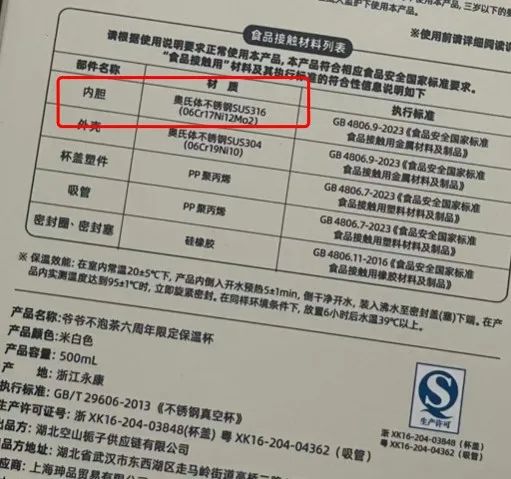
Regarding the rust spots and scratches found on some products, the brand’s preliminary investigation concluded that these were caused by process issues during production, not by substandard materials. The brand expressed sincere apologies for the poor consumer experience resulting from this and announced the immediate launch of a recall process for the affected batch of "Garden Thermos Cups."
Consumers can return the defective thermos cups at any offline store within the deadline specified in the brand’s announcement, while the pure tea vouchers included with the cups remain unaffected and can still be used normally. The brand emphasized that the recall is aimed at protecting consumer rights and promised to strengthen quality control in the future to prevent similar occurrences.
This incident serves as a reminder to consumers that even thermos cups labeled as 316 stainless steel may exhibit abnormalities due to manufacturing flaws. When purchasing, besides verifying the material, attention should also be paid to manufacturing craftsmanship and brand reputation. If encountering similar quality issues, consumers should retain purchase receipts, proactively contact the brand or after-sales service, and if necessary, seek redress through proper channels to ensure their rights are not compromised.
The above content is compiled by CoffeeHunters, a coffee news website.


