







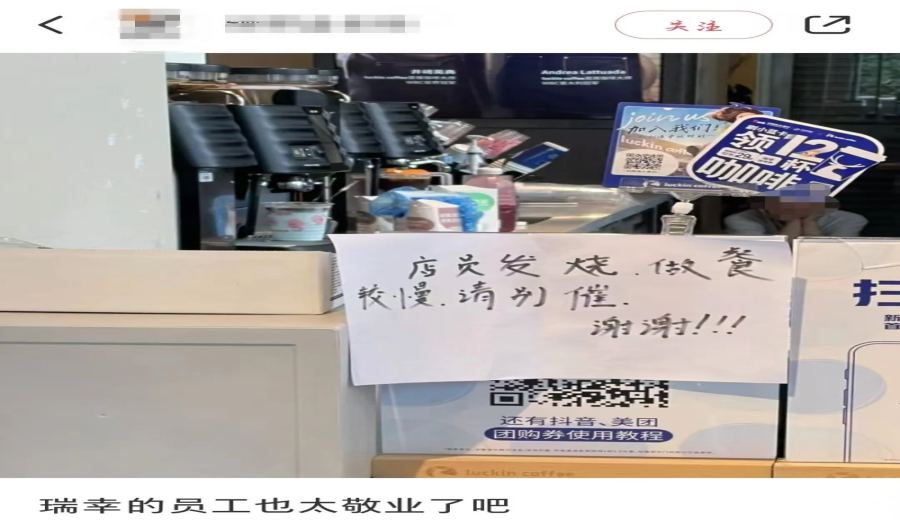
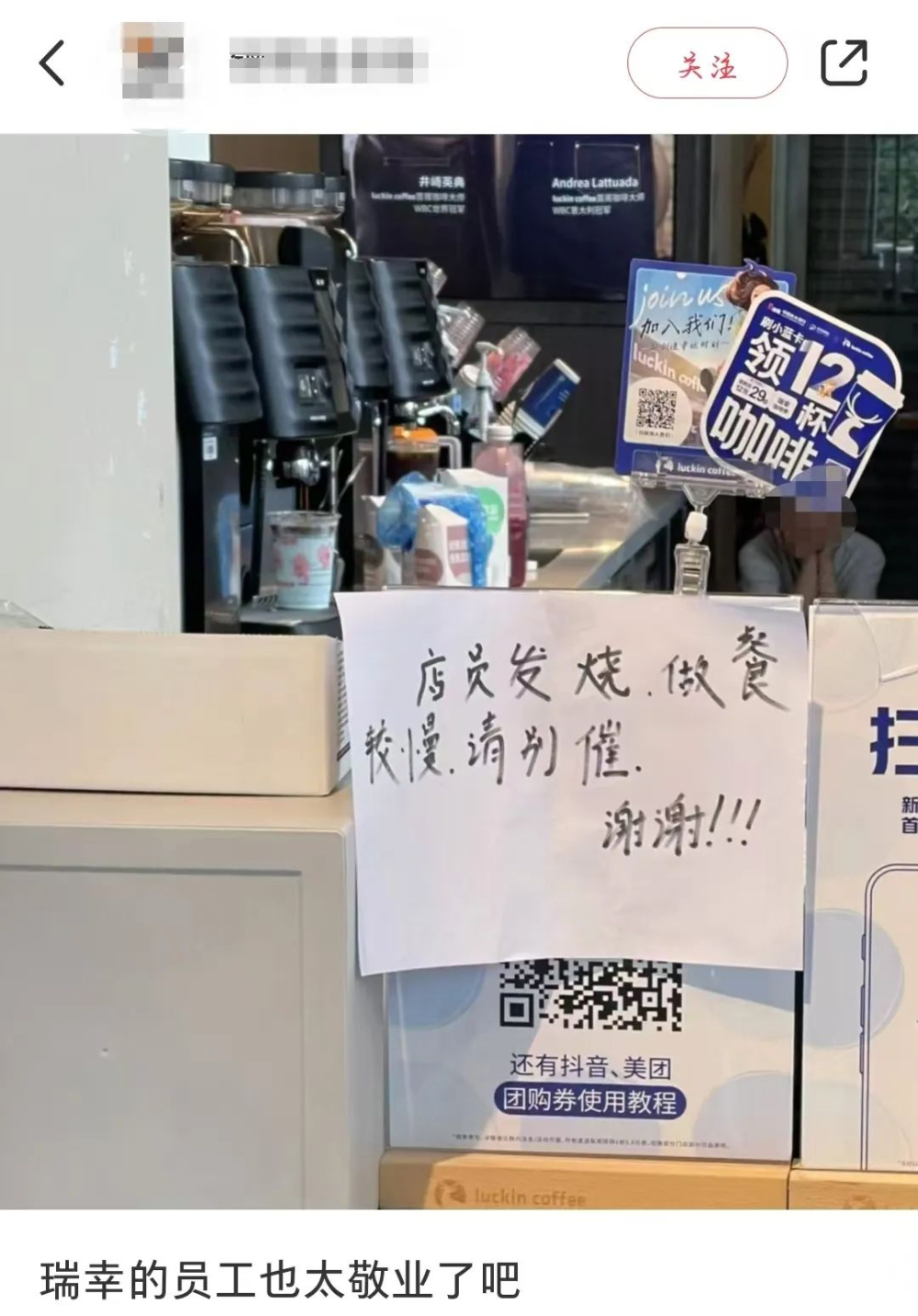
Introduction:When customers noticed a sign posted at Luckin Coffee’s counter stating “Staff has a fever, service may be slow,” it sparked widespread discussion about food safety and labor rights. This is not just a challenge faced by a single brand, but a common issue across the entire beverage industry. This article delves into the underlying reasons why workers are forced to work while ill, explores the conflict between systemic flaws and real-world pressures, and offers points of reflection for both consumers and industry professionals.
Recently, some customers at Luckin Coffee outlets spotted a handwritten notice prominently displayed at the counter: “Staff member has a fever, service may be delayed, please do not rush.” This simple note quickly went viral on social media platforms. While netizens praised the staff’s dedication, they also raised concerns about hygiene and safety when food and drinks are prepared by someone who is feverish.
In reality, many food and beverage workers, when suffering from colds or fevers, often choose to push through and continue working. The reason is not solely due to professional dedication, but rather stems from the dual pressures of staff shortages and the difficulty of taking time off. An anonymous Luckin employee revealed: “It’s common in stores for one person to do the work of several. As long as you can still move, you usually don’t dare to take sick leave lightly.”
According to industry practice, beverage preparation staff who take sick leave may not only risk losing their monthly attendance bonuses, but also face scheduling complications. More crucially, with staff already stretched thin, it’s not easy for colleagues to cover shifts.Luckin explicitly stipulates that working while sick is prohibited, but in practice, this rule is often rendered nominal due to understaffing.
One employee said with a wry smile: “Audits do penalize staff found working while ill, but when there’s no one available to cover the shift, you have no choice but to wear a mask and keep working.” This conflicting situation is not unique to the tea and coffee industries. Many workers admit: “We’d rather pay extra attention to hygiene ourselves than let the store shut down due to lack of staff.”
Notably,there remains a risk of cross-contamination during beverage preparation even when masks are worn. Professional advice suggests that those experiencing fever or significant discomfort should prioritize rest to ensure both beverage quality and customer health. Yet in reality, many outlets, due to inadequate staffing, leave employees caught in a difficult dilemma.
Industry observers point out that this phenomenon reflects deeper issues in labor structure. While many chain brands have well-established management systems, these are often compromised under various operational pressures. As consumers enjoy convenient services, they might also consider how to balance efficiency with the rights and wellbeing of workers.
An industry insider advises: “When you notice that service staff are clearly unwell, consumers can choose to be understanding or come back at a different time.” Such mutual understanding could help create a healthier environment for the entire industry. At the same time, brands should re-evaluate their staffing strategies to avoid forcing frontline workers into the impossible choice between health and livelihood.
The above content is compiled by CoffeeHunters, a coffee news website.


